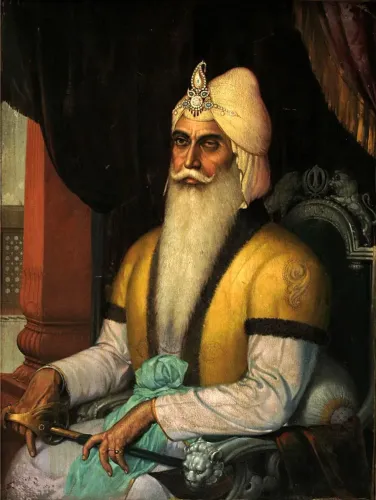
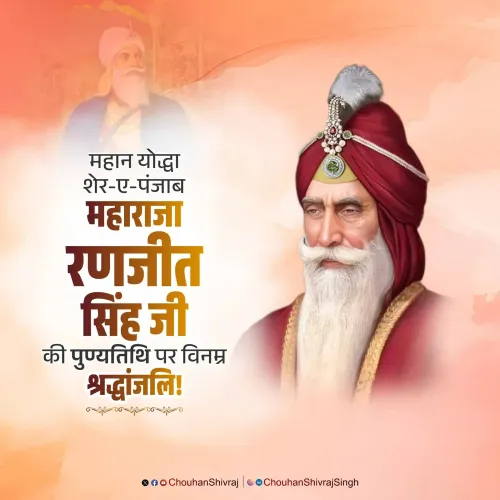
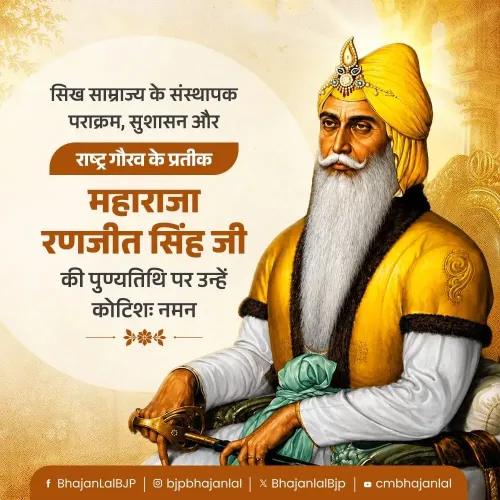
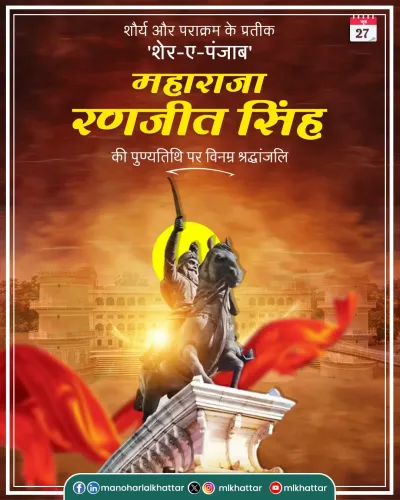
CM Samrat Choudhary Pays Tribute to Maharaja Ranjit Singh
Synopsis
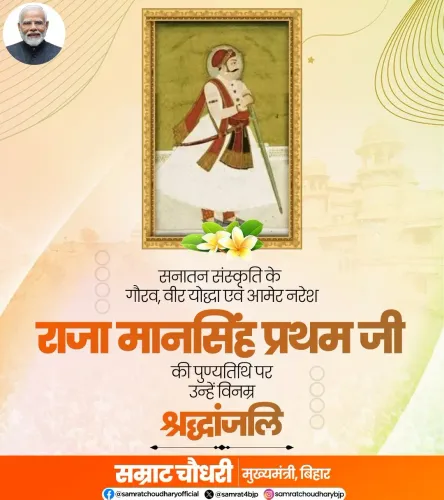
Bihar Chief Minister Samrat Choudhary on 27 June 2026 paid tribute to Maharaja Ranjit Singh on his death anniversary, describing the Sikh Empire's founder as a symbol of valour and national pride whose legacy remains an enduring inspiration for India.
Key Takeaways
Bihar Chief Minister Samrat Choudhary posted a tribute to Maharaja Ranjit Singh on 27 June 2026 , the emperor's death anniversary.
Maharaja Ranjit Singh founded the Sikh Empire, unified the Sikh misls, and ruled Punjab from 1799 until his death in 1839 .
CM Choudhary described Maharaja Ranjit Singh's courage and ideal of national service as a 'perennial source of inspiration.' The tribute is consistent with a broader BJP practice of marking death anniversaries of historical rulers to signal respect for diverse regional legacies.
No new policy announcement or Bihar government scheme was linked to the post.
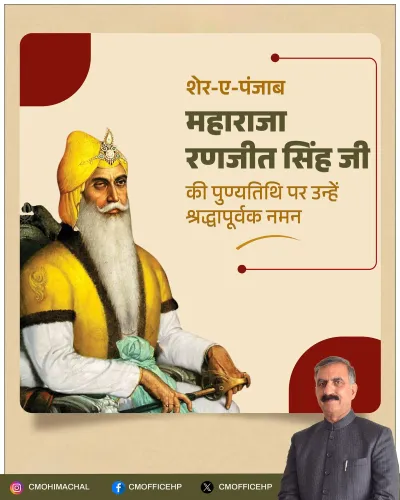
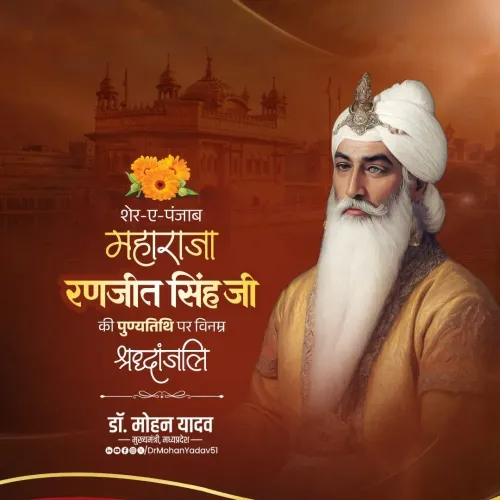
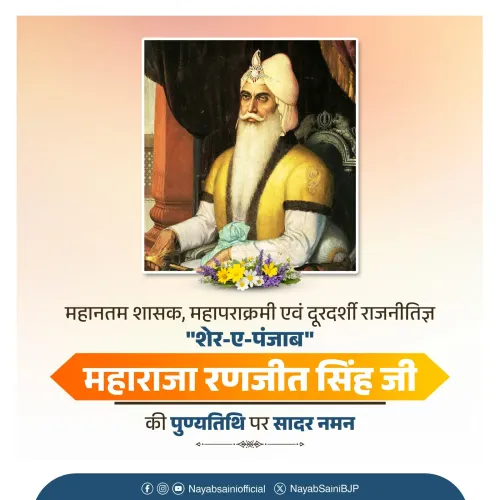
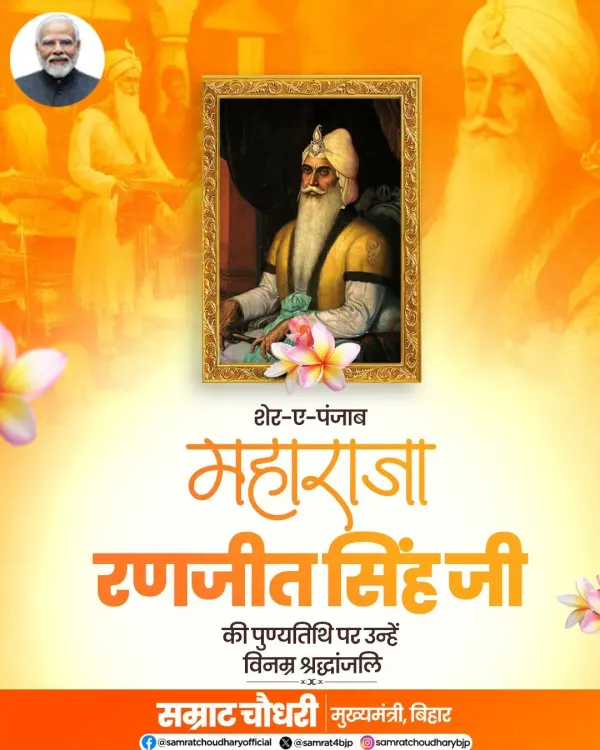
Bihar Chief Minister Samrat Choudhary on Saturday, 27 June 2026 paid tribute to Maharaja Ranjit Singh on his death anniversary, honouring the 19th-century Sikh emperor as a symbol of valour, leadership, and national pride.
Posting on X, the Chief Minister wrote: 'Sher-e-Punjab Maharaja Ranjit Singh ji ki punyatithi par unhe vinamra shraddhanjali' — offering humble homage to the 'Lion of Punjab' on his death anniversary. He described Maharaja Ranjit Singh's 'unparalleled courage and ideal of national service' as an enduring source of inspiration.
Context
Maharaja Ranjit Singh died on 27 June 1839, and his death anniversary is observed each year across India, particularly within the Sikh community. Born in 1780, he founded the Sikh Empire, unified the Sikh misls, and ruled Punjab for four decades, building one of the most formidable military powers in the subcontinent. His administration was widely noted for its secular character, with ministers and commanders drawn from diverse religious communities.
Chief Minister Samrat Choudhary leads the government of Bihar, a state geographically and demographically distinct from Punjab, underscoring the cross-regional character of the tribute.
Policy Backdrop
Indian political leaders across party lines have made it a consistent practice to mark the death anniversaries of historical rulers and national figures on social media. For BJP leaders in particular, tributes to icons such as Maharaja Ranjit Singh serve to project a vision of national integration that draws on diverse martial and leadership legacies from across the country's regions.
This pattern is especially visible around fixed calendar dates tied to 19th-century rulers, where posts carry cultural and symbolic weight without necessarily announcing new policy measures. The practice signals respect for regional histories to audiences beyond the leader's own state.
Stakeholders and Impact
The tribute is directed primarily at the Sikh community and those who regard Maharaja Ranjit Singh as a foundational figure in Indian history. For a BJP leader from Bihar to issue such a message reinforces the party's outreach to communities and constituencies beyond its immediate electoral base.
Historians and educators who study 19th-century Punjab and the Sikh Empire also find such moments of public commemoration useful in keeping awareness of this period alive in national discourse. The hashtags #SherEPunjab and #IndianHistory used in the post extend the message to broader audiences on social media.
What's Next
Similar anniversary tributes from other state chief ministers and national party leaders are expected throughout the day, as 27 June is a recognised date of remembrance for Maharaja Ranjit Singh across India. Cultural organisations and Sikh bodies in Punjab and elsewhere typically hold commemorative events on this date. Any state-sponsored exhibitions or programmes on the Sikh Empire's history, whether in Bihar or Punjab, would represent a step beyond the symbolic into the programmatic.
Point of View
Integrationist identity. The choice of Ranjit Singh, whose secular administration and military legacy command respect well beyond Punjab, makes the gesture broadly palatable. It fits a recurring pattern where the party uses fixed historical anniversaries as low-cost, high-visibility moments to reinforce its claim to a unified national heritage. While the post carries no policy content, its cultural signalling to Sikh communities and history-conscious voters should not be underestimated.
NationPress
25 Sept 2026
Frequently Asked Questions
When did Maharaja Ranjit Singh die?
Maharaja Ranjit Singh died on 27 June 1839 , and his death anniversary is observed annually across India, particularly by the Sikh community.
Why did Bihar CM Samrat Choudhary pay tribute to Maharaja Ranjit Singh?
CM Samrat Choudhary paid tribute on 27 June 2026 to mark Maharaja Ranjit Singh's death anniversary, describing him as a symbol of valour and national pride whose legacy is an enduring inspiration.
Who was Maharaja Ranjit Singh?
Maharaja Ranjit Singh, known as Sher-e-Punjab (Lion of Punjab), was the founder of the Sikh Empire who unified the Sikh misls and ruled Punjab from 1799 to 1839 , noted for his military prowess and secular administration.
What did Samrat Choudhary say about Maharaja Ranjit Singh?
CM Choudhary called Maharaja Ranjit Singh a symbol of 'valour, leadership, and national pride' and said his 'unparalleled courage and ideal of national service' would always remain a source of inspiration.
Is Samrat Choudhary the Chief Minister of Bihar?
Yes, Samrat Choudhary is the Chief Minister of Bihar and a senior leader of the BJP .