CM Samrat Choudhary Offers Prayers on Jyeshtha Purnima
Synopsis
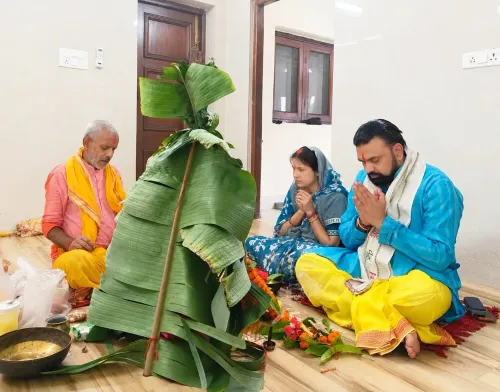
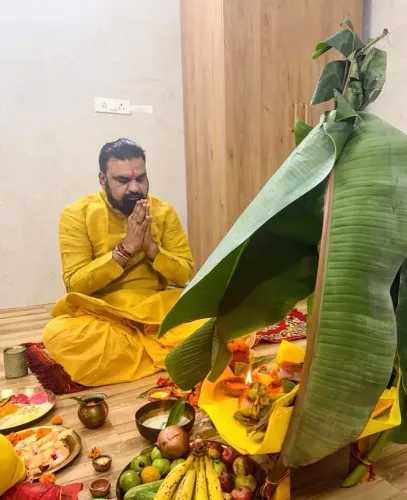
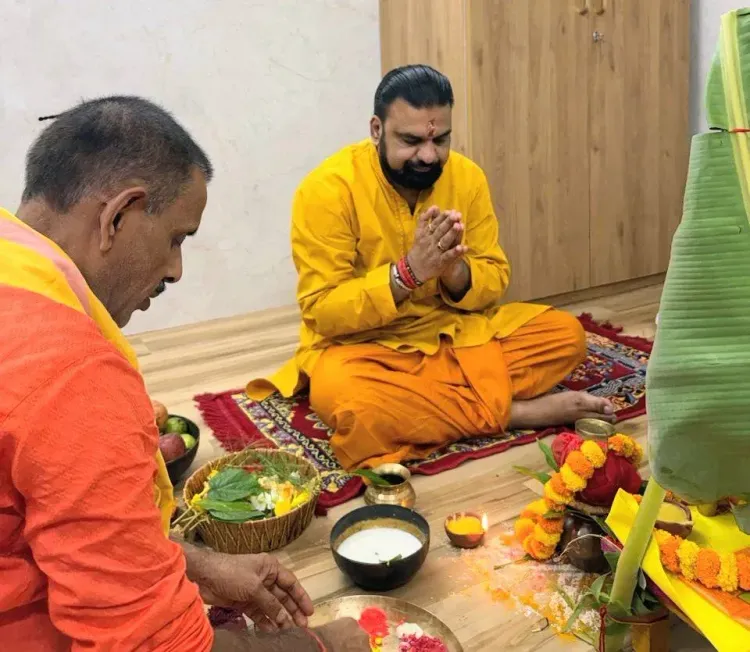
Bihar Chief Minister Samrat Choudhary observed Jyeshtha Shukla Purnima on 29 June 2026 by performing puja and listening to the Satyanarayan Katha, praying for the well-being and continuous progress of Bihar's people.
Key Takeaways
Bihar CM Samrat Choudhary observed Jyeshtha Shukla Purnima on 29 June 2026 with formal religious rites.
He listened to the Satyanarayan Katha , a devotional narrative dedicated to Lord Vishnu.
His prayers were specifically offered for the happiness, prosperity, good health of Bihar's residents and the state's progress.
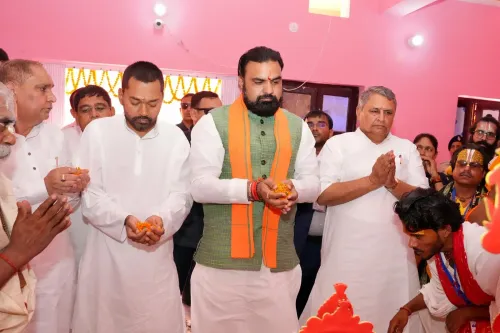
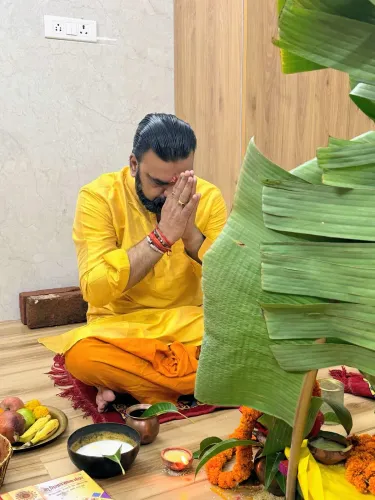
The Chief Minister shared four images from the observance on X along with the Vaishnava mantra Om Namo Bhagavate Vasudevaya .
He invoked the values of faith, truth, service, goodwill, and public welfare as the essence of such Indian cultural festivals.
Bihar Chief Minister Samrat Choudhary on Monday, 29 June 2026, observed Jyeshtha Shukla Purnima with religious rituals, performing puja and listening to the sacred Satyanarayan Katha (the devotional narrative of Lord Satyanarayan), and offered prayers for the well-being, prosperity, good health, and continuous progress of the people of Bihar.
Context
CM Choudhary shared his observance on X, writing: 'Aaj Jyeshtha Shukla Purnima ke paavan avsar par vidhi-vidhaan se puja-archana ki' — 'Today, on the auspicious occasion of Jyeshtha Shukla Purnima, I performed worship with due rites and rituals.' He added that he listened with devotion to the Satyanarayan Katha and prayed for the happiness, prosperity, and good health of the residents of the state and for Bihar's uninterrupted progress.
The post was accompanied by four images from the religious observance and concluded with the Vaishnava mantra ॥ Om Namo Bhagavate Vasudevaya॥, a salutation to Lord Vishnu widely recited during Satyanarayan worship.
Policy Backdrop
Jyeshtha Purnima, the full moon day in the Hindu month of Jyeshtha (falling in May–June), is traditionally observed across northern and eastern India with Satyanarayan Vrat and Katha — a ritual reading of the glory of Lord Satyanarayan, a form of Lord Vishnu. The observance is considered auspicious for seeking divine blessings for family welfare and societal well-being.
Public participation in such religious events by elected officials is a long-standing practice in Indian political culture, reflecting the intertwining of faith, culture, and governance. CM Choudhary's post explicitly frames the occasion within the values of faith (aastha), truth (satya), service (seva), goodwill (sadbhaav), and public welfare (lok kalyan) — themes he linked to Indian civilisational tradition.
Stakeholders and Impact
The Chief Minister's message was directed at Bihar's residents — a state with a population of over 12 crore — and carries symbolic significance given Bihar's deep roots in Hindu religious tradition and its large population of devout Vaishnavas. The post resonates with communities for whom the Satyanarayan Katha is a household ritual observed on every Purnima.
By publicly sharing his participation, CM Choudhary reinforces his connect with the state's cultural and religious sensibilities, a consistent feature of communication by BJP leaders who emphasise the party's alignment with Indian cultural values. His invocation of lok kalyan (public welfare) also ties the religious moment to his administrative responsibilities as Chief Minister.
What's Next
With Bihar approaching a politically significant period ahead of the state assembly election cycle, such public displays of cultural observance by the Chief Minister are likely to continue as part of broader outreach to voters across the state's diverse communities. The emphasis on 'continuous progress of Bihar' signals that even ceremonial communications are being woven into the larger narrative of development and governance that the BJP-led government in Patna is projecting.
Point of View
Choudhary bridges the devotional and the administrative — a messaging strategy that speaks simultaneously to the faithful and to voters evaluating governance. With Bihar's electoral cycle on the horizon, such communication serves a dual purpose: cultural affinity-building and a subtle assertion of the ruling dispensation's developmental narrative. The post is ceremonial in form but carries political undertones consistent with the BJP's broader cultural outreach playbook.
NationPress
27 Sept 2026
Frequently Asked Questions
Why did Bihar CM Samrat Choudhary perform Satyanarayan Katha on 29 June 2026?
CM Samrat Choudhary observed the Satyanarayan Katha on the occasion of Jyeshtha Shukla Purnima, a traditional Hindu full-moon day in the month of Jyeshtha, on which the Satyanarayan Vrat and Katha are widely performed across India for seeking divine blessings.
What is Jyeshtha Purnima and why is it significant?
Jyeshtha Purnima is the full moon day in the Hindu month of Jyeshtha, typically falling in May or June. It is considered highly auspicious, especially for observing the Satyanarayan Vrat, and is widely celebrated across northern and eastern India.
What did Bihar CM Samrat Choudhary pray for on Jyeshtha Purnima 2026?
CM Choudhary prayed for the happiness, prosperity, good health, and continuous progress of the people of Bihar during his Jyeshtha Purnima observance on 29 June 2026.
What mantra did Samrat Choudhary share on Jyeshtha Purnima?
CM Choudhary shared the Vaishnava mantra 'Om Namo Bhagavate Vasudevaya,' a traditional salutation to Lord Vishnu that is commonly recited during Satyanarayan worship.
What values did Bihar CM Samrat Choudhary associate with Jyeshtha Purnima?
He associated the festival with the values of faith (aastha), truth (satya), service (seva), goodwill (sadbhaav), and public welfare (lok kalyan), calling these the core inspirations of Indian cultural festivals.