CM Samrat Choudhary Observes Jyeshtha Purnima with Satyanarayan Katha
Synopsis
Bihar Chief Minister Samrat Choudhary observed Jyeshtha Purnima on 31 May 2026, performing Satyanarayan Katha and praying for the prosperity and welfare of all Bihar residents, sharing the observance on X with a universalist benediction.
Key Takeaways
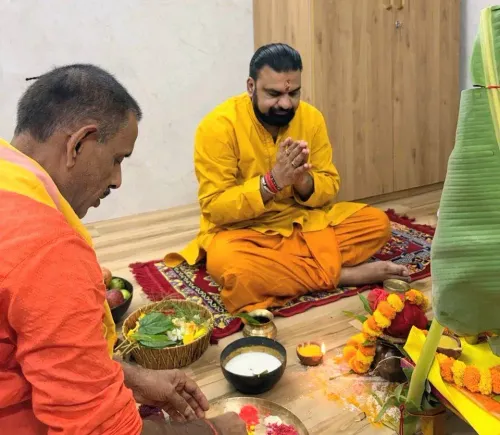
Bihar Chief Minister Samrat Choudhary observed Jyeshtha Purnima on 31 May 2026 with Satyanarayan Katha and ritual worship of Shri Hari.
The CM prayed for the happiness, prosperity, and welfare of all residents of Bihar .
He posted four images of the observance on his official X account along with a Sanskrit-rooted benediction for global well-being.
Jyeshtha Purnima is a significant full-moon day on the Hindu lunar calendar, traditionally associated with Satyanarayan Katha rituals.
No new government scheme or policy announcement was made in connection with this religious observance.
The post reflects a broader pattern of BJP leaders publicly documenting personal religious observances as part of their political communication.
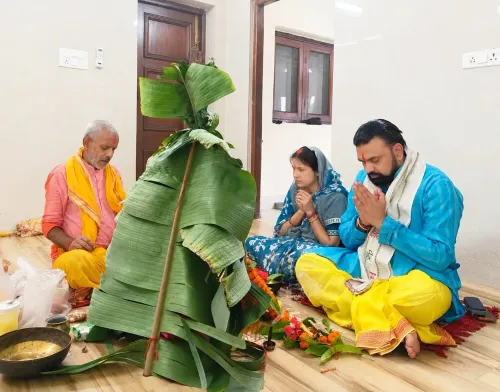
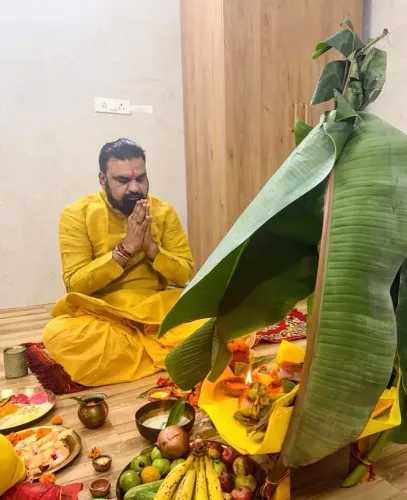
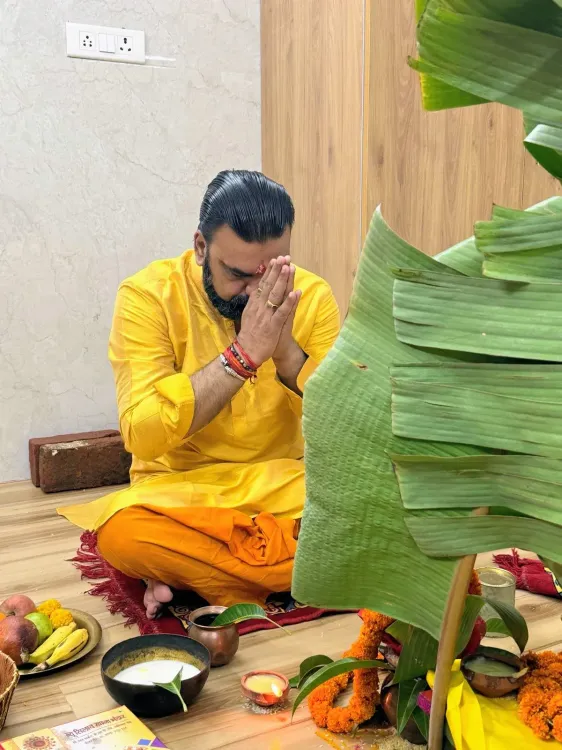
Bihar Chief Minister Samrat Choudhary on Sunday, 31 May 2026, observed Jyeshtha Purnima by devotedly listening to the Shri Satyanarayan Katha and performing ritual worship of Shri Hari, praying for the happiness, prosperity, and welfare of all residents of Bihar.
Context
Jyeshtha Purnima is a full-moon observance on the Hindu lunar calendar that falls in the month of Jyeshtha (May–June). The day holds particular significance for the Satyanarayan Katha — a ritual reading of sacred verses dedicated to Lord Satyanarayan, a form of Lord Vishnu, traditionally performed to invoke prosperity and collective well-being. Chief Minister Choudhary shared four images of the observance on his official X account, accompanied by the Sanskrit-rooted benediction: 'Dharm ki jai ho, adharm ka naash ho, praniyon mein sadbhav ho, vishwa ka kalyan ho' [May righteousness prevail, may unrighteousness be destroyed, may there be goodwill among all beings, may the world be blessed].
Policy Backdrop
Public participation by elected officials in religious observances has become a consistent feature of political communication across India, particularly among leaders of the BJP. Such posts combine personal piety with broad public-welfare messaging, reinforcing cultural alignment without announcing specific government schemes. Chief Minister Choudhary, who has maintained a visible public identity as a practising Hindu since assuming office, regularly documents festivals and religious milestones on social media. No new government policy or scheme was announced in connection with this observance.
Stakeholders and Impact
The post is addressed symbolically to all Bihar residents — a state with a population of over 12 crore — invoking their collective sukh (happiness), samridhi (prosperity), and kalyan (welfare). The broader benediction extends the prayer to all living beings and to the world at large, reflecting the universalist register common to Vaishnav devotional tradition. For Bihar's large Hindu population, the Satyanarayan Katha is a widely practised household ritual, and a Chief Minister's public observance of it carries symbolic resonance beyond partisan lines.
What's Next
State-level leaders from the BJP have, in prior years, followed high-profile religious observances with related cultural-policy announcements — such as support for temple infrastructure, religious tourism, or heritage conservation. Observers of Bihar politics will watch whether the state government follows this cycle with any formal cultural or religious-tourism initiative in the coming months. For now, the post stands as a statement of personal faith and a public expression of goodwill toward the people of Bihar.
Point of View
Where ritual participation doubles as a signal of cultural solidarity with the majority electorate. The universalist closing benediction — invoking welfare for all living beings and the world — softens the partisan edge and broadens the post's appeal beyond the BJP base. In the context of Bihar, a state with significant religious and caste diversity, such messaging is carefully calibrated to be devotional without being exclusionary. The post adds to a pattern that analysts track as 'soft Hindutva' governance signalling — present but non-confrontational, and unlikely to generate political friction.
NationPress
14 Oct 2026
Frequently Asked Questions
What did Bihar CM Samrat Choudhary do on Jyeshtha Purnima 2026?
Bihar Chief Minister Samrat Choudhary observed Jyeshtha Purnima on 31 May 2026 by listening to the Shri Satyanarayan Katha and performing ritual worship of Shri Hari, praying for the welfare of all Bihar residents.
What is Jyeshtha Purnima and why is it significant?
Jyeshtha Purnima is the full-moon day in the Hindu lunar month of Jyeshtha (May–June). It is traditionally associated with the Satyanarayan Katha, a ritual reading dedicated to Lord Vishnu, performed to seek prosperity and collective well-being.
What is Satyanarayan Katha?
Satyanarayan Katha is a Hindu devotional ritual involving the recitation of sacred verses dedicated to Lord Satyanarayan, a form of Lord Vishnu. It is widely practised in Indian households on auspicious occasions to invoke blessings for health, prosperity, and happiness.
Did CM Samrat Choudhary announce any new scheme on Jyeshtha Purnima?
No. Chief Minister Samrat Choudhary's post on Jyeshtha Purnima 2026 was a personal religious observance. No new government scheme or policy announcement was made in connection with the occasion.
Who is Samrat Choudhary?
Samrat Choudhary is the Chief Minister of Bihar and a senior leader of the Bharatiya Janata Party (BJP). He is known for publicly participating in Hindu religious observances as part of his public and political persona.