CM Samrat Choudhary pushes Bihar's industrial agenda in Delhi
Synopsis
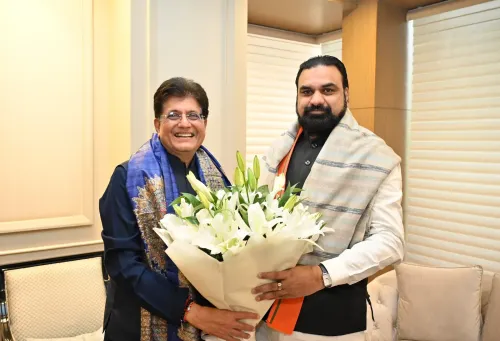
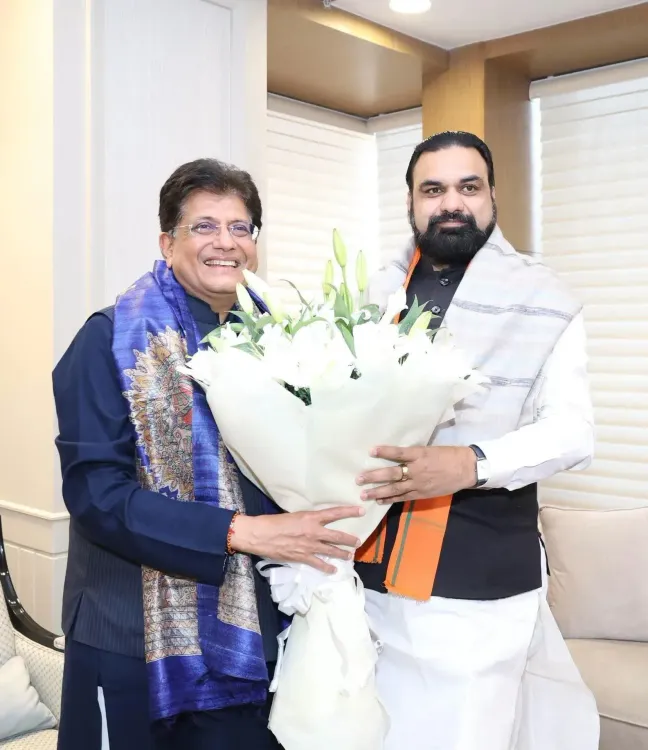
Bihar Chief Minister Samrat Choudhary met Union Commerce Minister Piyush Goyal in New Delhi on 3 November 2026, pushing for the Gaya Integrated Manufacturing Cluster, a 100 MW data centre, investor incentives, Tea Board representation, and export promotion for Bihar.
Key Takeaways
Bihar CM Samrat Choudhary held a meeting with Union Commerce Minister Piyush Goyal in New Delhi on 3 November 2026 .
The agenda included six items: investor incentives, the Gaya Integrated Manufacturing Cluster (IMC) , export promotion, Tea Board representation for Bihar, a unified Commerce Ministry office, and a 100 MW data centre .
The Gaya IMC sits within the national framework of the National Industrial Corridor Development Programme , which funds shared manufacturing infrastructure.
Bihar is seeking formal representation on the Tea Board , a statutory body that has historically been dominated by Assam and West Bengal.
A 100 megawatt data centre in Bihar would place the state among India's emerging hyperscale infrastructure destinations.
No formal decisions or approvals from the meeting have been confirmed; follow-up policy notifications are the key next indicator.
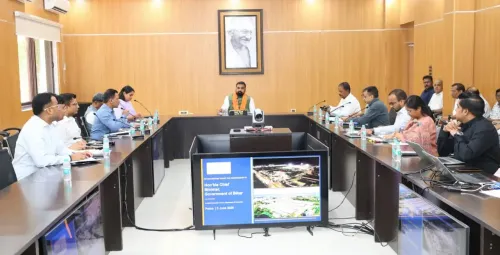
Bihar's industrial ambitions landed squarely on New Delhi's policy table on Tuesday, 3 November 2026, when Bihar Chief Minister Samrat Choudhary sat down with Union Commerce and Industry Minister Piyush Goyal for a focused discussion on accelerating investment, manufacturing, and economic growth in the state.
Six agenda items, one clear signal from Patna
The meeting was not a courtesy call. According to Choudhary's post, the agenda ran through six distinct areas: investor incentives, the proposed Integrated Manufacturing Cluster (IMC) at Gaya, export promotion, Bihar's inclusion in the Tea Board, a unified office of the Commerce Ministry, and the development of a 100-megawatt data centre. That breadth — from tea cultivation to terabytes — reflects how deliberately Bihar is trying to diversify its economic base rather than bet on a single sector.
In Hindi, Choudhary described the discussions as 'sarthak charcha' — meaningful dialogue — a phrase that signals substance over symbolism, even if formal outcomes are yet to be announced.
The Gaya IMC and what a manufacturing cluster means for Bihar
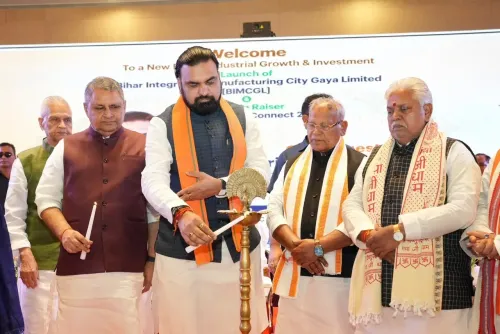
The Integrated Manufacturing Cluster proposed for Gaya is the most structurally significant item on the list. IMCs under the National Industrial Corridor Development Programme are designed to offer shared infrastructure — roads, power, water, logistics — that individual firms cannot economically build alone. For Gaya, a district better known for its Buddhist pilgrimage circuit than its factory floors, a confirmed IMC would represent a genuine industrial pivot.
Bihar's push fits a well-worn national pattern. Since the Make in India initiative of 2014 and the Bihar Industrial Investment Promotion Policy of 2016, successive state governments have worked to close the gap between Bihar's investment potential and its actual manufacturing output. The Gaya IMC, if greenlit, would be among the most concrete expressions of that ambition yet.
Tea Board, data centres, and the export diversification play
Two agenda items stand out for their specificity. Bihar's push for representation on the Tea Board — the statutory body under the Commerce Ministry that governs cultivation, processing, and exports — signals that the state wants a formal seat at the table for a crop that is grown in its northern districts but has historically been dominated by Assam and West Bengal in regulatory terms.
The proposed 100 MW data centre, meanwhile, places Bihar in the middle of one of India's fastest-growing infrastructure races. States from Maharashtra to Telangana have competed aggressively for hyperscale data-centre investments; a 100 MW facility would mark Bihar's entry into that tier in a serious way, with downstream benefits for tech employment and digital infrastructure.
Centre-state coordination as Bihar's growth strategy
Meetings of this kind — a state chief minister pressing a central minister on cluster approvals, export schemes, and sectoral board representation — are the unglamorous engine of Indian industrial policy. Progress depends on alignment between what states ask for and what central ministries can unlock in land, funds, and regulatory frameworks.
The fact that Choudhary travelled to New Delhi himself, rather than sending a delegation, underscores how much political capital Bihar's government is investing in these conversations. The next signpost will be whether any of Tuesday's discussions harden into formal approvals, project notifications, or policy orders from North Block.
Point of View
High-level lobbying at the Centre rather than waiting for top-down allocations. For Bihar — historically categorised as a 'BIMARU' state but now consistently cited as a fast-growing economy — securing the Gaya IMC and a 100 MW data centre would be tangible proof of structural transformation, not just headline GDP numbers. Choudhary's personal presence in New Delhi signals that industrial promotion has become a core political deliverable for the BJP government in Patna, not merely an administrative process. The Tea Board push, subtle but deliberate, also suggests Bihar is seeking regulatory leverage in sectors where it has production capacity but limited policy voice.
NationPress
3 Nov 2026
Frequently Asked Questions
What did Bihar CM Samrat Choudhary discuss with Piyush Goyal?
Bihar Chief Minister Samrat Choudhary met Union Commerce and Industry Minister Piyush Goyal in New Delhi on 3 November 2026 to discuss investor incentives, the Gaya Integrated Manufacturing Cluster, export promotion, Bihar's participation in the Tea Board, a unified Commerce Ministry office, and the development of a 100 MW data centre in Bihar.
What is the Integrated Manufacturing Cluster planned for Gaya?
The Integrated Manufacturing Cluster (IMC) at Gaya is a proposed industrial hub under the central government's National Industrial Corridor Development Programme. It would provide shared infrastructure — power, roads, water, logistics — to attract manufacturing investment to Bihar's Gaya district.
Why is Bihar seeking representation on the Tea Board?
Bihar grows tea in its northern districts but has historically had limited representation on the Tea Board, the statutory body under the Commerce Ministry that regulates and promotes tea cultivation and exports. Chief Minister Choudhary raised this with Piyush Goyal to secure a formal role for the state in tea policy.
What is the 100 MW data centre project in Bihar?
A 100-megawatt data centre is one of the infrastructure proposals Bihar's government is pushing with the central government. Such a facility would place Bihar among India's larger data-centre destinations, attracting tech investment and boosting digital infrastructure in the state.
What is Bihar's industrial policy background?
Bihar has pursued industrial growth through the Bihar Industrial Investment Promotion Policy of 2016, which offered fiscal incentives and single-window clearance. The state has also aligned with the national Make in India initiative launched in 2014 to raise manufacturing investment and create jobs.