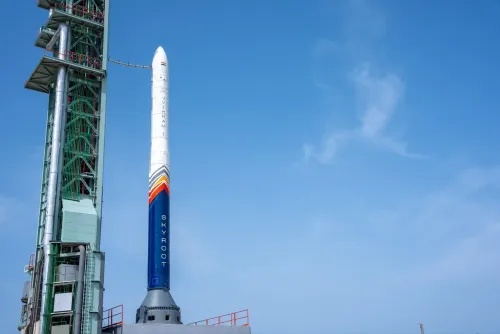
CM Sawant Hails PM Modi's Praise for Skyroot Vikram-1 Launch
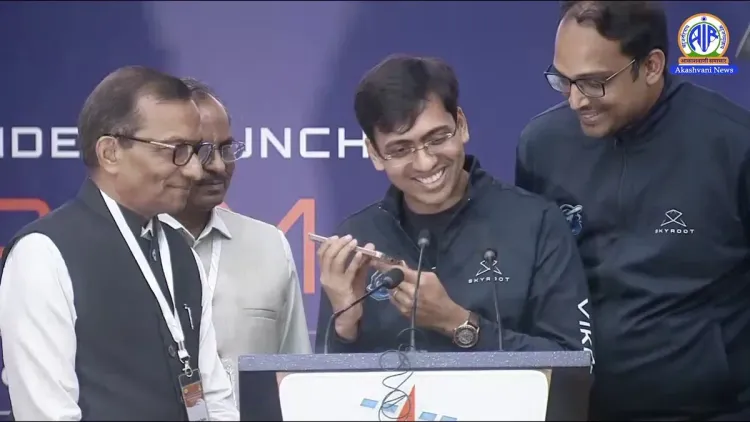
Synopsis
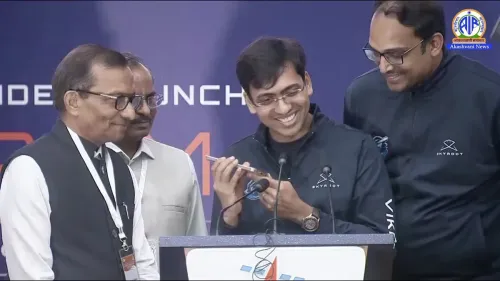
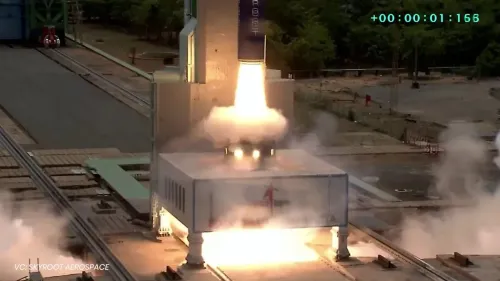
Goa Chief Minister Pramod Sawant amplified PM Narendra Modi's congratulations to Hyderabad-based Skyroot Aerospace on the successful orbital launch of Vikram-1, calling it a defining moment in India's space journey and a source of inspiration for young engineers nationwide.
Key Takeaways
Vikram-1 , developed by Hyderabad -based Skyroot Aerospace , achieved a successful orbital launch, marking a first for India's private space sector.
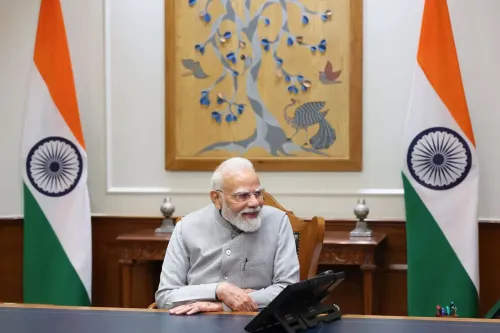
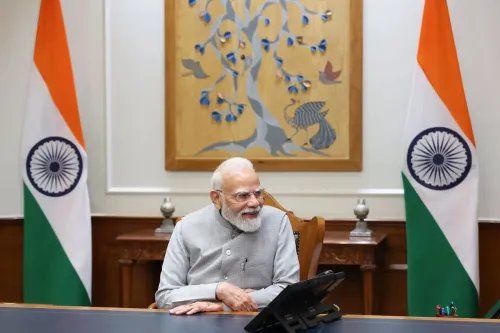
Prime Minister Narendra Modi personally congratulated Skyroot Aerospace, and Goa CM Pramod Sawant amplified the message on 20 July 2026 .
India's space sector reforms beginning in June 2020 and the Indian Space Policy of 2023 created the regulatory environment that enabled private launch vehicles.
IN-SPACe serves as the single-window agency overseeing private participation in end-to-end launch activities.
The milestone is expected to attract fresh investment into India's private space ecosystem and benefit small satellite operators seeking domestic launch options.
Passage of a comprehensive Space Activities Bill in Parliament remains a key policy step to consolidate the sector's momentum.
Goa Chief Minister Pramod Sawant on Monday, 20 July 2026, amplified Prime Minister Narendra Modi's congratulatory message to Skyroot Aerospace following the successful launch of the Vikram-1 rocket, calling the milestone a defining moment in India's space journey. Sawant echoed the Prime Minister's words, noting that 'this achievement will inspire many more youngsters to touch the sky.'
Context
Skyroot Aerospace, a Hyderabad-based private launch vehicle company founded in 2018, developed the Vikram-1 rocket to carry small satellites into low Earth orbit. The successful orbital launch marks a landmark for India's private space sector, demonstrating that homegrown startups can deliver end-to-end launch capability. Prime Minister Modi personally congratulated the team, a gesture that underscores the political and strategic importance the government attaches to commercial space milestones.
Chief Minister Sawant, sharing the Prime Minister's message on X, described the event as 'a defining moment in India's space journey.' His post reflects the broader BJP leadership's enthusiasm for showcasing indigenous technological achievement as a symbol of national progress.
Policy Backdrop
The success of Vikram-1 is the direct outcome of space sector reforms that began in June 2020, when the Government of India opened end-to-end launch activities to private companies and established IN-SPACe as a single-window regulatory agency. The Indian Space Policy of 2023 further formalised the role of non-government entities in building and operating launch vehicles, creating a clear legal and institutional pathway for startups like Skyroot.
These reforms were designed to complement ISRO's capabilities rather than replace them, channelling private capital and engineering talent into segments where speed and commercial flexibility matter. The Atmanirbhar Bharat initiative provided the ideological scaffolding, positioning indigenous launch capability as a strategic and economic priority.
Stakeholders and Impact
The immediate beneficiaries are India's growing constellation of private space startups and the young engineers who staff them. A successful orbital launch by a private Indian firm validates the commercial model and is likely to attract fresh venture investment into the sector. Small satellite operators — from agritech to defence analytics firms — stand to gain affordable domestic launch options as Skyroot scales operations.
For the broader ecosystem, the milestone strengthens the case for passing a comprehensive Space Activities Bill in Parliament, which would provide long-term legal certainty for private operators. Student engineering communities and aerospace aspirants across India are also a stated constituency: the Prime Minister's message, as amplified by CM Sawant, was explicitly framed as inspiration for the next generation.
What's Next
Attention will now turn to Skyroot's commercial launch manifest and the cadence of follow-on Vikram-series missions. Competing private launch ventures are watching closely, and a successful commercial payload delivery could trigger a wave of customer bookings. Policymakers will face pressure to accelerate the Space Activities Bill and expand IN-SPACe's capacity to handle a rising volume of launch licences.
India's private space sector now has a proven orbital launch vehicle in its arsenal. Whether the country can build on this moment to capture a meaningful share of the global small-satellite launch market will depend on sustained policy support, infrastructure investment at launch sites, and the pipeline of missions that Skyroot and its peers can secure in the months ahead.
Point of View
Ensuring that a central government achievement resonates through state-level voices. The Vikram-1 launch fits neatly into the Atmanirbhar Bharat narrative that the ruling party has cultivated since 2020, when space sector reforms were first announced. By invoking youth inspiration, both leaders are positioning the private space sector not merely as an industrial policy success but as a generational aspiration — a framing that carries electoral as well as policy weight. The real test will be whether institutional follow-through, including the long-pending Space Activities Bill, matches the rhetorical momentum.
NationPress
20 Oct 2026
Frequently Asked Questions
What is Vikram-1 and who built it?
Vikram-1 is an orbital launch vehicle developed by Skyroot Aerospace, a Hyderabad-based private Indian rocket company founded in 2018. It is designed to carry small satellites into low Earth orbit.
What did PM Modi say about the Skyroot Aerospace launch?
Prime Minister Narendra Modi congratulated Skyroot Aerospace on the successful launch of Vikram-1, describing it as a defining moment in India's space journey and expressing confidence that the achievement would inspire young people to aim higher.
Why is the Vikram-1 launch significant for India?
The successful orbital launch by a private Indian company demonstrates that the space sector reforms introduced since 2020 are bearing fruit, opening the door to commercial launch services and reducing dependence on government agencies for small satellite deployment.
What is IN-SPACe and what role does it play?
IN-SPACe, or the Indian National Space Promotion and Authorisation Centre, was established in 2020 as a single-window agency to regulate and facilitate private participation in India's space sector, including launch vehicle development and operations.
What should we watch for next in India's private space sector?
Key developments to follow include Skyroot Aerospace's commercial launch manifest, subsequent Vikram-series missions, potential passage of the Space Activities Bill in Parliament, and the entry or scaling up of other private launch vehicle companies in India.