CM Sawant Champions Preventive Healthcare for Goans
Synopsis
Goa Chief Minister Pramod Sawant on 10 October 2026 called on citizens to adopt preventive healthcare habits — regular check-ups, healthy lifestyles, and early detection — arguing the approach spares families from avoidable pain and financial hardship.
Key Takeaways
Goa CM Pramod Sawant posted a public health appeal on 10 October 2026 .
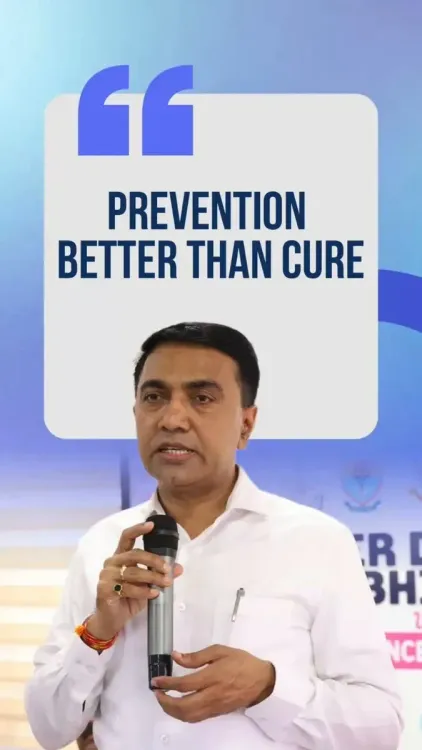
He urged citizens to follow the principle of 'Prevention is Better than Cure.' His call covers three pillars: regular health check-ups, healthy lifestyles, and early detection.
Sawant explicitly linked delayed diagnosis to avoidable pain and financial stress on patients and families.
The appeal reflects broader concerns about non-communicable diseases and out-of-pocket health costs across India.
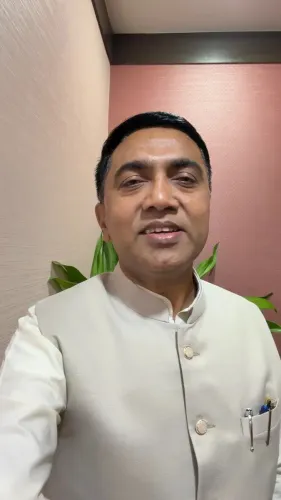
A stitch in time saves nine — and Goa Chief Minister Pramod Sawant wants every resident of the state to take that adage seriously when it comes to their health. On Saturday, 10 October 2026, the Chief Minister used his platform to make a direct, personal appeal for a fundamental shift in how people approach their own wellbeing.
Sawant urged citizens to embrace the principle of 'Prevention is Better than Cure', calling for a cultural pivot toward regular health check-ups, healthy lifestyles, and early detection of illness. His message was pointed: catching a disease early does not just save a life — it spares families from what he called 'avoidable pain and financial stress.'
Why early detection changes everything
The financial argument at the heart of Sawant's appeal is one that resonates deeply across India. Catastrophic out-of-pocket health expenditure remains one of the leading drivers of household poverty in the country, with late-stage diagnoses of conditions like diabetes, hypertension, and cancer routinely costing families multiples of what early intervention would have. A preventive check-up is not just a medical act — it is an economic shield.
By framing preventive care as relief from 'avoidable pain,' the Chief Minister is also acknowledging the human cost that statistics rarely capture: the months of treatment, the disrupted livelihoods, the emotional toll on caregivers that a timely diagnosis could have cut short.
Sawant's call and Goa's health landscape
Goa, despite being among India's wealthier and better-administered states, faces the same lifestyle-disease pressures as the rest of the country — rising rates of non-communicable diseases driven by sedentary habits, processed diets, and delayed medical attention. The Chief Minister's appeal for healthy lifestyles alongside institutional check-ups signals an awareness that the solution is both behavioural and systemic.
The timing of the post, on a weekend, also suggests a deliberate attempt to reach citizens in a personal register — not a policy announcement, but a direct conversation about choices people make every day.
Prevention, as Sawant frames it, is not a luxury for the health-conscious few. It is a practical, affordable act of self-preservation — and, he implies, a civic responsibility to one's own family.
Point of View
He speaks to a middle- and lower-income audience for whom the cost of illness, not just its pain, is the decisive deterrent to seeking care. The framing also signals an implicit acknowledgement that curative healthcare systems, however improved, cannot alone address the burden of lifestyle diseases accelerating across Goa and India. Whether this messaging translates into state-backed preventive health programmes will be the real test of political intent.
NationPress
10 Oct 2026
Frequently Asked Questions
What did Goa CM Pramod Sawant say about preventive healthcare?
Sawant urged all citizens to embrace 'Prevention is Better than Cure' by prioritising regular health check-ups, healthy lifestyles, and early disease detection to avoid unnecessary pain and financial burden on families.
Why is preventive healthcare important in India?
Late-stage diagnosis of diseases like diabetes, hypertension, and cancer leads to significantly higher treatment costs and can push households into financial distress; early detection and lifestyle changes dramatically reduce both health and economic risks.
When did CM Sawant make this health appeal?
Pramod Sawant posted the preventive healthcare message on Saturday, 10 October 2026.
What are the three pillars of preventive healthcare Sawant mentioned?
Sawant highlighted regular health check-ups, adoption of healthy lifestyles, and early detection of illness as the three core elements of preventive healthcare.
How does preventive healthcare reduce financial stress on families?
By catching diseases early, patients avoid expensive late-stage treatments, prolonged hospitalisation, and loss of income — all of which are common consequences of delayed diagnosis in India.