CM Sawant Signs MoU for Goa's 10-Year Health Cohort Study

Synopsis
Goa CM Pramod Sawant witnessed the signing of an MoU on 22 June 2026 launching the Goa CARES Longitudinal Cohort Study 2026, a 10-year initiative tracking nearly one lakh adults for diabetes, cancer, heart disease and respiratory illness risk factors, in partnership with Tata Memorial Centre and the University of Oxford.
Key Takeaways
The Goa CARES: Longitudinal Cohort Study 2026 MoU was signed on 22 June 2026 at GST Bhavan, Panaji .
Three partners signed the MoU: the Directorate of Health Services, Goa ; Centre for Cancer Epidemiology, Tata Memorial Centre, Mumbai ; and the University of Oxford, UK .
The study will track nearly one lakh adults over 10 years to identify risk factors for diabetes, heart disease, cancer, and respiratory illnesses.
Health Minister Vishwajeet Rane was present at the MoU signing alongside senior officials.
The initiative aligns with India's broader national push toward preventive, evidence-based health policy under the NPCDCS framework launched in 2010.
Early findings from participant recruitment are expected to inform Goa's preventive healthcare resource allocation within the first two to three years.
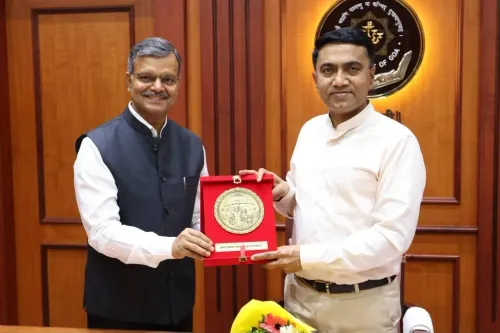
Goa Chief Minister Pramod Sawant announced on Monday, 22 June 2026 that a landmark Memorandum of Understanding was signed at GST Bhavan, Panaji, launching the Goa CARES: Longitudinal Cohort Study 2026 — a decade-long research initiative that will track nearly one lakh adults to map the risk factors behind lifestyle diseases across the state.
Context
The MoU was signed between three institutions: the Directorate of Health Services, Government of Goa; the Centre for Cancer Epidemiology, Tata Memorial Centre, Mumbai; and the University of Oxford, United Kingdom. Health Minister Vishwajeet Rane was present at the signing along with senior officials and dignitaries. Chief Minister Sawant described the collaboration as 'a major step in Goa's healthcare journey' and congratulated all doctors, researchers, and healthcare professionals involved.
The study will follow participants over 10 years, focusing on non-communicable conditions including diabetes, heart disease, cancer, and respiratory illnesses. Its primary aim is early identification of risk factors and the strengthening of preventive healthcare infrastructure across Goa.
Policy Backdrop
India has been grappling with a rising burden of non-communicable diseases for over two decades. The national government launched the National Programme for Prevention and Control of Cancer, Diabetes, Cardiovascular Diseases and Stroke (NPCDCS) in 2010 to address these conditions through systematic screening and risk-factor management at the state level.
The Tata Memorial Centre has been a key driver of population-based cancer epidemiology research in India since the early 2000s, partnering with multiple state governments to generate local data. The University of Oxford brings internationally recognised expertise in longitudinal cohort study design and data standards, lending the Goa CARES initiative both scientific rigour and global credibility.
Stakeholders and Impact
The most direct beneficiaries are Goa's adult population, who will gain access to a health monitoring framework capable of detecting disease risk years before clinical symptoms emerge. For the state's health system, the data generated over the study period is expected to inform targeted interventions and resource allocation in preventive care.
Researchers at the Directorate of Health Services and the two partner institutions will co-design data collection protocols and analytical frameworks. The collaboration also positions Goa as a model for other Indian states exploring evidence-based, locally grounded health policy — a broader pattern already visible in similar cohort initiatives being pursued by state governments in partnership with national research bodies.
What's Next
Participant recruitment across Goa is expected to begin from 2026 onward, with baseline risk-factor data anticipated within the first two to three years of the study. If the Goa CARES model demonstrates measurable outcomes in early disease detection and preventive intervention, it could serve as a template for replication in other Indian states facing comparable non-communicable disease burdens.
The initiative signals a deliberate pivot in Goa's public health strategy — from reactive, curative care toward a long-horizon, science-driven approach anchored in real population data. The success of recruitment and the quality of early findings will be the first major test of whether this ambition translates into actionable policy.
Point of View
Longitudinal evidence generation. By anchoring the study with both Tata Memorial Centre and the University of Oxford, Goa is positioning its data within internationally comparable standards, which strengthens the eventual policy case for intervention. For Chief Minister Sawant, the initiative offers a concrete, apolitical governance win ahead of future electoral cycles, grounding BJP's Goa administration in a science-and-development narrative. If the cohort yields usable baseline data within three years, it could accelerate a replication wave among other smaller Indian states seeking low-cost, high-credibility health policy frameworks.
NationPress
21 Sept 2026
Frequently Asked Questions
What is the Goa CARES Longitudinal Cohort Study 2026?
The Goa CARES Longitudinal Cohort Study 2026 is a 10-year public health research initiative that will track nearly one lakh adults in Goa to identify risk factors for lifestyle diseases such as diabetes, heart disease, cancer, and respiratory illnesses.
Who are the partners in the Goa CARES MoU?
The MoU was signed between the Directorate of Health Services, Government of Goa; the Centre for Cancer Epidemiology, Tata Memorial Centre, Mumbai; and the University of Oxford, United Kingdom.
When and where was the Goa CARES MoU signed?
The MoU was signed on 22 June 2026 at GST Bhavan, Panaji, in the presence of Goa Health Minister Vishwajeet Rane and other senior officials.
What diseases will the Goa CARES study focus on?
The study will focus on non-communicable lifestyle diseases including diabetes, heart disease, cancer, and respiratory illnesses, with the goal of identifying risk factors early to strengthen preventive healthcare in Goa.
How many people will be part of the Goa CARES cohort study?
Nearly one lakh adults across Goa will be enrolled and followed over a period of 10 years as part of the longitudinal cohort study.