Goa CM Sawant witnesses GIPARD-ShivYog MoU for govt wellness
Synopsis
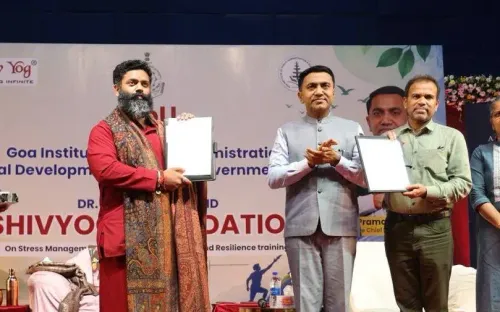
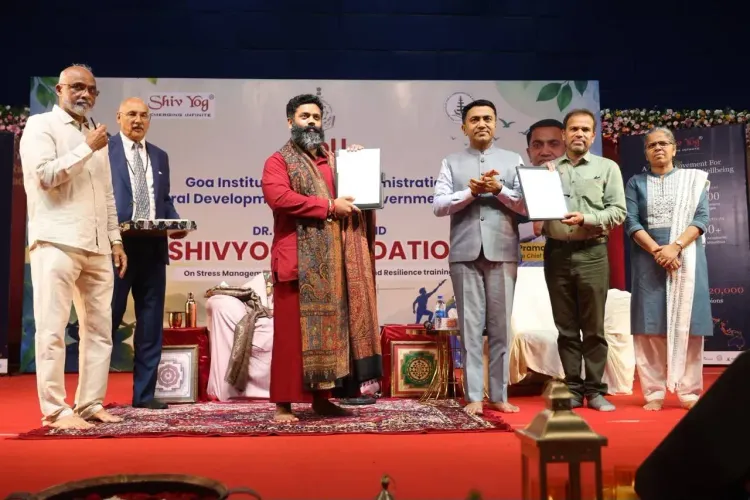
Goa CM Pramod Sawant on 30 July 2026 witnessed a cost-neutral MoU between GIPARD and the ShivYog Foundation to deliver structured meditation, mindfulness, and stress-management programmes for government employees, students, and the wider community, linking the initiative to Nasha Mukt Bharat Abhiyan.
Key Takeaways
Goa CM Pramod Sawant witnessed the MoU signing between GIPARD and the ShivYog Foundation on 30 July 2026 .
The partnership will deliver structured programmes on meditation, mindfulness, stress management, and emotional well-being for government employees, students, and the wider community.
The collaboration carries no financial implication to the Goa state government.
CM Sawant linked the initiative to Nasha Mukt Bharat Abhiyan , the national anti-substance-abuse campaign launched in 2020 .
The initiative aligns with a broader national pattern of states embedding mental health modules in public administration training without additional budget outlays.
Rollout timelines and participation metrics across Goa government departments and educational institutions are yet to be announced.
A quiet signing ceremony in Goa on Thursday, 30 July 2026 carried an unusually direct message: that the mental health of the people running government matters as much as the policies they implement. Goa Chief Minister Pramod Sawant witnessed the signing of a Memorandum of Understanding between the Goa Institute of Public Administration and Rural Development (GIPARD) and the ShivYog Foundation, launching a structured wellness collaboration for government employees, students, and the wider community — with no financial outlay from the state exchequer.
What GIPARD and ShivYog have agreed to deliver
Under the MoU, the two organisations will roll out structured programmes covering meditation, mindfulness, stress management, and emotional well-being. The partnership is explicitly cost-neutral to the government — a design choice that reflects a growing national pattern of states leveraging non-governmental wellness organisations to expand preventive health without fresh budget lines. GIPARD, Goa's apex body for capacity building of public officials and rural development, becomes the institutional anchor that routes these programmes into the administration's training architecture.
Sawant's case for emotionally resilient public servants
CM Sawant framed the initiative in governance terms, not just health terms. 'Mental wellness is fundamental to effective governance,' he said, arguing that 'emotionally resilient public servants are better equipped to serve citizens with compassion, efficiency, and integrity.' It is a framing that has gained traction across Indian states since the early 2020s, as public administration training institutes began embedding mental health modules alongside conventional skills training.
The Nasha Mukt Bharat Abhiyan thread
Sawant explicitly tied the new MoU to Nasha Mukt Bharat Abhiyan, the national campaign launched in 2020 by the Ministry of Social Justice and Empowerment to reduce substance abuse through community awareness and preventive action. Goa has run complementary anti-addiction and wellness drives under that central framework since its launch. The GIPARD-ShivYog partnership now adds a mindfulness and emotional resilience layer to that existing architecture — positioning wellness as both a governance tool and a social health investment under the broader vision of a Swayampurna Goa (self-reliant Goa).
The real test will be in the rollout: how many government departments participate, how consistently the programmes are delivered, and whether participation metrics are tracked and published. A well-designed MoU is only as consequential as the implementation that follows it.
Point of View
A model that gained momentum after the mental-health pressures of the early 2020s. For CM Sawant, tying the initiative to Nasha Mukt Bharat Abhiyan is politically efficient — it anchors a new state-level action to a well-known central scheme, amplifying visibility at no additional cost. The framing of mental wellness as a governance necessity, not merely a welfare gesture, signals an attempt to institutionalise the concept within Goa's bureaucratic culture. Whether GIPARD can translate the MoU into measurable participation across departments will determine if this becomes a lasting policy fixture or a well-intentioned announcement.
NationPress
13 Sept 2026
Frequently Asked Questions
What is the GIPARD-ShivYog Foundation MoU about?
The MoU signed on 30 July 2026 commits GIPARD and the ShivYog Foundation to deliver structured programmes on meditation, mindfulness, stress management, and emotional well-being for Goa government employees, students, and the wider community, at no cost to the state government.
What is the ShivYog Foundation?
The ShivYog Foundation is an organisation that promotes meditation, mindfulness, and holistic wellness practices through structured training modules.
How does this MoU relate to Nasha Mukt Bharat Abhiyan?
CM Sawant described the initiative as complementing Nasha Mukt Bharat Abhiyan , the national campaign launched in 2020 to reduce substance abuse through preventive awareness. The wellness and mindfulness programmes add a mental resilience layer to Goa's existing anti-addiction efforts under that scheme.
Will the Goa government spend money on this wellness programme?
No. CM Sawant confirmed that the collaboration has been undertaken 'without any financial implication to the Government,' making it a cost-neutral partnership for the state exchequer.