CM Sawant celebrates 15th Goa Marathi Film Festival
Synopsis
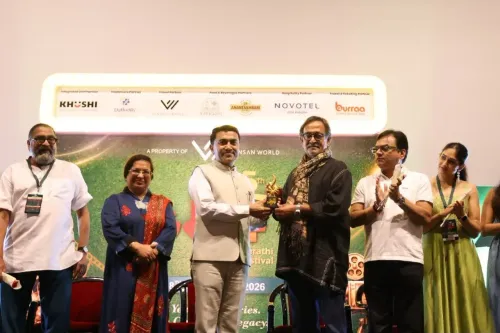
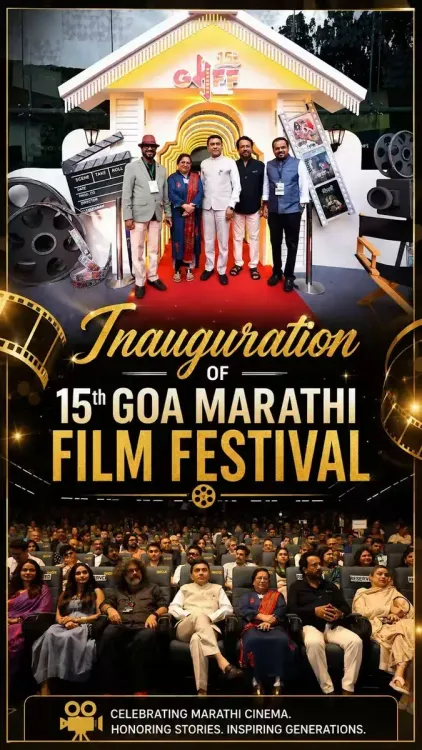
Goa Chief Minister Pramod Sawant celebrated the 15th Goa Marathi Film Festival on 8 August 2026, highlighting the state's enduring cultural and linguistic ties with Marathi cinema and the broader Maharashtra region.
Key Takeaways
Goa CM Pramod Sawant publicly endorsed the 15th Goa Marathi Film Festival on 8 August 2026 .
Sawant described the event as 'a celebration of the beautiful connection Goa shares with Marathi cinema.' The festival is a recurring, state-supported showcase now in its 15th consecutive edition .
Goa has a significant Marathi-speaking population and deep historical ties to Maharashtra , making the festival culturally resonant rather than ceremonial.
Regional film festivals in Goa serve both arts promotion and cultural tourism goals.
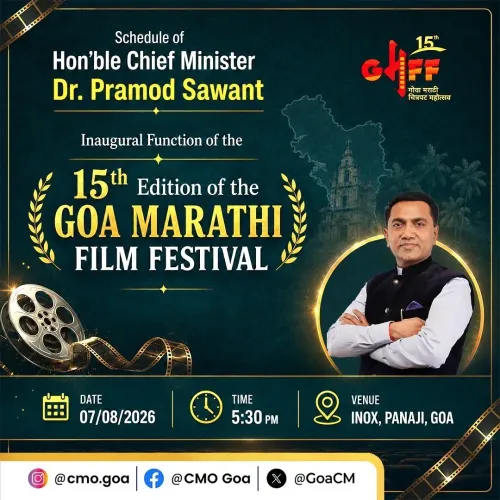
Where language meets landscape, cinema finds a home. Goa Chief Minister Pramod Sawant marked the opening of the 15th Goa Marathi Film Festival on Saturday, 8 August 2026, calling it a celebration of the deep bond between Goa and Marathi cinema.
Sawant described the festival as 'a celebration of the beautiful connection Goa shares with Marathi cinema, bringing films, artists and audiences together once again.' The message, posted on X with the hashtags #MarathiFilmFestival and #MarathiCinema, signals the state government's continued backing of the annual showcase.
Goa's Marathi roots and the case for this festival
Goa carries a historically layered identity — Konkani is its official language, yet a substantial Marathi-speaking population has long shaped the state's cultural fabric. The proximity to Maharashtra and centuries of shared tradition make Marathi cinema a natural fit for Goan audiences, not an import but almost a homecoming.
The Goa Marathi Film Festival has grown into a recurring state-supported platform that gives that relationship a formal stage. Reaching its 15th edition marks a decade and a half of bringing regional filmmakers, performers, and viewers into the same room — a quiet but consistent investment in cultural diplomacy between two neighbouring communities.
Regional festivals as soft cultural infrastructure
Goa has periodically hosted regional language film festivals as part of a broader effort to highlight shared heritage with neighbouring states. These events serve a dual purpose: they nurture local arts ecosystems and reinforce the state's identity as a destination for cultural tourism beyond its beaches.
For the Marathi film industry, a dedicated festival in Goa represents an audience beyond Maharashtra's borders — a chance to build reach in a state where the language already has deep roots. For Goan cultural audiences, it is an affirmation that their linguistic plurality deserves a public stage.
Fifteen editions in, the festival is no longer an experiment. It is a fixture — and Chief Minister Sawant's public endorsement keeps state support firmly in the frame.
Point of View
Where Konkani and Marathi communities coexist and electoral arithmetic is tight. Reaching the 15th edition signals institutional durability, not just political optics. The festival quietly positions Goa as a cultural bridge between the Konkan coast and Maharashtra, a framing that serves both tourism and community outreach. Sustained state patronage of such events increasingly functions as soft infrastructure for regional coalition-building.
NationPress
8 Aug 2026
Frequently Asked Questions
What is the Goa Marathi Film Festival?
The Goa Marathi Film Festival is a recurring state-supported event in Goa that showcases Marathi films and celebrates the cultural and linguistic ties between Goa and the Marathi-speaking world. The 2026 edition is its 15th.
Why does Goa host a Marathi film festival?
Goa has a significant Marathi-speaking population and shares deep historical and cultural ties with neighbouring Maharashtra, making Marathi cinema a natural cultural fit for Goan audiences.
What did CM Pramod Sawant say about the festival?
Sawant called it 'a celebration of the beautiful connection Goa shares with Marathi cinema, bringing films, artists and audiences together once again.'
How long has the Goa Marathi Film Festival been running?
The festival is in its 15th edition as of 2026, meaning it has been running for fifteen years as a platform for Marathi cinema in Goa.
Is the Goa Marathi Film Festival a government-supported event?
Yes, the festival has historically received state government support and is backed by the Goa government, as reflected in Chief Minister Sawant's public endorsement.