Jitendra Singh dedicates Eco-Educational Hub at CSIR-NBRI Lucknow
Synopsis
Union Science Minister Dr. Jitendra Singh dedicated the Eco-Educational Hub at CSIR-NBRI's Banthara Campus in Lucknow on 8 August 2026, marking a step toward public science outreach at one of India's premier botanical research institutes.
Key Takeaways
Jitendra Singh dedicated the Eco-Educational Hub at CSIR-NBRI's Banthara Campus , Lucknow , on 8 August 2026 .
The hub is housed within the Maharishi Parashar Bioresource Centre (MPBC) , a specialised bioresource research and education facility.
CSIR-NBRI was established in 1953 as National Botanic Gardens and became a CSIR institute in 1978 .
Outgoing Director Dr.
Shasany and Officiating Director Dr.
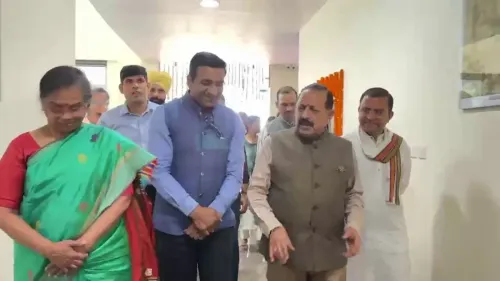
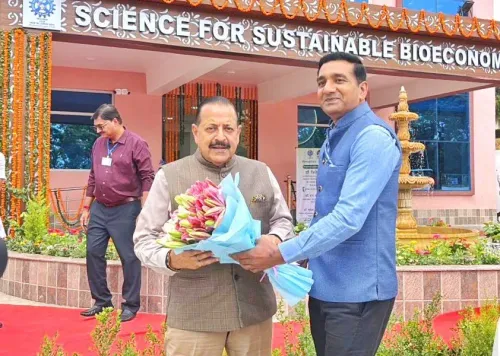
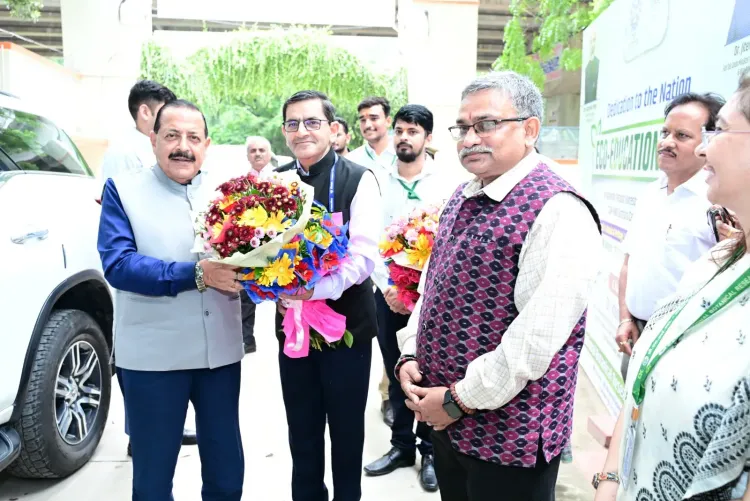
Zabeer Ahmed received the minister at the event.
The dedication continues a broader CSIR pattern of opening outreach facilities to connect research with students and environmental educators.
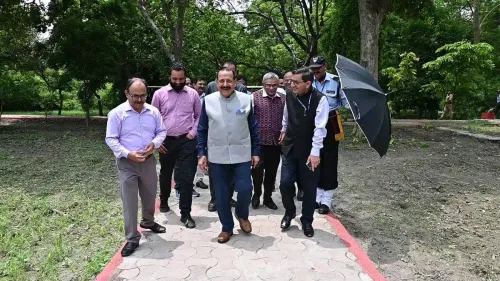
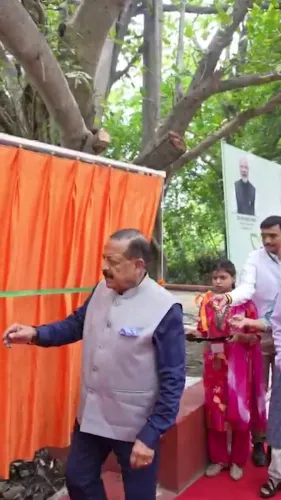
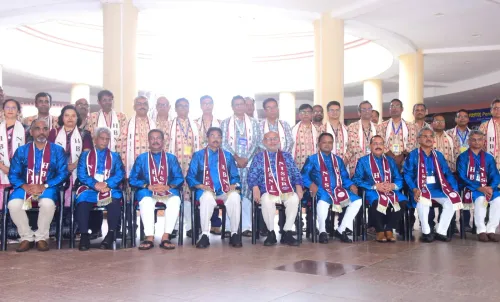
A botanical institute born in 1953 took a new step toward public science on Saturday, 8 August 2026 — and Union Science and Technology Minister Dr. Jitendra Singh was there to mark it. The minister arrived at the Maharishi Parashar Bioresource Centre (MPBC) on the Banthara Campus of CSIR–National Botanical Research Institute (NBRI), Lucknow, to formally dedicate the institute's new Eco-Educational Hub to the nation.
What the Eco-Educational Hub means for NBRI
NBRI traces its roots to 1953, when it was established as the National Botanic Gardens, before being brought under the Council of Scientific and Industrial Research (CSIR) umbrella in 1978 to pursue advanced botanical and bioresource research. The Banthara Campus — home to the Maharishi Parashar Bioresource Centre — now hosts this dedicated outreach facility, designed to bridge the gap between laboratory science and public environmental education. The hub is aimed at students, researchers, and environmental educators who can engage with India's rich bioresource heritage in a structured, campus-based setting. Dr. Singh was received by outgoing Director Dr. A.K. Shasany, a noted plant biotechnologist, alongside Officiating Director Dr. Zabeer Ahmed, senior faculty, officials, and distinguished dignitaries — a handover moment that gave the dedication added institutional weight.CSIR's push to connect science with communities
The dedication fits a deliberate, wider pattern within India's science establishment. CSIR laboratories across the country have been progressively opening outreach and eco-education facilities at regional campuses, seeking to anchor cutting-edge research in local communities rather than keep it behind closed gates. Science ministers have consistently used such inaugurations to underscore the government's intent to weave traditional knowledge systems — in this case, the Maharishi Parashar legacy of bioresource wisdom — into the fabric of modern scientific practice. For NBRI, an institute whose mandate spans plant sciences, biodiversity conservation, and bioresource management, an eco-educational hub is a natural extension: it turns the campus itself into a living classroom. Whether similar facilities follow at other CSIR institutes — and whether dedicated budget lines emerge in the science ministry's forward planning — will be the real measure of how far this model travels.Point of View
But it signals a deliberate policy choice: science infrastructure is increasingly being asked to justify itself through public engagement, not just peer-reviewed output. For the science ministry, events like this serve a dual purpose — they reinforce the government's 'Jan Vigyan' (science for the people) narrative while giving regional CSIR campuses a visibility boost that can attract student footfall and future funding. The timing, amid a broader push to integrate traditional knowledge with modern bioscience, also carries a soft political message about India's civilisational continuity in science. How many similar hubs actually get built and resourced at other CSIR institutes will determine whether this is a policy direction or a one-off dedication.
NationPress
22 Sept 2026
Frequently Asked Questions
What is the Eco-Educational Hub at CSIR-NBRI Lucknow?
The Eco-Educational Hub is a public outreach and environmental education facility located at the Maharishi Parashar Bioresource Centre on CSIR-NBRI's Banthara Campus in Lucknow, dedicated on 8 August 2026 by Union Minister Dr. Jitendra Singh.
What is CSIR-NBRI and where is it located?
CSIR-National Botanical Research Institute (NBRI) is a premier research laboratory under the Council of Scientific and Industrial Research, headquartered in Lucknow. It was established in 1953 as the National Botanic Gardens and became a CSIR institute in 1978.
Who is the Director of CSIR-NBRI in 2026?
As of the dedication event on 8 August 2026, Dr. Zabeer Ahmed was serving as Officiating Director of CSIR-NBRI, with Dr. A.K. Shasany having served as the outgoing Director.
What is the Maharishi Parashar Bioresource Centre?
The Maharishi Parashar Bioresource Centre (MPBC) is a specialised facility on CSIR-NBRI's Banthara Campus in Lucknow, dedicated to bioresource research and education, and named after the ancient sage Maharishi Parashar.
Why is Dr. Jitendra Singh visiting CSIR institutes?
As Union Minister of State (Independent Charge) for Science and Technology, Dr. Jitendra Singh oversees CSIR laboratories. His visits to inaugurate outreach facilities are part of a broader government effort to connect scientific research with public education and community engagement.