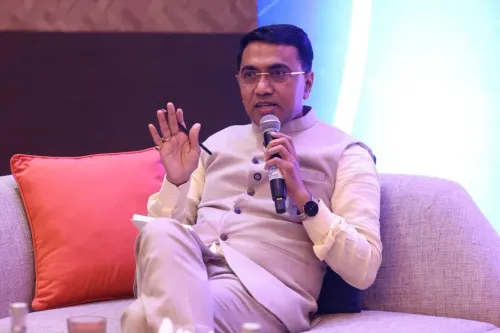
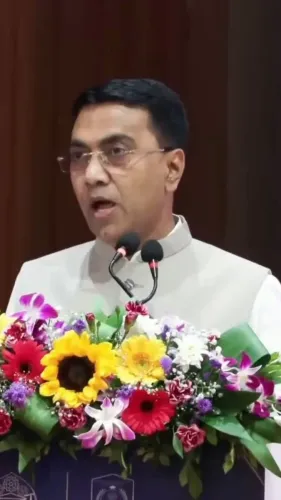
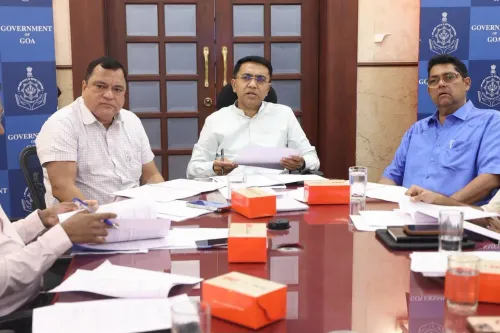
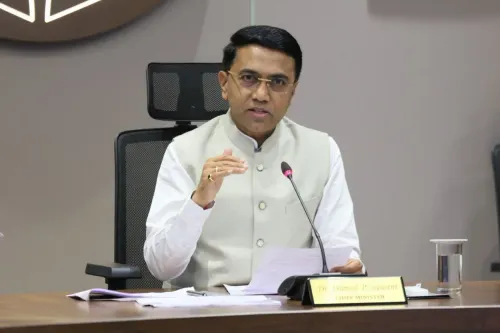
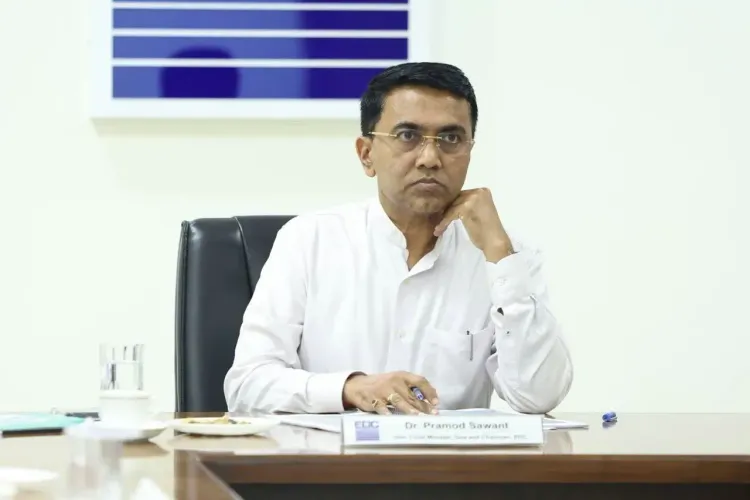
CM Sawant Chairs 410th EDC Goa Board Meeting
Synopsis
Goa CM Pramod Sawant chaired the 410th EDC Goa Board Meeting on November 18, 2026, reviewing Patto Plaza commercial plots, Goa Electronics Ltd performance, and the Mukhyamantri Swayam Rozgar Yojana with a presentation by training partner EDII Goa Centre.
Key Takeaways
CM Pramod Sawant personally chaired the 410th Board Meeting of EDC Goa Limited on November 18, 2026 .
The board reviewed the status of plots at Patto Plaza , a key commercial precinct in Panaji .
Financial performance of Goa Electronics Ltd. , a state PSU, was placed before the board for review.
A presentation on Mukhyamantri Swayam Rozgar Yojana was delivered by EDII Goa Centre , the scheme's training partner.
The meeting focused on reviewing ongoing operations, assessing progress and strengthening entrepreneurship and economic development initiatives in Goa.
Goa's economic machinery got a formal check-up on Wednesday, November 18, 2026, as Goa Chief Minister Pramod Sawant chaired the 410th Board Meeting of EDC Goa Limited — covering everything from commercial plots in Panaji to the state's flagship self-employment push.
Patto Plaza plots and EDC's commercial ledger
EDC Goa Limited, the state-owned Economic Development Corporation incorporated in the 1970s to provide term loans, equity and infrastructure support to industrial and service-sector units, placed the status of its plots at Patto Plaza — a key commercial precinct in Panaji — before the board for review. The discussion centred on ongoing operations and the progress of allotments, keeping the spotlight firmly on how Goa's physical industrial infrastructure is being utilised.
Alongside the plot review, the board also took note of the financial performance of Goa Electronics Ltd., a state public-sector unit, as part of the government's periodic oversight of its commercial entities.
Mukhyamantri Swayam Rozgar Yojana in the spotlight
The meeting's most forward-looking segment was a dedicated presentation on the Mukhyamantri Swayam Rozgar Yojana — the state government's self-employment scheme designed to channel Goan youth into micro-enterprises through training and financial assistance. The presentation was delivered by EDII Goa Centre, the Entrepreneurship Development Institute of India's Goa arm, which serves as the scheme's training partner.
Goa's approach here follows a pattern familiar across state governments: layering self-employment schemes on top of central skill programmes, using institutions like EDII to build enterprise capacity while EDC provides the financial and infrastructure scaffolding. The goal is to redirect youth toward productive micro-enterprise rather than dependence on government employment rolls.
What the 410th meeting signals
Sawant's decision to personally chair the board meeting underscores the state's intent to keep its economic corporations under active political oversight. The twin agenda — physical assets at Patto Plaza and human-capital investment through Swayam Rozgar — reflects Goa's dual-track economic strategy: manage what the state owns and seed what the market can grow.
The next indicator to watch is the quarterly progress report on Mukhyamantri Swayam Rozgar Yojana beneficiary numbers, and whether the board moves on any fresh plot-allotment policy out of EDC Goa. For now, the 410th meeting puts both tracks formally on record.
Point of View
Not just electoral promises, to be part of its visible identity ahead of the next electoral cycle. The dual focus on physical infrastructure at Patto Plaza and human-capital investment through the Swayam Rozgar Yojana reflects a deliberate 'hardware plus software' economic narrative. Bringing EDII into the picture as a training partner also signals an intent to professionalise scheme delivery rather than treat it as a subsidy pipeline. Whether the board's deliberations translate into measurable beneficiary numbers will determine how credible this narrative becomes.
NationPress
18 Nov 2026
Frequently Asked Questions
What is EDC Goa Limited?
EDC Goa Limited is Goa's state-owned Economic Development Corporation, established in the 1970s to provide term loans, equity support and industrial infrastructure — including plot allotments — to industries and service-sector businesses in the state.
What is the Mukhyamantri Swayam Rozgar Yojana in Goa?
The Mukhyamantri Swayam Rozgar Yojana is a Goa government self-employment scheme that provides training and financial assistance to youth to help them start micro-enterprises, with EDII Goa Centre serving as the training partner.
Where is Patto Plaza located?
Patto Plaza is a commercial area in Panaji, Goa, where EDC Goa Limited holds plots that are periodically reviewed for allotment and utilisation status.
What is EDII Goa Centre?
EDII Goa Centre is the Goa branch of the Entrepreneurship Development Institute of India, which partners with the state government to deliver enterprise training under schemes like the Mukhyamantri Swayam Rozgar Yojana.
What was discussed at the 410th EDC Goa board meeting?
The 410th EDC Goa board meeting, chaired by CM Pramod Sawant on November 18, 2026, reviewed the corporation's business operations, the status of Patto Plaza plots, the financial performance of Goa Electronics Ltd., and progress under the Mukhyamantri Swayam Rozgar Yojana.