CM Sawant greets Marathi theatre community on Rangbhoomi Din
Synopsis
Goa Chief Minister Pramod Sawant on 5 November 2026 marked Marathi Rangbhoomi Din by greeting producers, artists, technicians, writers, and audiences who contribute to the development of Marathi theatre.
Key Takeaways
Goa CM Pramod Sawant posted Marathi Rangbhoomi Din greetings on 5 November 2026 .
He addressed five distinct groups: producers, artists, technicians, writers, and audiences .
Marathi Rangbhoomi Din is an annual observance on 5 November honouring the Marathi theatre tradition.
Goa has a significant Marathi-speaking population alongside the state's official Konkani language.
The message reflects a broader pattern of Indian state leaders using cultural days to affirm regional linguistic identities.
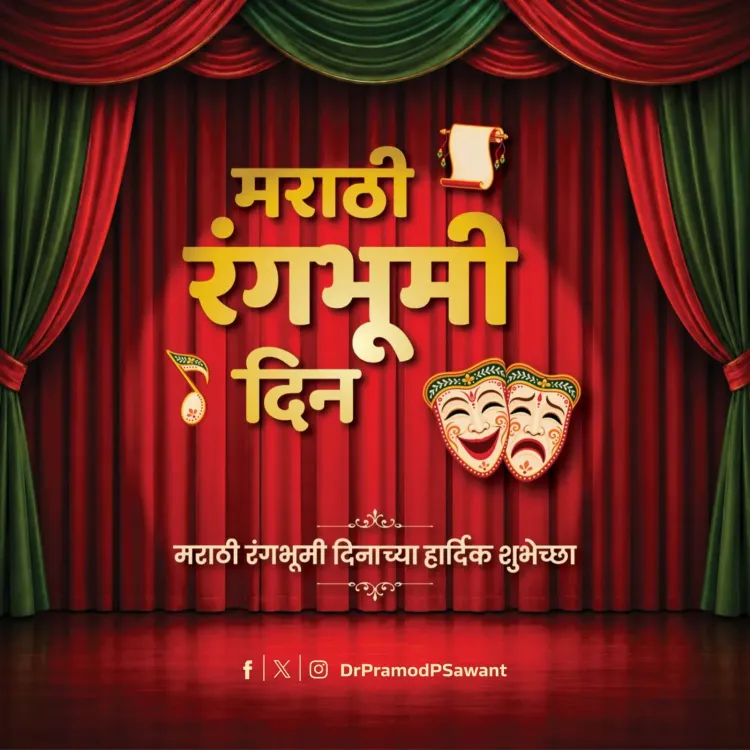
On Marathi Rangbhoomi Din, 5 November 2026, Goa Chief Minister Pramod Sawant extended warm wishes to everyone who shapes and sustains the Marathi stage — from producers and performers to technicians, writers, and the audiences who fill the seats.
In his post, Chief Minister Sawant wrote in Marathi: 'मराठी रंगभूमीच्या विकासात योगदान देणाऱ्या, देत असलेल्या सर्व निर्माते, कलाकार, तंत्रज्ञ, लेखक आणि प्रेक्षकांना, मराठी रंगभूमी दिनाच्या हार्दिक शुभेच्छा.' — 'Heartfelt greetings on Marathi Rangbhoomi Din to all producers, artists, technicians, writers, and audiences who have contributed, and continue to contribute, to the development of Marathi theatre.'
Why Goa's CM marks this day
Goa is officially a Konkani-speaking state, yet it carries a substantial Marathi-speaking population whose cultural identity is deeply tied to the Marathi stage. For a BJP chief minister governing a linguistically layered coastal state, acknowledging Marathi Rangbhoomi Din is both a cultural gesture and a quiet recognition of that community's presence in Goa's social fabric.
Marathi theatre — one of India's oldest and most richly documented regional stage traditions — has a dedicated annual observance on 5 November to honour the breadth of talent it takes to keep a living art form alive: not just the actor under the spotlight, but the writer at the desk, the technician in the wings, and the audience that makes performance meaningful.
The ecosystem CM Sawant chose to name
What stands out in the message is its deliberate sweep. By listing producers, artists, technicians, writers, and audiences individually, Sawant's greeting acknowledges theatre as a collective enterprise — an entire ecosystem rather than a headline name or a single production. That framing reflects the broader cultural moment: regional theatre communities across India have long argued that behind-the-scenes contributors deserve as much recognition as performers.
State governments across Maharashtra, Goa, and the Marathi diaspora belt routinely mark the day, and such messages serve as a formal signal of official support for regional language arts at a time when streaming platforms increasingly compete for the same audiences that once filled local theatres.
Point of View
Writers, and audiences — the message signals institutional respect for a cultural tradition that extends well beyond Maharashtra's borders. It also fits a wider BJP cultural playbook of consistent, visible engagement with regional language observances to consolidate community goodwill. For Goa's Marathi-speaking voters, the acknowledgement from their Chief Minister on a formal cultural day carries a quiet but clear statement of belonging.
NationPress
5 Nov 2026
Frequently Asked Questions
What is Marathi Rangbhoomi Din?
Marathi Rangbhoomi Din is an annual observance celebrated on 5 November to honour the Marathi theatre tradition and recognise the contributions of producers, artists, technicians, writers, and audiences to the Marathi stage.
Why did Goa's Chief Minister post about Marathi Rangbhoomi Din?
Goa has a significant Marathi-speaking population, and Chief Minister Pramod Sawant regularly marks regional cultural days to acknowledge the diverse linguistic communities in the state.
What did CM Pramod Sawant say on Marathi Rangbhoomi Din 2026?
Sawant extended 'heartfelt greetings' to all producers, artists, technicians, writers, and audiences who have contributed and continue to contribute to the development of Marathi theatre.
Is Marathi an official language of Goa?
No. Konkani is Goa's official state language, but Marathi is widely spoken and culturally significant among a large segment of Goa's population.
When is Marathi Rangbhoomi Din celebrated?
Marathi Rangbhoomi Din is observed annually on 5 November .