CM Sawant launches book on Goa's Mother Goddess worship
Synopsis
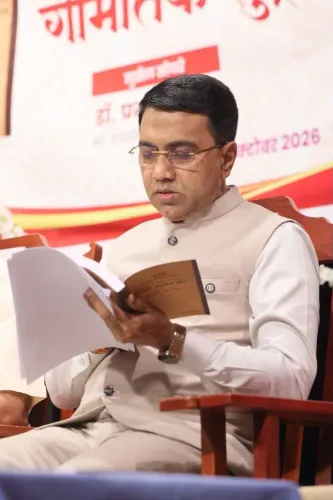
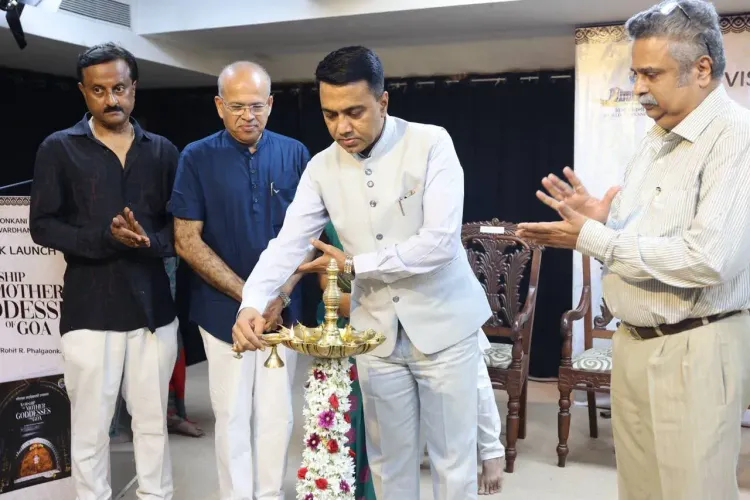
Goa Chief Minister Pramod Sawant launched Worship of Mother Goddesses of Goa by Dr Rohit R Phalgaonkar at Sanskruti Bhavan, Panaji. Backed by the World Konkani Centre's Vardhani Fellowship, the book maps goddess worship through archaeology and folklore. Sawant linked it to the Goa State Heritage Policy and the Kotiteerth Corridor.
Key Takeaways
Goa Chief Minister Pramod Sawant launched Worship of Mother Goddesses of Goa at Sanskruti Bhavan, Patto, Panaji on 27 November 2026 .
Phalgaonkar and was published with support from the Vardhani Fellowship of the World Konkani Centre, Mangaluru .
Sawant said the Mother Goddess in Goa embodies protection, healing, justice, prosperity and shared community identity.
Nandagopal Shenoy and Usha Shenoy for backing the scholarship.
He linked the launch to the Goa State Heritage Policy , the State Mission for Manuscripts and the Kotiteerth Corridor at Divar .
Goa Chief Minister Pramod Sawant on 27 November 2026 launched Worship of Mother Goddesses of Goa at Sanskruti Bhavan in Patto, Panaji, insisting the Mother Goddess is far more than an object of devotion. The volume by Dr. Rohit R. Phalgaonkar, published with the Vardhani Fellowship of the World Konkani Centre, Mangaluru, binds archaeology, Murti Shastra, folklore and community memory to a living tradition of protection, healing and shared identity.
Protection, healing, justice — and community identity
Sawant put the thesis in plain language. “In Goa, the Mother Goddess is far more than an object of devotion-she embodies protection, healing, justice, prosperity, and our shared community identity,” he wrote as he announced the launch.
That framing matters in a state where village goddesses still organise festivals, vows and local justice. The book, as he described it, does not isolate temples from the people who keep them. It draws on Murti Shastra — the traditional science of sacred images — alongside archaeology and folklore, then folds in community memory so the record is not only of stone but of practice.
He commended Dr. Phalgaonkar for dedicated research and presented the study as a window onto what he called Goa's timeless traditions of goddess worship.
A Mangaluru fellowship, a Panaji launch
The publication was backed by the Vardhani Fellowship of the World Konkani Centre in Mangaluru, an institution that funds scholarly work on Konkani language, literature and heritage. Sawant specifically thanked Shri C. A. Nandagopal Shenoy and Smt. Usha Shenoy for supporting scholarship that preserves and celebrates Goa's cultural heritage.
The geography is the story. A Konkani centre across the state border finances the research; a government platform in Panaji gives it a public stage. Goa has repeatedly partnered with Konkani institutions outside the state to document a linguistic and religious identity that does not stop at the border.
Manuscripts, museums and Divar's Kotiteerth Corridor
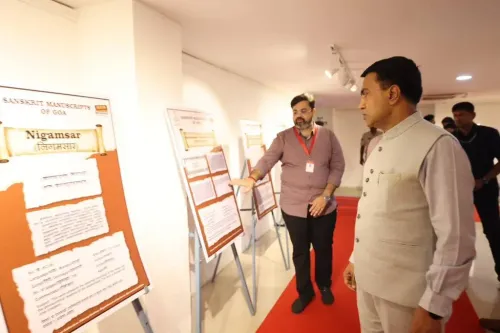
Sawant tied the book to a running state programme. The government, he said, remains steadfast in safeguarding this legacy through the Goa State Heritage Policy, the State Mission for Manuscripts, museums and archives, and landmark initiatives such as the Kotiteerth Corridor at Divar.
The manuscript mission is designed to digitise and conserve ancient texts. The corridor on Divar island is a heritage project aimed at conserving sacred sites and traditional worship practices — the same living landscape the new book tries to explain. Documentation, site work and fellowships are three levers of one policy: make the sacred visible, then keep it from vanishing.
From a hall in Patto to the shrines of Divar, Sawant closed on two lines of intent: celebrating sacred heritage, preserving cultural legacy. The next digitised manuscript and the next stone set on Divar will show if the goddess stays in the archive — or in the village.
Point of View
Faith and tourism policy travel together. The Goa State Heritage Policy, the manuscript mission and the Kotiteerth Corridor are the hardware; books like Phalgaonkar's supply the narrative. The test is whether Divar's corridor and the next fellowships actually thicken the archive, or whether the rhetoric outruns conservation.
NationPress
27 Nov 2026
Frequently Asked Questions
Who launched Worship of Mother Goddesses of Goa?
Goa Chief Minister Pramod Sawant launched the book on 27 November 2026 at Sanskruti Bhavan in Patto, Panaji. The volume is by researcher Dr. Rohit R. Phalgaonkar.
What is the Vardhani Fellowship?
The Vardhani Fellowship is a programme of the World Konkani Centre in Mangaluru that supports scholarly publications on Konkani cultural topics. Sawant said it backed this book and thanked C. A. Nandagopal Shenoy and Usha Shenoy.
What did Pramod Sawant say about the Mother Goddess in Goa?
He said the Mother Goddess is far more than an object of devotion and embodies protection, healing, justice, prosperity and shared community identity. He argued the book illuminates Goa's traditions of goddess worship through archaeology, Murti Shastra, folklore and community memory.
What is the Kotiteerth Corridor?
The Kotiteerth Corridor is a heritage development project at Divar island aimed at conserving sacred sites and traditional worship practices. Sawant cited it alongside the Goa State Heritage Policy and the State Mission for Manuscripts.
What is the Goa State Heritage Policy?
It is the state's framework for protecting tangible and intangible cultural assets, including museums, archives and manuscript conservation. Sawant said the government is using it, with the State Mission for Manuscripts, to safeguard Goa's cultural legacy.