CM Sawant Launches MajheApp Driver for Goa Bike Taxis
Synopsis
Goa CM Pramod Sawant launched MajheApp Driver at Panaji on 7 July 2026, a hyperlocal platform for bike taxi pilots, alongside a social security extension for pilots above 50 and a 50% e-bike subsidy to formalise and green Goa's motorcycle taxi sector.
Key Takeaways
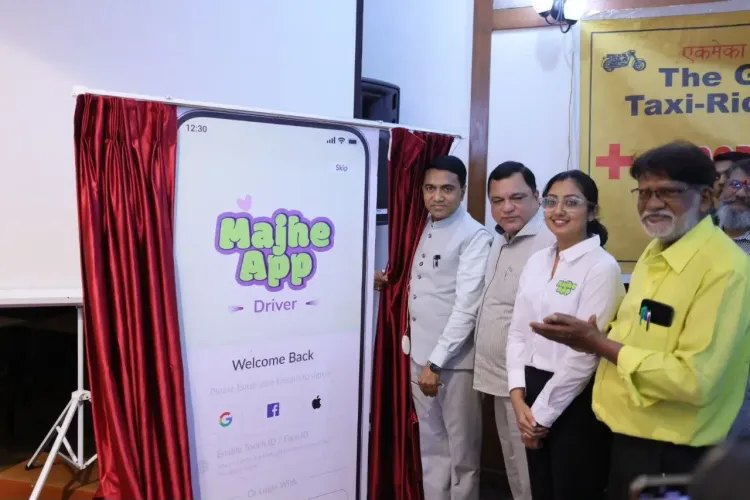
MajheApp Driver launched at Menezes Braganza Hall, Panaji on 7 July 2026 by Chief Minister Pramod Sawant .
The app, developed by Rebekah Lobo and Samuel Timothy , connects locals and tourists with verified businesses, bike taxis, and delivery services.
Traditional bike taxi pilots above age 50 will be covered under the Dayanand Social Security Scheme from 1st August .
The government will provide a 50% subsidy on E-Bikes for traditional pilots to promote sustainable mobility.
Pilots without smartphones will be supported to ensure inclusive participation in the digital platform.
The initiative is backed by the Goa Motor Cycle Taxi Riders Association and the Directorate of Transport .
Goa Chief Minister Pramod Sawant on Monday, 7 July 2026, launched the MajheApp Driver platform at Menezes Braganza Hall, Panaji, in coordination with the Goa Motor Cycle Taxi Riders Association and the Directorate of Transport. The event was held in the presence of Transport and Industries Minister Mauvin Godinho and marks a significant step toward digitally onboarding Goa's traditional bike taxi sector.
Context
The MajheApp is a hyperlocal platform developed by Rebekah Lobo and Samuel Timothy, designed to connect locals and tourists with verified local businesses, bike taxi pilots, delivery services, and other community-based services. Chief Minister Sawant congratulated both developers, describing the app as 'Goa's own' solution aimed at strengthening the local economy. The platform's driver-facing module, MajheApp Driver, is specifically built to expand the customer reach of traditional motorcycle taxi pilots through digital onboarding and technology-enabled services.
A notable feature of the initiative is its inclusivity: pilots who do not own smartphones will also be supported to ensure wider participation across the community, addressing a common barrier to digital adoption among informal transport workers.
Policy Backdrop
At the launch, Chief Minister Sawant announced that traditional bike taxi pilots above the age of 50 will be covered under the Dayanand Social Security Scheme starting 1st August. The scheme extension brings welfare coverage to an older cohort of pilots who have historically operated outside formal social protection nets. The Dayanand Social Security Scheme is an existing Goa government welfare programme now being broadened to include this segment of transport workers.
Separately, the government announced a 50% subsidy on E-Bikes for traditional pilots, positioning the initiative as part of Goa's broader push toward sustainable mobility. Indian states have been rolling out EV incentive programmes since 2021, and this subsidy aligns Goa with that national trend while tailoring it to the tourism-heavy coastal economy's specific needs.
Stakeholders and Impact
The primary beneficiaries are traditional bike taxi pilots — a segment that forms a visible part of Goa's tourism and transport ecosystem. Chief Minister Sawant described bike taxi pilots as 'ambassadors of Goa's tourism and transport sector,' signalling the government's intent to position them as formal participants in the state's visitor economy rather than informal operators on its margins.
Local businesses and tourists stand to benefit from a verified, app-based directory of community services, reducing reliance on unorganised, word-of-mouth referrals. The Goa Motor Cycle Taxi Riders Association and the Directorate of Transport are the institutional partners responsible for coordinating rollout and regulatory oversight. The e-bike subsidy, if disbursed effectively from August onward, could also reduce operational costs for pilots while cutting emissions in a state heavily dependent on road transport for tourism movement.
What's Next
The immediate milestones to watch are the commencement of Dayanand Social Security Scheme coverage for eligible pilots and the start of e-bike subsidy disbursements from 1st August. The Directorate of Transport is expected to issue follow-up regulatory notifications governing app integration and pilot registration. Tracking the number of pilots who successfully onboard onto MajheApp Driver — including those without smartphones — will be a key indicator of the initiative's ground-level reach. Broader adoption by local businesses and tourist uptake of the platform will determine whether MajheApp evolves into a durable hyperlocal commerce layer for Goa's economy.
Point of View
Welfare extension, and green mobility incentives rather than regulation alone. Extending the Dayanand Social Security Scheme to pilots above 50 is a politically salient move ahead of any electoral cycle, targeting an older, economically vulnerable cohort that has long operated without a safety net. The 50% e-bike subsidy mirrors a pattern seen across coastal and tourism-dependent states seeking to align with national EV priorities while reducing visible pollution in high-footfall tourist zones. The emphasis on smartphone-free onboarding is a pragmatic acknowledgement that digital inclusion schemes often fail at the last mile, and its success will be the real test of this initiative's ambition.
NationPress
5 Oct 2026
Frequently Asked Questions
What is MajheApp Driver and what does it do?
MajheApp Driver is a hyperlocal digital platform developed by Rebekah Lobo and Samuel Timothy, launched in Goa to connect locals and tourists with verified local businesses, traditional bike taxi pilots, and delivery services. It is designed to help pilots expand their customer reach through digital onboarding.
Who are the bike taxi pilots covered under the Dayanand Social Security Scheme?
Traditional bike taxi pilots above the age of 50 will be covered under the Dayanand Social Security Scheme from 1st August, as announced by Chief Minister Pramod Sawant at the MajheApp Driver launch in Panaji.
What is the e-bike subsidy announced for Goa bike taxi pilots?
The Goa government announced a 50% subsidy on E-Bikes for traditional bike taxi pilots to promote sustainable and green mobility across the state.
What happens to pilots who do not have smartphones?
The MajheApp Driver initiative includes provisions to support pilots without smartphones, ensuring they can participate in the digital onboarding programme despite not owning a device.
Who developed MajheApp and which government bodies are involved?
MajheApp was developed by Rebekah Lobo and Samuel Timothy. The Directorate of Transport and the Goa Motor Cycle Taxi Riders Association are the key government and industry partners coordinating the rollout alongside the state government.