CM Sai Distributes Cycles to Class 9 Girls Under Saraswati Yojana
Synopsis
Chief Minister Vishnu Deo Sai distributed free bicycles to Class 9 girls at a government school in Nagar Panchayat Samoda under the Saraswati Cycle Yojana on 9 July 2026, aiming to reduce dropout rates and improve secondary school access for girls across Chhattisgarh.
Key Takeaways
CM Vishnu Deo Sai personally distributed bicycles to Class 9 girls at a government school in Nagar Panchayat Samoda on 9 July 2026 .
The distribution was conducted under the Saraswati Cycle Yojana , Chhattisgarh's scheme providing free bicycles to secondary school girls.
The scheme targets Class 9 enrollment — a critical dropout-risk stage — by removing distance as a barrier to school attendance.
Chhattisgarh's approach mirrors successful cycle-for-girls programmes pioneered by states like Bihar in the early 2000s.
CM Sai , in office since December 2023 , has positioned girls' education and women's empowerment as core planks of the state's welfare agenda.
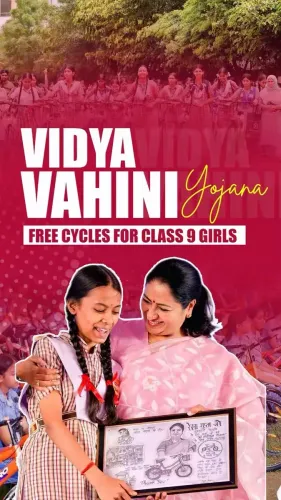
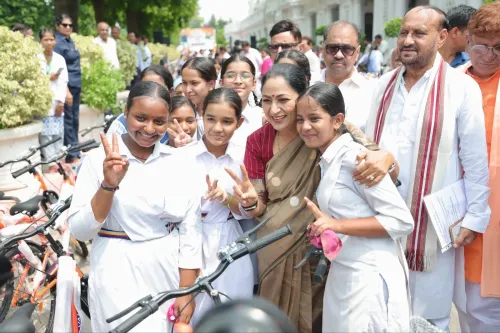
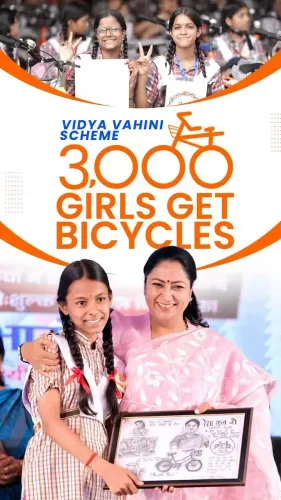
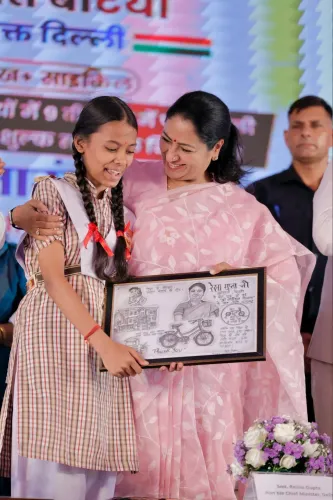
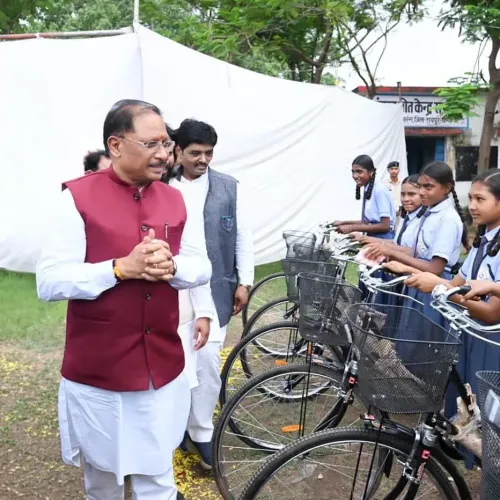
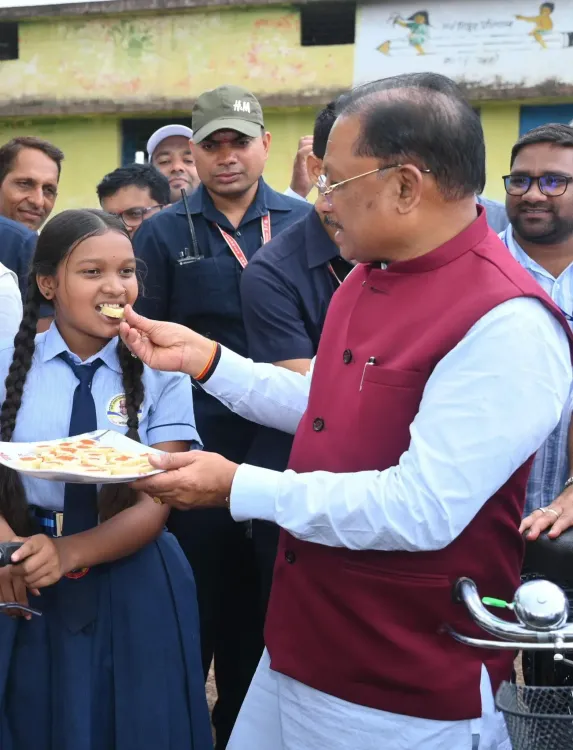
Chief Minister Vishnu Deo Sai of Chhattisgarh on Thursday, 9 July 2026 distributed bicycles to Class 9 girls at a government school campus in Nagar Panchayat Samoda under the state's Saraswati Cycle Yojana, reinforcing the government's push to strengthen girls' access to secondary education.
The Chief Minister's Office shared the event on X, describing the initiative with the words: 'Muskurati-majboot betiyan, Chhattisgarh ki sabse badi shakti' — 'Smiling, strong daughters: Chhattisgarh's greatest strength.' The post highlighted the bicycle distribution as a step toward giving the girls' educational journey 'new momentum.'
Context
The Saraswati Cycle Yojana is a Chhattisgarh government scheme that provides free bicycles to girls enrolled in Class 9, targeting a key transition point where dropout rates among adolescent girls tend to rise. Distance from school is a well-documented barrier to secondary enrollment in rural and semi-urban areas, and the scheme directly addresses that gap. The Samoda event is one of several distribution drives the state has conducted under this programme.
Policy Backdrop
Cycle distribution schemes for adolescent girls have a long lineage across Indian states, with early large-scale models emerging in Bihar and other states in the early 2000s to combat female dropout rates at the secondary level. Chhattisgarh's version follows this proven model, situating it within the current BJP administration's broader welfare agenda under CM Sai, who took office in December 2023. The scheme aligns with national goals around girls' education and women's empowerment, echoing the spirit of centrally sponsored programmes that incentivise secondary school retention.
By targeting Class 9 specifically, the scheme intervenes at the moment students transition from upper primary to secondary school — a stage where many rural families weigh the cost and logistics of continued education against early withdrawal.
Stakeholders and Impact
The primary beneficiaries are rural and semi-urban schoolgirls in Chhattisgarh who face long distances to secondary schools, often without reliable public transport. Families in these areas frequently cite travel difficulty as a reason for pulling daughters out of school after Class 8. A bicycle can effectively extend a girl's reachable school radius, reducing both the financial burden of commuting and safety concerns associated with long walks.
Secondary stakeholders include local school administrations and Nagar Panchayat bodies that coordinate distribution logistics. The scheme also carries symbolic weight: public distribution events with the Chief Minister present signal political commitment to girls' education at the highest level of state government.
What's Next
Attention will now turn to the breadth of the Saraswati Cycle Yojana rollout — specifically how many blocks and districts receive distributions in the current academic cycle, and whether the state releases attendance or retention data for Class 9 and Class 10 girls that could indicate the scheme's on-ground impact. Continued high-profile distribution events suggest the government intends to keep the programme visible as part of its welfare narrative ahead of future electoral cycles.
Point of View
Giving this event credibility beyond symbolism. For CM Vishnu Deo Sai, who is still consolidating his political identity in Chhattisgarh after taking office in late 2023, high-visibility welfare deliveries to rural girls serve a dual purpose — they signal governance competence and reinforce the BJP's women-centric outreach in a state with significant rural and tribal constituencies. The emphasis on 'smiling, strong daughters' as Chhattisgarh's 'greatest strength' is deliberate messaging that frames welfare spending as an investment in state identity rather than routine expenditure. Observers will watch whether the scheme's rollout is accompanied by measurable retention data, which would distinguish genuine policy impact from electoral positioning.
NationPress
8 Oct 2026
Frequently Asked Questions
What is the Saraswati Cycle Yojana in Chhattisgarh?
The Saraswati Cycle Yojana is a Chhattisgarh government scheme that provides free bicycles to girls enrolled in Class 9 to help them access secondary schools more easily and reduce dropout rates caused by long travel distances.
Who distributed cycles under Saraswati Cycle Yojana on 9 July 2026?
Chief Minister Vishnu Deo Sai personally distributed bicycles to Class 9 girls at a government school campus in Nagar Panchayat Samoda on 9 July 2026.
Why does Chhattisgarh give free cycles to Class 9 girls?
Class 9 is a high-risk dropout stage for adolescent girls in rural areas. By providing bicycles, the state aims to reduce the travel barrier that causes many families to withdraw daughters from school after Class 8.
Is Saraswati Cycle Yojana only for Chhattisgarh?
Yes, the Saraswati Cycle Yojana is a Chhattisgarh state government scheme. However, similar bicycle distribution programmes exist in several other Indian states, including Bihar, which introduced one of the earliest such models in the 2000s.
Who is Vishnu Deo Sai?
Vishnu Deo Sai is the Chief Minister of Chhattisgarh and a BJP leader who assumed office in December 2023. His administration has prioritised girls' education and women's empowerment as part of its welfare agenda.