CM Sawant Meets Union Env Minister Bhupender Yadav in Delhi
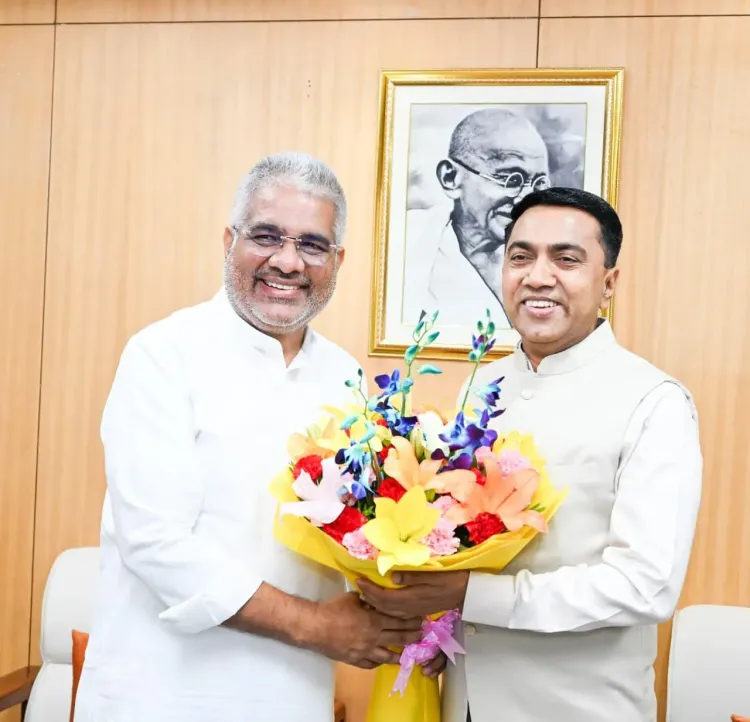
Synopsis
Goa Chief Minister Pramod Sawant held talks with Union Environment Minister Bhupender Yadav in New Delhi on June 1, 2026, focusing on sustainable development and green growth for the coastal state. The meeting reflects ongoing centre-state coordination on India's climate commitments and Goa's environmental priorities.
Key Takeaways
Goa CM Pramod Sawant met Union Minister Bhupender Yadav in New Delhi on June 1, 2026 .
Discussions centred on sustainable development and green growth priorities specific to Goa .
Goa has a State Action Plan on Climate Change aligned with India's Panchamrit strategy and net-zero by 2070 goal.
Coastal communities and the tourism sector are the primary stakeholders in any green growth framework for the state.
The meeting reflects routine but critical centre-state coordination on environmental governance within India's federal structure.
Follow-up action on coastal zone management and renewable energy targets for Goa will be closely watched.
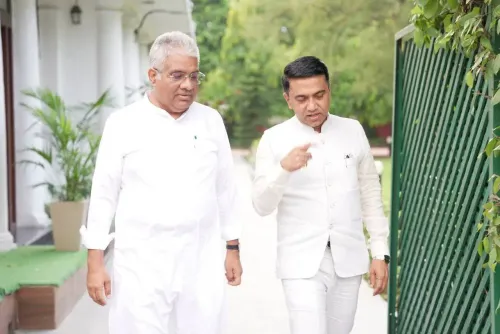
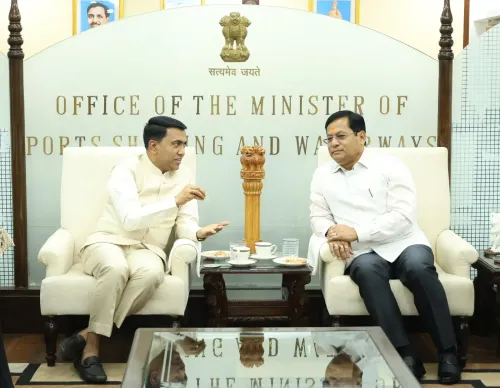
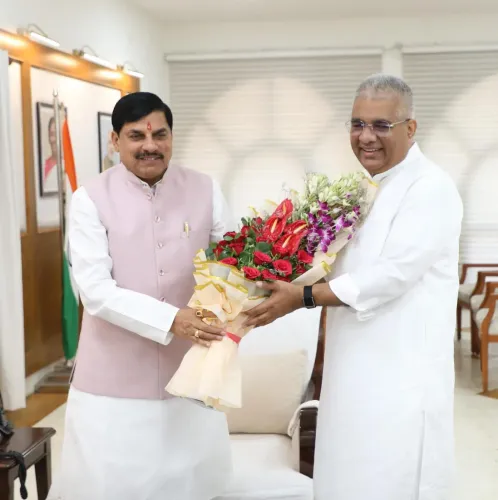
Goa Chief Minister Pramod Sawant met Union Minister for Environment, Forest and Climate Change Bhupender Yadav in New Delhi on Monday, June 1, 2026, holding discussions on sustainable development and green growth priorities for the coastal state.
Context
CM Sawant described the meeting as productive, saying he was 'pleased to meet and interact' with the Union Minister and that talks covered 'various aspects of sustainable development and green growth in Goa.' The bilateral interaction reflects the routine but important channel of centre-state coordination that shapes how national environmental policy is adapted at the state level.
Goa's economy is heavily anchored in coastal tourism, making the state particularly exposed to climate-related pressures including sea-level rise, erratic monsoons, and biodiversity stress in its Western Ghats and mangrove ecosystems.
Policy Backdrop
India committed to a net-zero emissions target by 2070 and the Panchamrit strategy at COP26 in 2021, setting ambitious benchmarks for renewable energy, carbon sink expansion, and emissions reduction. Goa subsequently aligned its State Action Plan on Climate Change with these national goals, covering adaptation and mitigation measures relevant to its coastal geography.
Union Minister Bhupender Yadav, who has held the environment portfolio since 2021, oversees key national programmes including the Green India Mission, pollution control frameworks, and India's negotiating position at international climate forums. His ministry also administers coastal regulation zone norms that directly govern development activity in states like Goa.
Stakeholders and Impact
Goa's coastal communities, fishing households, and the tourism sector — which collectively form the backbone of the state's economy — stand as the primary stakeholders in any green growth framework that emerges from such centre-state discussions. Sustainable tourism guidelines, mangrove conservation drives, and pollution abatement schemes can significantly affect livelihoods along the Konkan coastline.
National programmes for mangrove protection and marine biodiversity, channelled through the Ministry of Environment, Forest and Climate Change, depend on active state partnership for ground-level implementation. Goa's participation in India's updated Nationally Determined Contributions under the Paris Agreement requires exactly the kind of coordination this meeting represents.
What's Next
Observers will watch for the rollout of any joint initiatives on coastal zone management, renewable energy targets, or forest conservation projects that may follow from the discussions. Goa's positioning ahead of future Conference of Parties meetings could also be shaped by the policy alignment achieved through engagements like this one.
As India scales up its climate ambitions and state governments are increasingly called upon to deliver measurable outcomes, meetings between CM Sawant and central ministers signal that Goa intends to remain an active participant in the country's green transition rather than a passive recipient of central directives.
Point of View
Regulatory clarity, and scheme access. For Goa, a state where ecological health and economic prosperity are inseparable, such engagements carry outsized significance. The BJP's dual command of the state government and the central ministry also smooths political friction that might otherwise slow policy coordination. Longer term, the interaction fits into a broader pattern of India's sub-national units being drawn into the architecture of its Paris Agreement commitments, where state-level delivery is increasingly non-negotiable.
NationPress
21 Sept 2026
Frequently Asked Questions
Why did Goa CM Pramod Sawant meet Bhupender Yadav?
CM Pramod Sawant met Union Minister Bhupender Yadav in New Delhi on June 1, 2026 to hold discussions on sustainable development and green growth in Goa , covering various aspects of environmental policy and centre-state coordination.
What is Goa's State Action Plan on Climate Change?
Goa's State Action Plan on Climate Change is the state's framework to align with India's national climate goals, including adaptation and mitigation measures suited to its coastal geography and biodiversity hotspots.
What is Bhupender Yadav's role as Environment Minister?
Bhupender Yadav has served as Union Minister for Environment, Forest and Climate Change since 2021 , overseeing national forest policy, pollution control, the Green India Mission , and India's position in international climate negotiations.
How does Goa's environment connect to India's climate targets?
Goa participates in national programmes for mangrove conservation and pollution abatement that support India's updated Nationally Determined Contributions under the Paris Agreement and the country's net-zero by 2070 commitment.
What outcomes are expected from the Sawant-Yadav meeting?
Observers will watch for follow-up action on joint projects related to coastal zone management , renewable energy targets , and forest conservation in Goa , as well as the state's positioning ahead of future Conference of Parties meetings.