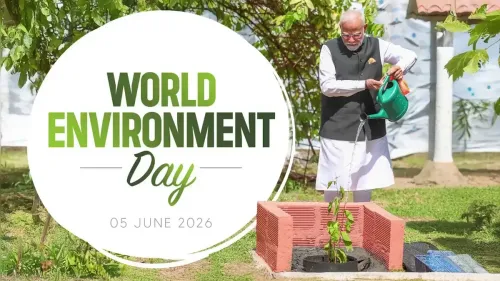
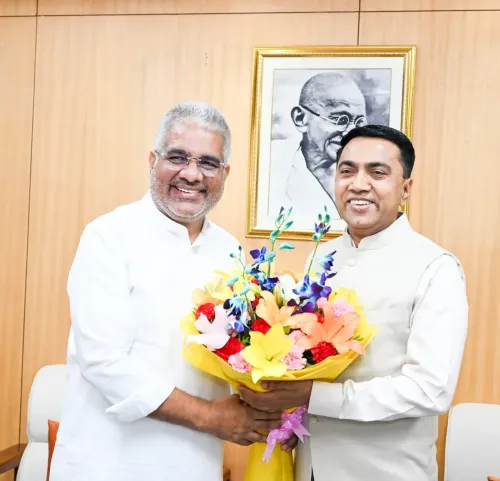
CM Sawant Calls for Collective Action on World Environment Day

Synopsis
On World Environment Day, June 5, 2026, Goa Chief Minister Pramod Sawant urged citizens to reaffirm collective responsibility for environmental protection, calling every step toward sustainability and conservation a contribution to a greener, healthier planet.
Key Takeaways
Goa Chief Minister Pramod Sawant posted a World Environment Day message on June 5, 2026 , calling for collective environmental responsibility.
He emphasised sustainability, conservation, and responsible living as pathways to 'a greener, and healthier planet.' World Environment Day was established by the UN General Assembly in 1972 and is observed globally every June 5 .
India ratified the Paris Agreement in 2016 , committing to reduce GDP emission intensity by 33–35 percent by 2030 .
Goa , as a coastal state with Western Ghats biodiversity and marine ecosystems, faces ongoing tension between tourism-led development and environmental conservation.
State-level implementation of climate commitments — including coastal zone management and renewable energy — will be watched in coming assembly sessions.
Goa Chief Minister Pramod Sawant on Friday, June 5, 2026, marked World Environment Day by calling on citizens to reaffirm their collective responsibility toward protecting the environment for future generations, urging every individual to embrace sustainability, conservation, and responsible living.
Context
World Environment Day is observed every year on June 5, a date established by the UN General Assembly in 1972 to encourage global awareness and action for environmental protection. It remains one of the largest global platforms for public outreach on ecological issues. Chief Minister Sawant's post, shared on the morning of the observance, urged that 'every small step towards sustainability, conservation, and responsible living contributes to a greener, and healthier planet.'
The message reflects a broader pattern among Indian state leaders of using international environmental observances to publicly align with national and global climate commitments. For Goa — India's smallest state by area and a coastal tourism hub — such messaging carries particular resonance given the state's ecological assets, including Western Ghats forests and fragile marine ecosystems.
Policy Backdrop
India ratified the Paris Agreement in 2016, committing to reduce the emission intensity of its GDP by 33–35 percent by 2030 under the UNFCCC framework. At the national level, the National Action Plan on Climate Change, launched in 2008, established eight missions covering solar energy, sustainable habitat, and water conservation — frameworks within which state governments, including Goa, are expected to operate.
Goa's coastline has been governed by successive Coastal Regulation Zone (CRZ) notifications, first issued in 1991 and periodically revised, to regulate development along sensitive shorelines. The state also participates in central schemes for mangrove conservation and renewable energy that predate the current administration. The Swachh Bharat Mission, launched nationally in 2014, extended waste management and environmental sanitation mandates to all states, including Goa.
Stakeholders and Impact
The message is directed at multiple constituencies: Goan residents, the state's substantial tourism sector, and coastal communities whose livelihoods depend on the health of marine and forest ecosystems. Tourism is a primary economic driver for Goa, making the balance between development and conservation a persistent policy tension for the state government.
Environmental advocates and civil society groups in the state have consistently pressed for stronger enforcement of coastal zone regulations and greater transparency in forest clearances. Chief Minister Sawant's call for 'responsible living' and conservation aligns with messaging from the BJP's national leadership, which has integrated environmental themes into its governance narrative alongside infrastructure development.
What's Next
Observers will watch for state-level follow-through, particularly any updates to Goa's climate action plan or new coastal zone management notifications expected in coming assembly sessions. The degree to which the World Environment Day statement translates into concrete policy announcements — on renewable energy targets, mangrove protection, or waste management — will be the measure of its significance beyond the observance itself.
As India continues to navigate its international climate obligations alongside domestic development pressures, statements from state chief ministers on days such as this serve as a gauge of sub-national political will on environmental governance.
Point of View
Signalling Goa's alignment with India's international climate commitments at a time when the state faces real pressure to reconcile coastal development with ecological preservation. For a BJP-governed state where tourism revenue and environmental regulation are in constant tension, such public messaging helps frame the party's identity on green issues without committing to specific policy targets. The statement fits a well-established sub-national pattern: leaders use global observances to reinforce national narratives, leaving the harder work of enforcement and legislation to quieter moments in the legislative calendar. Whether this translates into measurable action on coastal zone management or renewable energy will determine its lasting significance.
NationPress
21 Oct 2026
Frequently Asked Questions
What did Goa CM Pramod Sawant say on World Environment Day 2026?
Chief Minister Pramod Sawant called on citizens to reaffirm their collective responsibility to protect the environment for future generations, stating that every small step toward sustainability, conservation, and responsible living contributes to a greener and healthier planet.
When is World Environment Day observed and who established it?
World Environment Day is observed every year on June 5. It was established by the UN General Assembly in 1972 to encourage global awareness and action on environmental protection.
What are Goa's key environmental concerns?
Goa's primary environmental concerns include protecting its Western Ghats forests, marine and coastal ecosystems, and managing the impact of tourism and coastal development, governed in part by Coastal Regulation Zone notifications.
What is India's commitment under the Paris Agreement?
India ratified the Paris Agreement in 2016 and committed to reducing the emission intensity of its GDP by 33 to 35 percent by 2030 under the UNFCCC framework.
What national environmental schemes apply to Goa?
Goa participates in several central schemes including the National Action Plan on Climate Change launched in 2008, the Swachh Bharat Mission launched in 2014, and central programmes for mangrove conservation and renewable energy.