Piyush Goyal Marks World Environment Day, Cites India's Green Balance
Synopsis
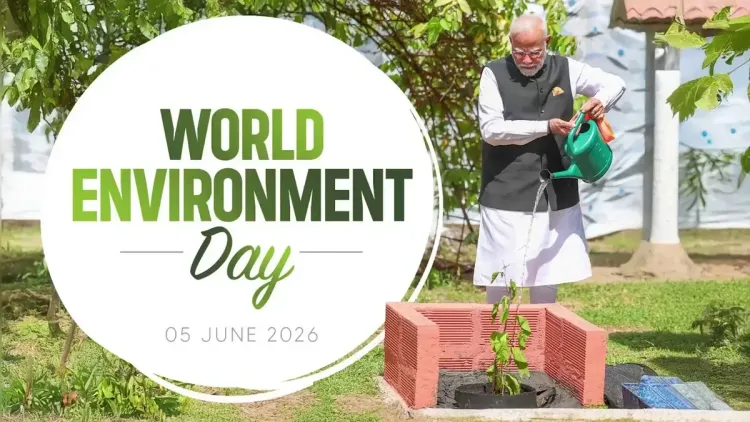
Commerce Minister Piyush Goyal marked World Environment Day on 5 June 2026, calling environmental protection a duty to future generations and urging citizens to join India's green mission. He credited PM Modi's leadership for making India a global example of balancing development with nature.
Key Takeaways
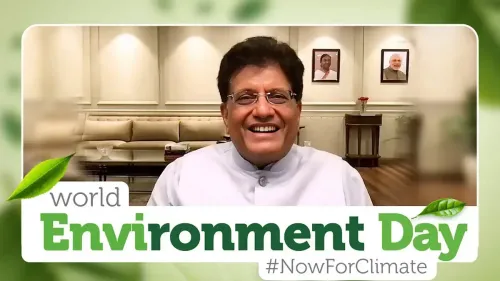
Commerce Minister Piyush Goyal posted a World Environment Day message on 5 June 2026 in Hindi, calling environmental protection a duty to future generations.
He credited Prime Minister Narendra Modi 's leadership for positioning India as a global model balancing development and nature.
The post invoked 'jan bhaagidaari' (public participation) to strengthen India's green resolve.
India's Panchamrit strategy, announced at COP26 in 2021 , includes a net-zero target by 2070 and 50 per cent non-fossil energy by 2030 .
The government's Mission LiFE campaign, launched in 2022 , promotes sustainable lifestyles through citizen engagement — consistent with Goyal's call to action.
India's updated NDCs ahead of COP31 will be the next major test of its stated development-ecology balance.
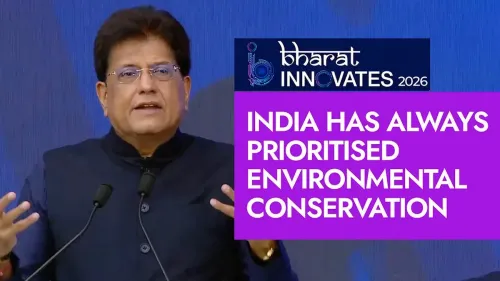
Union Commerce and Industry Minister Piyush Goyal marked World Environment Day on 5 June 2026 by calling environmental protection a duty to future generations and highlighting India's pursuit of development alongside ecological balance under Prime Minister Narendra Modi.
Context
Posting in Hindi on the occasion of World Environment Day, Goyal wrote: 'पर्यावरण संरक्षण केवल एक जिम्मेदारी नहीं, बल्कि भावी पीढ़ियों के प्रति हमारा कर्तव्य है' — 'Environmental protection is not merely a responsibility, but our duty towards future generations.' He called on citizens to strengthen this resolve through public participation, tagging the campaign hashtags #WorldEnvironmentDay and #NowForClimate.
The post frames India's climate ambition not as a regulatory burden but as a collective national mission, a framing consistent with the government's outward messaging at multilateral forums. Goyal, as a senior BJP leader and Leader of the House in the Rajya Sabha, carries weight beyond his commerce portfolio when he speaks on national priorities.
Policy Backdrop
India's dual-track approach — accelerating economic growth while expanding renewable capacity — has been a cornerstone of its international climate positioning. At COP26 in Glasgow in 2021, Prime Minister Modi unveiled the Panchamrit strategy, which includes a commitment to reach net-zero emissions by 2070 and source 50 per cent of energy from non-fossil fuels by 2030.
In 2022, the government launched Mission LiFE (Lifestyle for Environment), a public-participation campaign encouraging sustainable consumption habits at the individual level — precisely the 'jan bhaagidaari' (people's participation) that Goyal invoked in his post. India has also been a founding force behind the International Solar Alliance, positioning itself as a leader among developing nations on clean energy.
These initiatives form the policy lineage behind Goyal's message, which echoes the government's standard formulation: that development and nature are not in conflict but can be pursued in tandem as a 'global example.'
Stakeholders and Impact
The immediate audience for such messaging is the Indian public — particularly younger citizens and civil-society groups engaged in environmental action. By invoking 'future generations,' Goyal aligns with a global rhetorical register used by climate advocates and policymakers alike on World Environment Day, which is observed in 195 countries under United Nations auspices every 5 June.
For India's trading partners and international investors, statements from senior ministers on climate commitment also serve as signals of policy continuity. Commerce Ministry portfolios intersect with green trade rules, carbon border adjustments being debated in the European Union, and sustainability standards in export markets — giving Goyal's voice on this topic practical diplomatic relevance beyond symbolism.
What's Next
Attention will turn to India's updated Nationally Determined Contributions (NDCs) ahead of COP31, where the country's stated balance between growth and ecology will face scrutiny from both domestic constituencies and international partners. State-level green action plans and the scaling of Mission LiFE outreach will be key indicators of whether the public-participation mandate Goyal described translates into measurable policy momentum.
Point of View
And attributing global credibility to PM Modi's personal leadership. The invocation of public participation mirrors the grassroots branding of Mission LiFE, suggesting the government is keen to sustain that campaign's visibility. For a Commerce Minister, the statement also carries a subtle trade-policy signal — that India's development agenda and its green commitments are officially presented as compatible, a position with direct relevance to carbon-border debates in export markets. The message reinforces a long-standing government arc: India as a responsible, proactive climate actor, not a reluctant follower.
NationPress
20 Oct 2026
Frequently Asked Questions
Why did Piyush Goyal post about World Environment Day?
Goyal posted on 5 June 2026 to mark World Environment Day , calling environmental protection a duty to future generations and urging citizens to participate in India's green mission.
What is India's climate commitment under PM Modi?
Under PM Modi , India announced the Panchamrit strategy at COP26 in 2021 , pledging net-zero emissions by 2070 and 50 per cent energy from non-fossil sources by 2030 , alongside the International Solar Alliance .
What is Mission LiFE and how does it relate to Goyal's message?
Mission LiFE (Lifestyle for Environment) , launched in 2022 , encourages sustainable consumption habits among ordinary citizens — directly reflecting the 'public participation' Goyal called for in his post.
What is World Environment Day?
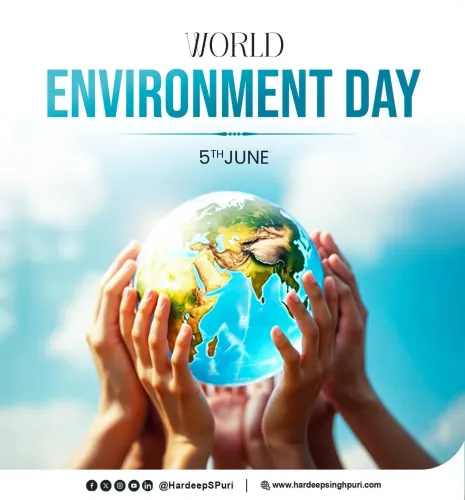
World Environment Day is a United Nations -designated annual observance held every 5 June to promote global environmental awareness and action, observed in 195 countries .
What comes next for India's climate policy?
India is expected to submit updated Nationally Determined Contributions (NDCs) ahead of COP31 , which will be closely watched as the next concrete test of its development-and-ecology balance.