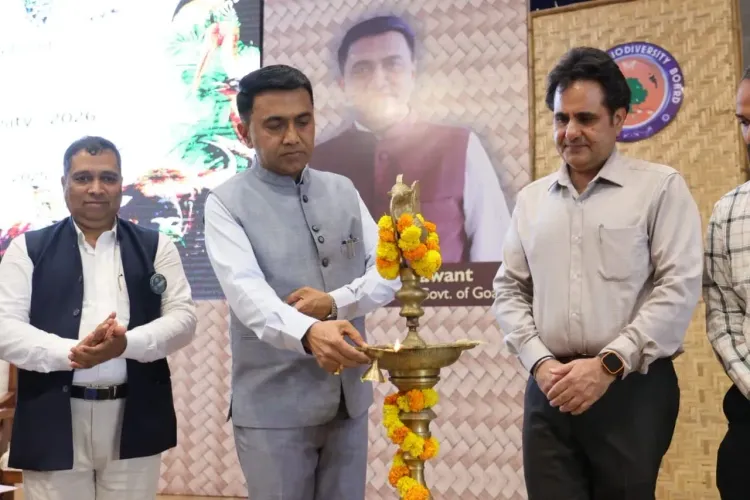
Goa CM Sawant addresses International Biodiversity Day 2026
Synopsis
Goa Chief Minister Dr. Pramod Sawant addressed the International Day for Biodiversity 2026, co-organised by the Goa State Biodiversity Board and the National Biodiversity Authority under the theme 'Acting Locally For Global Impact', reinforcing the state's role in India's decentralised biodiversity governance framework.
Key Takeaways
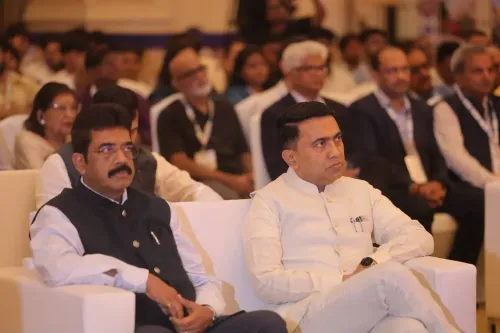
Pramod Sawant attended and addressed the International Day for Biodiversity 2026 in Goa on 22 May 2026 .
The event was jointly organised by the Government of Goa , the Goa State Biodiversity Board , and the National Biodiversity Authority .
The theme for the 2026 observance was 'Acting Locally For Global Impact' .
India's biodiversity governance operates through a three-tier system established under the Biological Diversity Act, 2002 .
Goa sits within the Western Ghats biodiversity hotspot, making state-level conservation efforts globally significant.
Follow-up action on Goa's biodiversity action plan and local committee activations will be key indicators of the event's impact.
Chief Minister Dr. Pramod Sawant of Goa attended and addressed the International Day for Biodiversity 2026 event on 22 May 2026, organised jointly by the Government of Goa, the Goa State Biodiversity Board, and the National Biodiversity Authority under the theme 'Acting Locally For Global Impact'.
Context
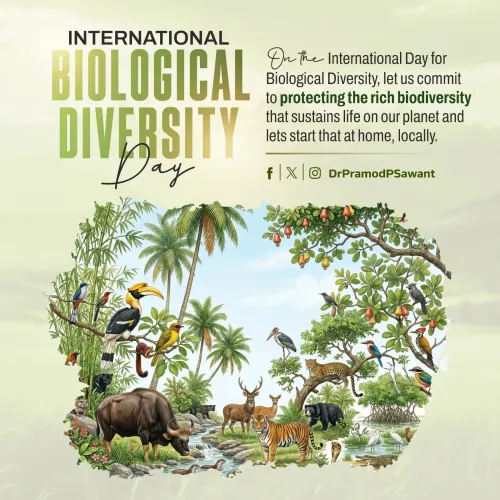
The International Day for Biodiversity has been observed annually on 22 May since 2002, under the UN Convention on Biological Diversity, to which India is a signatory. This year's theme — 'Acting Locally For Global Impact' — underscores the role of sub-national governments and local communities in meeting global conservation targets. Goa's participation, anchored by the Chief Minister's direct address, signals the state's commitment to embedding biodiversity concerns into its governance agenda.
Policy Backdrop
India's biodiversity governance rests on the Biological Diversity Act, 2002, which established a three-tier institutional framework: the National Biodiversity Authority (NBA) at the national level, State Biodiversity Boards at the state level, and Biodiversity Management Committees at the local level. The National Biodiversity Authority, headquartered in Chennai, was set up in 2003 as an autonomous body to regulate access to biological resources and oversee benefit-sharing arrangements. The Goa State Biodiversity Board operates as the state's statutory arm, responsible for documenting biological resources and promoting their sustainable use across the coastal and forest-rich territory.
Events co-organised with the NBA reflect a deliberate effort to align state-level action with national biodiversity targets and India's international commitments under the Convention on Biological Diversity.
Stakeholders and Impact
Goa's biodiversity profile is shaped by its position on the Western Ghats — a globally recognised biodiversity hotspot — as well as its extensive coastline and marine ecosystems. Local Biodiversity Management Committees, the tourism sector, and coastal and forest communities are the primary stakeholders in any state-level biodiversity initiative. The theme of local action for global impact directly speaks to these groups, encouraging grassroots stewardship of natural resources. For Goa's tourism-dependent economy, sustainable biodiversity management is also an economic imperative, as the state's natural landscapes are central to its appeal.
What's Next
Observers will watch for any new commitments emerging from the event, including updates to Goa's biodiversity action plan or fresh activations of local Biodiversity Management Committees across the state's talukas. The event also sets a marker for how actively Goa engages with the post-Kunming-Montreal Global Biodiversity Framework targets that India has pledged to pursue. Sustained follow-through at the local level — beyond ceremonial observances — will determine whether this year's theme translates into measurable conservation outcomes.
Point of View
Not merely a passive recipient of central policy. The choice of theme, 'Acting Locally For Global Impact', aligns with India's post-Kunming-Montreal Framework obligations and signals that state governments are being drawn into the accountability chain for global biodiversity targets. For Goa, where tourism revenue and ecological health are structurally intertwined, such high-profile observances carry both symbolic and practical weight. The real test, however, lies in whether the event catalyses concrete local-level action — new biodiversity management committees, updated people's biodiversity registers, or measurable habitat protection commitments.
NationPress
7 Oct 2026
Frequently Asked Questions
What is the International Day for Biodiversity and when is it observed?
The International Day for Biodiversity is a UN observance held annually on 22 May to raise awareness about biodiversity issues. It has been observed since 2002 under the UN Convention on Biological Diversity.
What was the theme of International Day for Biodiversity 2026?
The theme for International Day for Biodiversity 2026 was 'Acting Locally For Global Impact', emphasising the role of local and state-level action in achieving global conservation goals.
What is the Goa State Biodiversity Board?
The Goa State Biodiversity Board is a statutory body under the Government of Goa, established under the Biological Diversity Act, 2002. It is responsible for conserving biodiversity, documenting biological resources, and promoting their sustainable use across the state.
What is the National Biodiversity Authority of India?
The National Biodiversity Authority is a Chennai-based autonomous body set up in 2003 to implement the Biological Diversity Act, 2002. It regulates access to India's biological resources and oversees benefit-sharing arrangements at the national level.
Why is Goa important for biodiversity conservation in India?
Goa is ecologically significant because it lies within the Western Ghats, a globally recognised biodiversity hotspot, and has extensive coastal and marine ecosystems. The state's biodiversity is also closely linked to its tourism economy, making conservation a dual environmental and economic priority.