CM Sawant Opens Goa FTA Workshop to Boost MSME Exports
Synopsis
Goa Chief Minister Pramod Sawant inaugurated a state-level FTA awareness workshop in Panaji on 19 October 2026, urging MSMEs and entrepreneurs to leverage India's trade agreements and pitching GI-tagged Goan products, Mormugao Port and Manohar International Airport as pillars of the state's export ambition.
Key Takeaways
Goa CM Pramod Sawant inaugurated the state-level FTA workshop in Panaji on 19 October 2026 .
The event was jointly organised by Goa's Directorate of Industries, Trade and Commerce and the Ministry of Commerce and Industry .
GI-tagged products — cashew, feni, mangoes and bebinca — were highlighted as Goa's key export assets for global markets.
Mormugao Port and Manohar International Airport were cited as strategic infrastructure enabling trade and exports.
The workshop aligned Goa's trade push with PM Modi's Make in India initiative, launched in 2014 .
Focus areas included quality upgrades, international certification, packaging improvements and export market linkages for MSMEs .
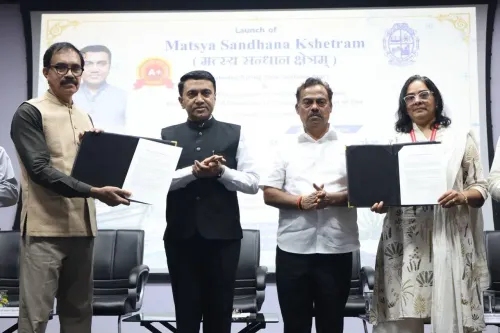
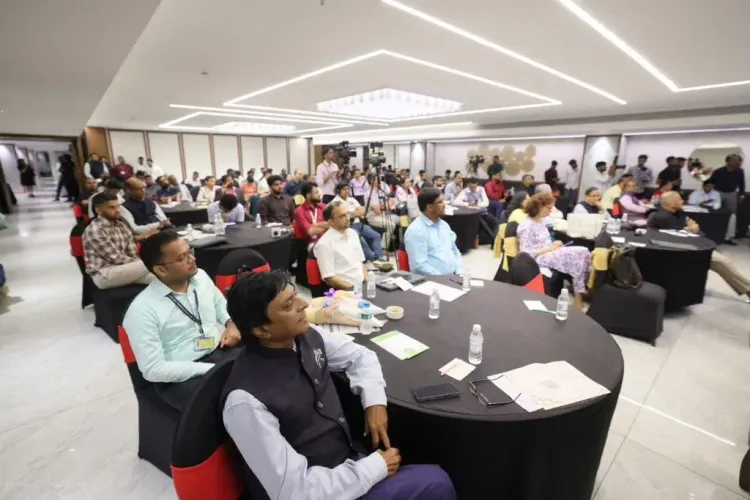
Goa's GI-tagged cashew, feni, mangoes and bebinca could soon find their way onto supermarket shelves in Tokyo, Seoul and Dubai — if the state can turn national trade agreements into local export wins. Goa Chief Minister Pramod Sawant on Monday, 19 October 2026, inaugurated a state-level workshop on 'Leveraging Free Trade Agreements (FTAs)' in Panaji, bringing together policymakers, industry representatives and trade experts to map exactly that path.
Goa's GI Products in the Global Spotlight
The workshop was jointly organised by the Directorate of Industries, Trade and Commerce, Government of Goa, in collaboration with the Ministry of Commerce and Industry, Government of India, and the Office of the Additional Director General of Foreign Trade, Mumbai. CM Sawant used the platform to highlight the export potential of Goa's most distinctive products — GI-tagged cashew, feni, mangoes and bebinca — arguing that improved quality standards, modern packaging, international certification and targeted marketing could carry these brands to global markets.
For Goa's MSMEs and entrepreneurs, the message was direct: India's expanding FTA network with ASEAN, Japan and South Korea already opens doors; the state's job is to make sure local businesses are ready to walk through them.
Ports, Airports and Highways: Goa's Trade Infrastructure Case
Sawant pointed to the state's strategic logistics backbone as a structural advantage. Mormugao Port, one of the country's major seaports for cargo handling, combined with the newly operational Manohar International Airport and improving highway connectivity, gives Goa a credible multimodal trade corridor — not just a picturesque coastline.
The argument matters because infrastructure readiness is often what separates a state that benefits from an FTA and one that simply watches the gains flow elsewhere. Goa is making the case it belongs in the first category.
Make in India, Made in Goa
Invoking the vision of Prime Minister Narendra Modi, CM Sawant reaffirmed the state's alignment with the Make in India initiative — launched in 2014 to position India as a global manufacturing and export hub. The workshop fits squarely into a broader central government playbook: push FTA awareness down to the state and district level so that exporters, not just negotiators, actually benefit from the agreements signed in New Delhi.
Goa's pitch is specific rather than generic. Rather than offering only land parcels and tax breaks, the state is anchoring its export identity in products that carry a protected geographical indication — a built-in quality signal that resonates in premium international markets.
The next test is follow-through: GI certification drives, packaging upgrades, and direct market linkages for Goan exporters will determine whether Monday's workshop translates into invoices — or just intentions.
Point of View
But the gains only materialise when states build local export capacity. Goa's emphasis on GI-tagged products is politically and commercially astute — protected geographical indications command premium pricing in international markets and are difficult for competitors to replicate. The invocation of Mormugao Port and Manohar International Airport signals that the state is framing trade readiness as an infrastructure story, not just a policy wish. Whether Goa can convert workshop momentum into measurable export growth for its MSMEs will be the real verdict on this initiative.
NationPress
20 Oct 2026
Frequently Asked Questions
What was the FTA workshop inaugurated by Goa CM Pramod Sawant about?
The state-level workshop on 'Leveraging Free Trade Agreements' in Panaji focused on helping Goan MSMEs, businesses and entrepreneurs understand how India's FTAs with countries like those in ASEAN, Japan and South Korea can open international markets for Goan products.
Which Goa products were highlighted for export at the FTA workshop?
CM Sawant spotlighted GI-tagged Goan products — cashew, feni, mangoes and bebinca — as candidates for global markets, citing the need for improved quality, packaging, certification and international marketing.
Who organised the Goa FTA workshop in October 2026?
The workshop was organised by the Directorate of Industries, Trade and Commerce, Government of Goa, in collaboration with the Ministry of Commerce and Industry, Government of India, and the Office of the Additional Director General of Foreign Trade, Mumbai.
How does Mormugao Port help Goa's export ambitions?
Mormugao Port is a major seaport handling international cargo and, along with Manohar International Airport and highway connectivity, forms the multimodal trade infrastructure CM Sawant cited as a competitive advantage for Goa's exports.
What is India's Make in India initiative and how does it relate to Goa's FTA push?
Make in India is a national initiative launched in 2014 to boost manufacturing, exports and global competitiveness. The Goa FTA workshop aligns with this vision by building state-level export capacity so local MSMEs can benefit from centrally negotiated trade agreements.