Goyal Launches State-Level FTA Outreach to Boost Exports
Synopsis
Commerce Minister Piyush Goyal has launched state-level FTA outreach events, starting with Goa, to help MSMEs, farmers, and small businesses leverage India's trade deals with UAE and Australia and grow exports.
Key Takeaways
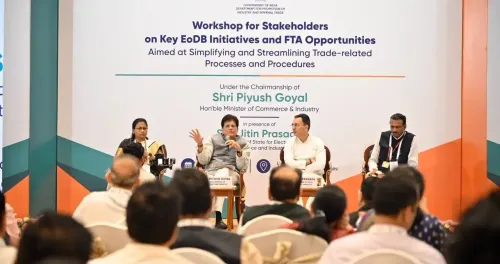
The Department of Commerce is organising dedicated FTA outreach events in collaboration with state governments to raise awareness among MSMEs, farmers, and small businesses.
Pramod Sawant participated in the first such event, the only state-level figure named in the announcement.
India's recent FTAs include the UAE CEPA (February 2022) and the Australia ECTA (April 2022) , offering preferential market access across a wide range of products.
The Foreign Trade Policy 2023 was launched to complement these agreements and ease doing business for exporters.
The initiative specifically targets farmers, women, youth, workers, and MSMEs to broaden the base of 'Made in India' exports.
More outreach events are planned across all states , each tailored to regional export strengths.
India's trade deals are only as powerful as the businesses that use them — and Union Commerce and Industry Minister Piyush Goyal is now pushing hard to close that gap. On Wednesday, October 21, 2026, Goyal announced a dedicated nationwide FTA outreach programme led by the Department of Commerce (DoC), designed to carry the benefits of India's recent free trade agreements directly to farmers, workers, MSMEs, and small businesses at the state level.
Goa kicks off the state-by-state push
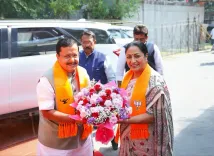
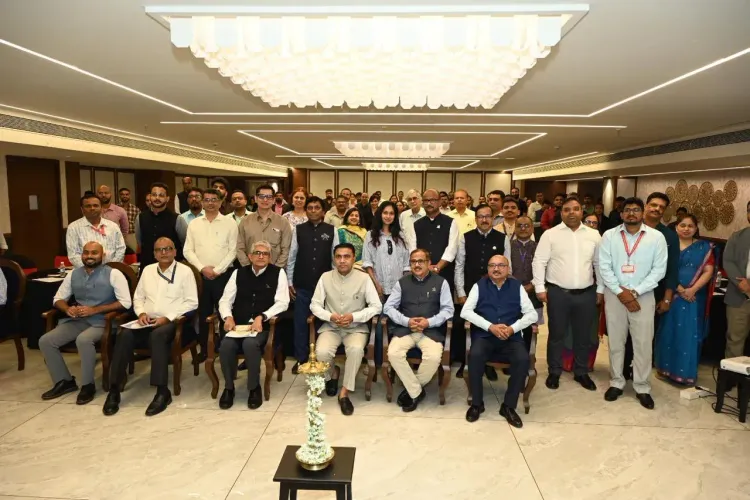
The first visible leg of the initiative featured Goa Chief Minister Dr. Pramod Sawant, whose participation Goyal specifically acknowledged. The minister credited Sawant for 'encouraging local businesses to explore new export markets' — a signal that the Centre intends to co-opt state governments as active partners, not passive bystanders, in the export drive. The event was organised by the Department of Commerce in collaboration with the Goa state government.
Goyal's message was direct: 'More such initiatives will be organised across the country to help every state unlock its unique export potential.' That framing — state-specific potential, not a one-size-fits-all push — marks a deliberate shift in how New Delhi is approaching trade policy implementation.
The FTA pipeline: UAE, Australia, and beyond
The backdrop is a flurry of landmark agreements. India signed the Comprehensive Economic Partnership Agreement (CEPA) with the UAE in February 2022 and the Economic Cooperation and Trade Agreement (ECTA) with Australia in April 2022. Together, they represent India's most significant bilateral trade deals in years, opening preferential access across hundreds of product categories. The Foreign Trade Policy 2023 was subsequently launched to improve ease of doing business for exporters, with a specific focus on MSMEs and smaller enterprises.
Yet awareness and utilisation of FTA provisions — particularly among micro-enterprises and first-time exporters — has historically lagged behind the headline ambitions of any trade deal. The outreach programme appears directly aimed at that utilisation gap.
Made in India products, global shelves
Goyal framed the initiative squarely around human outcomes: the goal is enabling 'farmers, workers, women, youth, MSMEs and small businesses' to take 'Made in India' products to global markets. That language is significant — it positions FTA outreach not merely as a trade-ministry exercise, but as an economic inclusion agenda, extending the reach of preferential market access to constituencies that have rarely benefited from bilateral deals.
The Department of Commerce is set to replicate the Goa model in additional states, with each programme calibrated to the specific export strengths of the region. Watch for uptake in states with concentrated MSME clusters — textiles in Gujarat, spices and seafood in Kerala, engineering goods in Maharashtra — as the most likely early targets for the rollout.
India's export machine has the architecture. The question now is whether the last mile reaches the artisan, the farmer, and the small factory floor. If this programme scales, the answer could reshape the country's export composition from the ground up.
Point of View
Which is where the real economic dividend is captured. By looping in state governments and targeting MSMEs explicitly, the Commerce Ministry is tacitly acknowledging that headline FTA numbers have outpaced ground-level awareness. The political calculus is equally clear: in an economy where MSMEs employ hundreds of millions, making trade deals visible and tangible to small producers is as much an electoral and social narrative as it is a trade-policy tool. If utilisation rates rise measurably, it validates the government's entire post-2022 FTA sprint.
NationPress
21 Oct 2026
Frequently Asked Questions
What is the FTA outreach programme announced by Piyush Goyal?
The Department of Commerce is organising state-level events in partnership with state governments to help MSMEs, farmers, women, youth, and small businesses understand and use India's free trade agreements to export 'Made in India' products to global markets.
Which FTAs has India signed that this programme targets?
The key agreements are the Comprehensive Economic Partnership Agreement (CEPA) with the UAE signed in February 2022 and the Economic Cooperation and Trade Agreement (ECTA) with Australia signed in April 2022.
What was Goa's role in the FTA outreach initiative?
Goa hosted one of the first FTA outreach events under the programme, with Chief Minister Dr. Pramod Sawant participating and encouraging local businesses to explore new export markets.
Why is FTA utilisation a problem for Indian MSMEs?
Small businesses and first-time exporters often lack awareness of the preferential tariff benefits available under FTAs, meaning the market access won through negotiations goes unused — the outreach programme is designed to close that gap.
Will more states get similar FTA outreach events?
Yes. Goyal confirmed that more events will be organised across the country, with each programme tailored to help individual states unlock their specific export potential under India's trade agreements.