NRRs are Rajasthan's global brand ambassadors, says CM Bhajanlal Sharma
Synopsis
Rajasthan CM Bhajanlal Sharma used a Jaipur diaspora dialogue to reframe NRRs not as nostalgic visitors but as active economic agents — announcing 11 new Rajasthan Foundation chapters, an ₹80,000 crore refinery complex and a raft of ease-of-doing-business reforms, while setting two major diaspora summits for December.
Key Takeaways
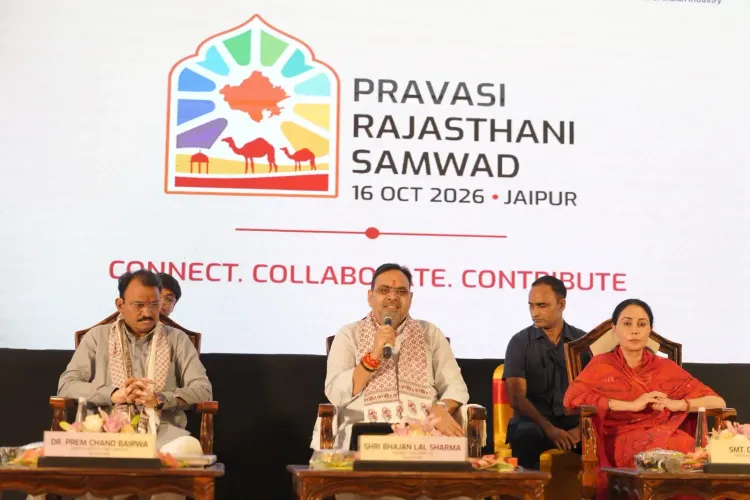
CM Bhajanlal Sharma addressed Non-Resident Rajasthanis at the Rajasthan International Centre, Jaipur on 16 October 2026 .
11 new chapters of the Rajasthan Foundation were announced alongside the coffee table book Vikas Ke Sahbhagi .
MSME Consent to Operate time cut from 120 days to 30 days ; 'White' category industries grew from 104 to 877 .
A greenfield refinery and petrochemical complex is being developed at an estimated cost of ₹80,000 crore .
The Karmabhumi Se Matrubhumi campaign has built approximately 62,000 water conservation structures.
The Pravasi Rajasthani Sammelan is scheduled for 10 December and the Shekhawati Heritage Meet for 8 December .
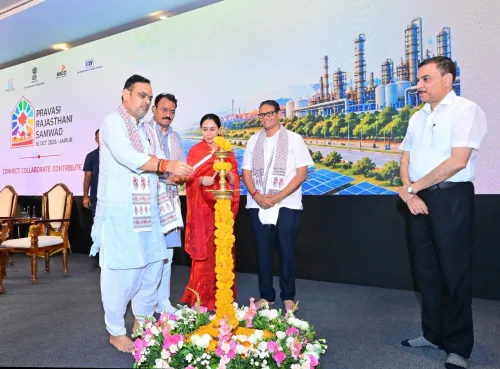
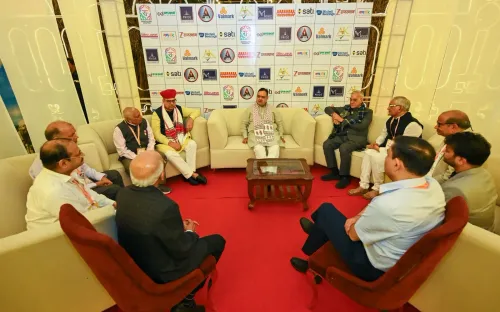
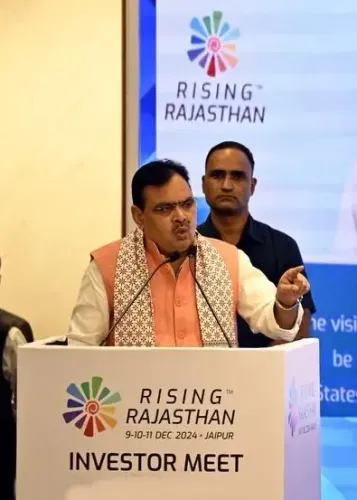
Rajasthan Chief Minister Bhajanlal Sharma on Friday, 16 October 2026, described Non-Resident Rajasthanis (NRRs) as global brand ambassadors of the state's rich culture and heritage, urging the diaspora to channel their connections into investment, entrepreneurship and social development. Addressing a dialogue programme at the Rajasthan International Centre in Jaipur, Sharma called for promoting the spirit of Padharo Thare Desh (Come back to your homeland) alongside the traditional welcome of Padharo Mhare Desh (Welcome to our land).
New Chapters and Policy Initiatives
At the event, Sharma announced 11 new chapters of the Rajasthan Foundation and unveiled a coffee table book titled Vikas Ke Sahbhagi (Partners in Development). He described the Rajasthan Foundation as a critical bridge connecting the diaspora with investment opportunities and social development initiatives back home.
On the policy front, the state government has established the Department of Domestic and Overseas Rajasthan Affairs, launched the Rajasthan Development Support Portal, introduced the NRR Policy-2025, and set up a District NRR Cell in every district — each cell mandated to organise at least one dialogue programme annually.
Infrastructure and Connectivity Push
Sharma said Rajasthan had witnessed unprecedented infrastructure expansion, attributing much of the momentum to the leadership of Prime Minister Narendra Modi. Several inter-state water agreements and projects are under way, including the Yamuna Water Agreement, the Narmada Agreement, the Kishau Multipurpose Project, and various water-linking initiatives aimed at improving availability across the state.
He added that Rajasthan had progressed from meeting its own electricity requirements to supplying power to other states. To bolster connectivity, nine greenfield expressways are being developed alongside an expansion in air connectivity.
Ease of Doing Business and Investment Climate
On the ease of doing business, Sharma highlighted that the time limit for obtaining Consent to Operate for MSME units had been reduced from 120 days to 30 days, while the limit for large industries had been set at 60 days. The number of industries classified under the environmentally benign 'White' category has grown from 104 to 877.
Around 190 services from 18 government departments are now accessible through the Raj Nivesh investment portal. The government is also promoting industrial growth through the Rajasthan Industrial Park Promotion Policy-2026, the Rajasthan Investment Promotion Scheme, the Rajasthan MSME Policy, and the One District-One Product policy. The state currently has 472 industrial areas housing approximately 46,000 operational industrial units.
A greenfield refinery and petrochemical complex being developed at an estimated cost of ₹80,000 crore is expected to emerge as a major economic growth driver, creating opportunities for both small and large industries.
Heritage, Tourism and Water Conservation
Sharma underscored the government's commitment to preserving Rajasthan's cultural legacy while pursuing development. A heritage tourism circuit is being developed across Sikar, Jhunjhunu and Churu, and 662 historic havelis in the Shekhawati region have been identified for preservation. The Shekhawati Heritage Meet is scheduled for 8 December to spotlight the region's architectural and cultural heritage.
On water conservation, the Karmabhumi Se Matrubhumi campaign has facilitated the construction of approximately 62,000 groundwater recharge and water conservation structures. Sharma also invited the Rajasthani diaspora to attend the Pravasi Rajasthani Sammelan on 10 December.
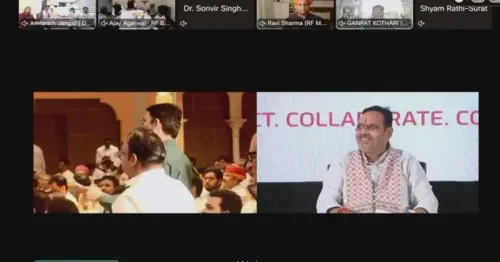
The dialogue was attended by diaspora representatives including Amraram Jangid from Dubai, Ravi Sharma from Melbourne, Sonveer Singh from Nairobi, Kailash Jhalani from New York, and Kanishk Yadav from Delhi, among others. With two flagship events on the horizon and a raft of investment-friendly reforms in place, all eyes will be on whether the diaspora translate this engagement into tangible capital flows into Rajasthan.
Point of View
000 crore refinery complex and the ease-of-doing-business reforms are substantive signals, yet the one-dialogue-per-district mandate for NRR Cells could prove tokenistic without measurable investment pipelines attached. Whether December's twin diaspora summits generate binding commitments or remain goodwill events will be the real indicator of this strategy's seriousness.
NationPress
16 Oct 2026
Frequently Asked Questions
What did Rajasthan CM Bhajanlal Sharma announce for NRRs on 16 October 2026?
CM Bhajanlal Sharma announced 11 new chapters of the Rajasthan Foundation and unveiled a coffee table book titled Vikas Ke Sahbhagi at a diaspora dialogue in Jaipur. He also outlined a suite of investment-friendly reforms under the NRR Policy-2025 and invited the diaspora to two flagship events in December.
What is the NRR Policy-2025 and how does it benefit Non-Resident Rajasthanis?
The NRR Policy-2025 is a state government initiative designed to connect the Rajasthani diaspora with investment and social development opportunities in Rajasthan. It is supported by the Rajasthan Development Support Portal, a dedicated Department of Domestic and Overseas Rajasthan Affairs, and a District NRR Cell in every district.
What is the ₹80,000 crore refinery project in Rajasthan?
Rajasthan is developing a greenfield refinery and petrochemical complex at an estimated cost of ₹80,000 crore, which is expected to become a major economic growth engine for the state. The project is also anticipated to generate supply-chain opportunities for both small and large industries.
What are the upcoming diaspora events Rajasthan has announced?
The Pravasi Rajasthani Sammelan is scheduled for 10 December and the Shekhawati Heritage Meet for 8 December 2026. Both events aim to strengthen ties between the global Rajasthani community and the state, focusing on investment, cultural heritage and tourism.
How has Rajasthan improved its ease of doing business for investors?
The state has reduced the time to obtain Consent to Operate for MSME units from 120 days to 30 days, with a 60-day limit for large industries. The number of industries in the environmentally benign 'White' category has also expanded from 104 to 877, and around 190 services from 18 departments are now available on the Raj Nivesh portal.