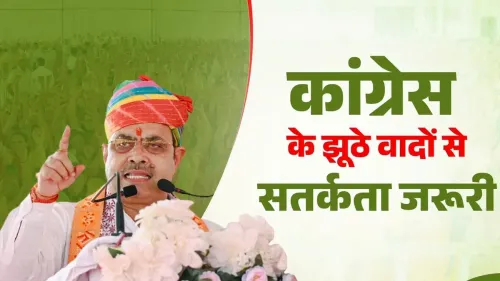
CM Bhajan Lal Sharma targets Congress over Rajasthan exam scams
Synopsis
Rajasthan CM Bhajan Lal Sharma accused the previous Congress government of enabling paper leaks and exam irregularities that crushed youth aspirations, pledging his BJP administration has overhauled recruitment to ensure merit-based, transparent processes.
Key Takeaways
CM Bhajan Lal Sharma posted on 30 September 2026 contrasting his government's recruitment reforms with Congress-era exam scandals.
Between 2018 and 2023 , Rajasthan saw multiple paper leak incidents in state recruitment exams, including the high-profile REET 2021 controversy.
The RPSC (Rajasthan Public Service Commission) faced heightened scrutiny during the Congress-led government's tenure.
The BJP won the December 2023 Rajasthan assembly elections partly on a platform of transparent and fair recruitments.
Sharma's post frames merit-based recruitment as a core governance promise, with forthcoming exam cycles serving as the litmus test.
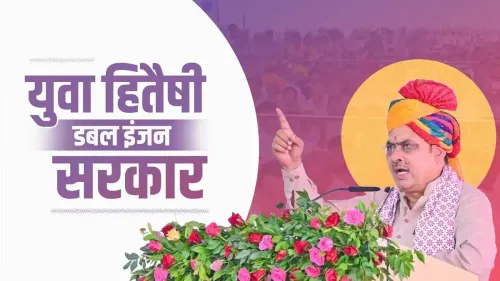
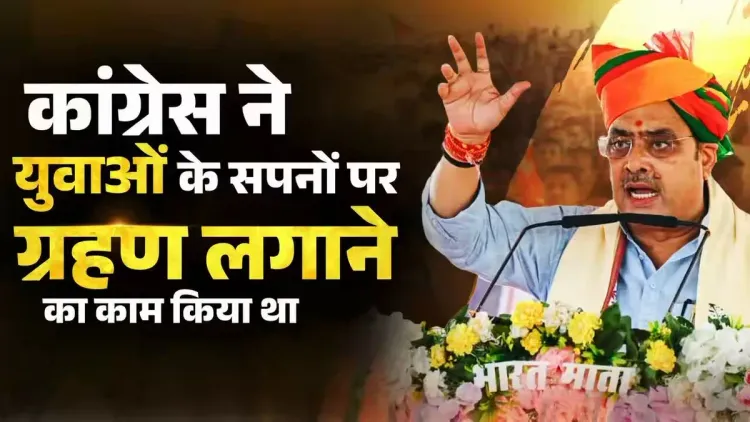
Paper leaks once stole futures in Rajasthan — and Rajasthan Chief Minister Bhajan Lal Sharma wants every job aspirant in the state to know that era is over. On Wednesday, 30 September 2026, Sharma took to X to draw a sharp contrast between what he called the Congress government's era of irregularities and his administration's push for clean, transparent recruitment.
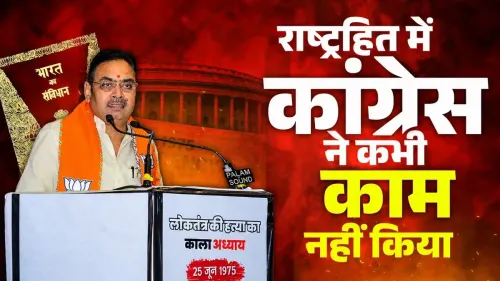
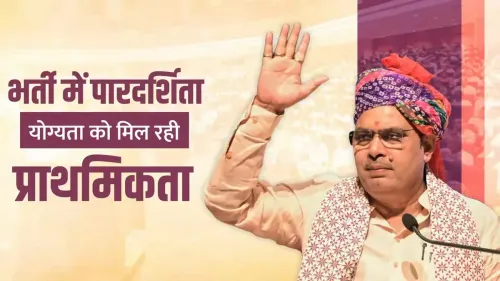
Posting in Hindi, Sharma wrote: 'Kāṃgres ke kāryakāl meṃ pepar līk aur bhartī parīkṣāoṃ kī aniyamitatāoṃ ne yuvāoṃ ke sapnoṃ par grahaṇ lagāne kā kām kiyā thā' — 'During the Congress tenure, paper leaks and irregularities in recruitment examinations eclipsed the dreams of young people.' He added that his government had 'brought systemic change, making recruitment examinations transparent and orderly, so that youth can advance on the basis of their hard work and merit.'
The paper-leak crisis that defined Rajasthan's Congress years
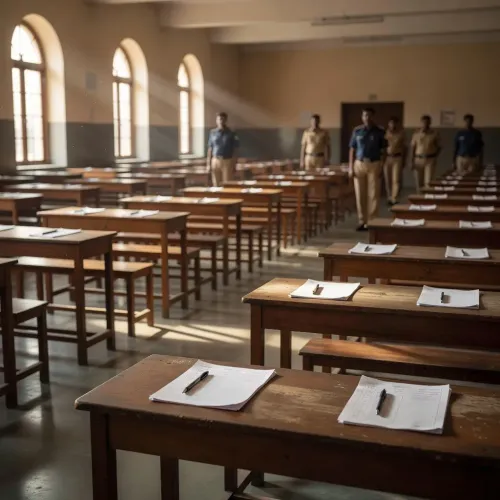
Between 2018 and 2023, Rajasthan became a byword for recruitment exam controversies. The Rajasthan Eligibility Examination for Teachers (REET), held in 2021, faced serious paper leak allegations, triggering protests across the state by hundreds of thousands of aspirants who had spent years preparing. The Rajasthan Public Service Commission (RPSC), the nodal body for state competitive exams, also came under scrutiny during this period.
For a generation of government-job aspirants — often from small towns and villages with few private-sector alternatives — each botched examination meant months of preparation wasted and financial strain deepened. The political salience of this issue was acute enough to feature prominently in the BJP's 2023 assembly election campaign, which culminated in a decisive victory and Sharma's installation as Chief Minister in December 2023.
Sharma's administration frames reform as a generational correction
Since taking office, the Sharma government has consistently positioned recruitment reform as a flagship governance promise — a direct answer to what it describes as the Congress-era breakdown of institutional integrity. Today's post reinforces that framing ahead of subsequent examination cycles being watched closely by lakhs of aspirants across the state.
The broader pattern is not unique to Rajasthan: competitive exam controversies have triggered protests in multiple Indian states, making clean recruitment a potent political issue nationally. Sharma's message targets precisely this nerve — signalling to youth voters that the administration's credibility rests on delivering the fair shot it promised them.
The real test, of course, is the scoreboard: the integrity of examinations yet to be conducted and the speed with which verified results reach deserving candidates. Rajasthan's aspirants are watching — and they have already shown they will make their verdict count at the ballot box.
Point of View
The BJP keeps the 2023 mandate alive in public memory and pre-empts any opposition attempt to reclaim the youth-welfare space. The broader significance is that clean competitive exams have emerged as a tier-one governance indicator across Indian states, and whichever party is seen as the custodian of that fairness holds a durable advantage with first-time voters and aspirant families. The real accountability moment, however, lies not in the post but in the results of the next major state recruitment examination.
NationPress
30 Sept 2026
Frequently Asked Questions
What paper leaks occurred in Rajasthan during the Congress government?
Between 2018 and 2023, multiple Rajasthan recruitment exams were hit by paper leak allegations. The most prominent was the REET (Rajasthan Eligibility Examination for Teachers) in 2021, which sparked widespread protests by teaching aspirants across the state.
What did CM Bhajan Lal Sharma say about recruitment exams in Rajasthan?
On 30 September 2026, CM Sharma stated that Congress-era paper leaks and irregularities had 'eclipsed the dreams of youth,' and that his government had made recruitment examinations transparent and merit-based through systemic reforms.
What is the RPSC and why is it significant?
The RPSC (Rajasthan Public Service Commission) is the state body responsible for conducting competitive examinations for government jobs in Rajasthan. It came under scrutiny during 2018-2023 amid allegations of exam irregularities.
When did Bhajan Lal Sharma become Chief Minister of Rajasthan?
Bhajan Lal Sharma became Chief Minister of Rajasthan in December 2023, after the BJP won the state assembly elections on a platform that prominently included promises of transparent government recruitments.
Why are paper leaks such a big political issue in Rajasthan?
Government jobs remain a primary aspiration for millions of youth in Rajasthan, many from small towns with limited private-sector opportunities. Any compromise in exam integrity directly harms years of preparation and family investment, making it a highly charged electoral issue.