CM Bhajan Lal Sharma Pays Tribute to Guru Amar Das Ji on Jyoti Jyot Divas
Synopsis
Rajasthan Chief Minister Bhajan Lal Sharma marked the Jyoti Jyot Divas of Guru Amar Das Ji, the third Sikh Guru, on 26 September 2026, honouring his transformative legacy of equality, communal service, and compassion in a tribute posted on X.
Key Takeaways
Rajasthan CM Bhajan Lal Sharma posted a tribute on 26 September 2026 marking the Jyoti Jyot Divas of Guru Amar Das Ji.
Guru Amar Das Ji was the third Guru of Sikhism , serving from 1552 to 1574 .
He is credited with expanding the institution of langar and championing women's rights and social equality in 16th-century India.
CM Sharma described the Guru as a 'divine embodiment of service, dedication, sacrifice, and compassion.' Indian political leaders across parties routinely issue tributes on Sikh Guru anniversaries, reflecting the country's interfaith civic tradition.
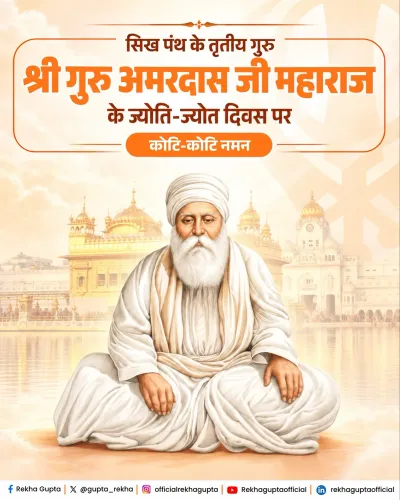
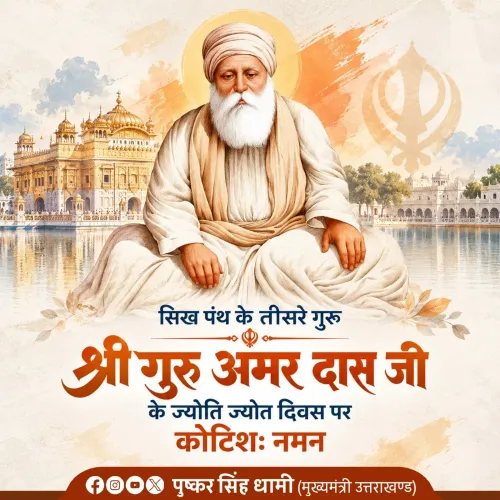
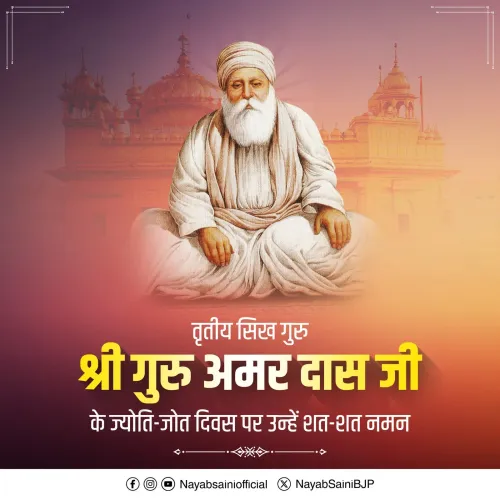
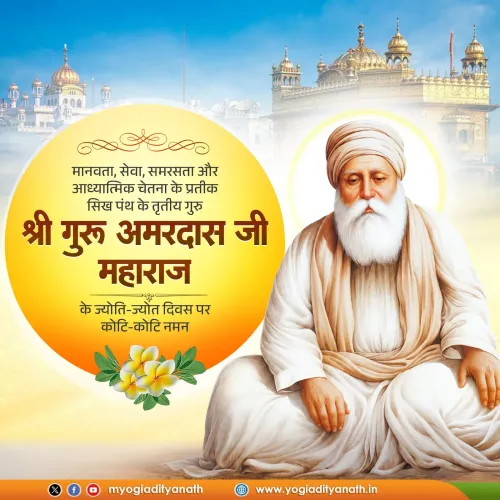
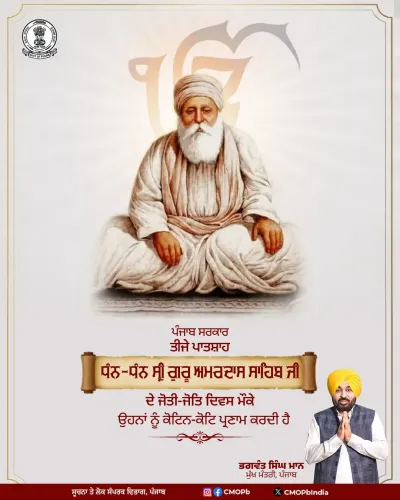
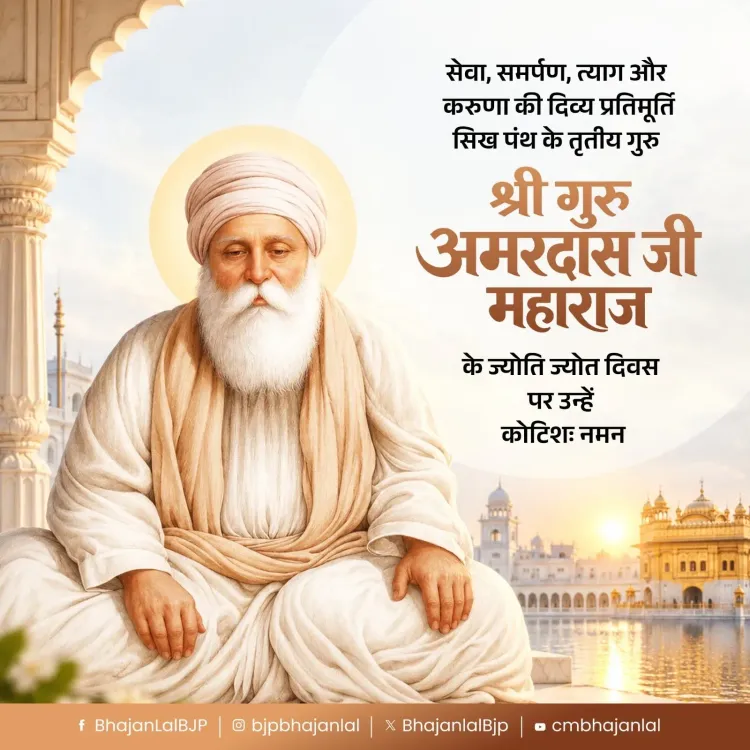
On the solemn occasion of Jyoti Jyot Divas — the death anniversary of Guru Amar Das Ji, the third Guru of Sikhism — Rajasthan Chief Minister Bhajan Lal Sharma offered his reverent homage, calling the Guru a divine embodiment of service, dedication, sacrifice, and compassion.
In his tribute posted on Saturday, 26 September 2026, CM Sharma wrote: 'सेवा, समर्पण, त्याग और करुणा की दिव्य प्रतिमूर्ति' — 'a divine embodiment of service, dedication, sacrifice, and compassion' — honoring the Guru with a 'koti-koti naman,' or salutations from millions. He described Guru Amar Das Ji's life as an unparalleled example of human welfare, equality, and the spirit of benevolence.
Who Was Guru Amar Das Ji, and Why Does This Day Matter
Guru Amar Das Ji served as the third Guru of the Sikh Panth from 1552 to 1574, a tenure that left an indelible imprint on the faith. He was a transformative figure who championed radical social equality — actively working to uplift women, abolish the purdah system, and condemn the practice of sati. His expansion and institutionalisation of the langar, the communal free kitchen, turned an act of charity into a cornerstone of Sikh identity that endures to this day.
CM Sharma noted that the Guru's immortal teachings continue to inspire humanity to walk the path of love, harmony, service, and truth — values that transcend faith and speak to a universal moral framework. 'उनकी अमर शिक्षाएं हमें सदैव प्रेम, सद्भाव, सेवा और सत्य के मार्ग पर चलने की प्रेरणा देती रहेंगी' — 'His immortal teachings will always inspire us to walk the path of love, harmony, service, and truth.'
Political Leaders and the Sikh Guru Tribute Tradition
CM Sharma's message fits a well-established pattern across India's political spectrum: leaders from all major parties issue public tributes on the anniversaries of Sikh Gurus, weaving together threads of shared national values and the country's secular framework. These tributes serve a dual purpose — honouring the Gurus' genuine historical and spiritual legacy while reinforcing a political leader's connection to India's diverse communities.
For Rajasthan, a state with a significant Sikh population particularly in districts bordering Punjab, such outreach carries both cultural and civic weight. Guru Amar Das Ji's emphasis on community service — seva — also resonates as a value frequently invoked in public policy discourse around welfare and social inclusion.
Centuries after his passing, Guru Amar Das Ji's insistence that equality is not a gift but a right remains as sharp as it was in the sixteenth century. That message, today echoed by a chief minister to millions, still asks something of those who repeat it.
Point of View
Honouring a Sikh Guru's anniversary carries particular resonance given the state's Sikh population and the party's efforts to broaden its interfaith appeal. The emphasis on 'seva' and equality also mirrors the BJP's own rhetorical framework around social welfare, creating a quiet ideological alignment between the Guru's teachings and the ruling government's public messaging.
NationPress
26 Sept 2026
Frequently Asked Questions
Who is Guru Amar Das Ji?
Guru Amar Das Ji was the third Guru of Sikhism, serving from 1552 to 1574. He is celebrated for promoting social equality, expanding the langar tradition, and advocating for women's rights.
What is Jyoti Jyot Divas?
Jyoti Jyot Divas marks the death anniversary of a Sikh Guru — the day they passed into eternal light. It is observed as a solemn occasion of prayer and remembrance within the Sikh community.
What did CM Bhajan Lal Sharma say about Guru Amar Das Ji?
CM Sharma called Guru Amar Das Ji a 'divine embodiment of service, dedication, sacrifice, and compassion' and said his immortal teachings will always inspire humanity to walk the path of love, harmony, service, and truth.
What was Guru Amar Das Ji known for?
Guru Amar Das Ji is known for institutionalising the langar (communal free kitchen), opposing the purdah system and sati, and championing social equality for all people regardless of caste or gender.
Why do Indian politicians pay tributes to Sikh Gurus?
Indian political leaders from across the spectrum issue tributes on Sikh Guru anniversaries to honour a shared national heritage, reinforce India's secular ethos, and connect with Sikh communities.