CM Shivakumar Calls CSR a Catalyst at FKCCI Summit
Synopsis
Chief Minister D.K. Shivakumar addressed the FKCCI Global CSR and Sustainability Summit 2026, demanding that every rupee of CSR spent in Karnataka create local impact, and inviting corporates to transform 2,000 government schools, boost AI skilling, and adopt aspirational districts.
Key Takeaways
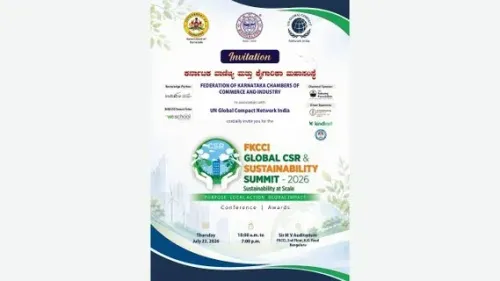
Shivakumar addressed the FKCCI Global CSR & Sustainability Summit 2026 on July 24, 2026 in Bengaluru.
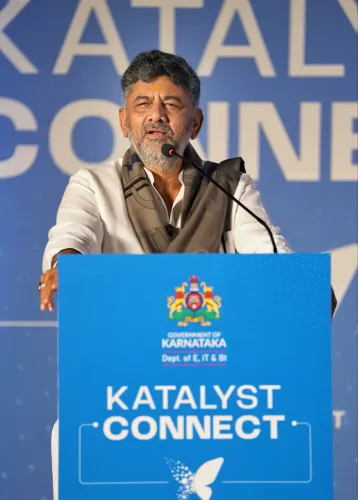
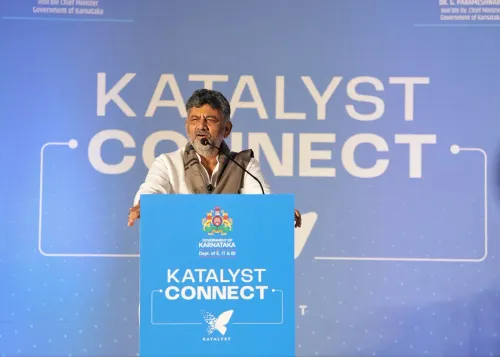
He declared that every rupee of CSR funds spent in Karnataka must 'remain in Karnataka and create visible, lasting impact.' Corporates were invited to partner on transforming 2,000 government schools and advancing AI and digital skilling initiatives.
The summit called for corporate adoption of aspirational districts to reach underserved communities across the state.
The event was co-organised with the UN Global Compact Network India and attended by the UN Resident Coordinator for India and the Consul General of Israel to South India .
CM Shivakumar framed the government-industry-academia-civil society partnership as Karnataka's route to an equitable and future-ready growth model.
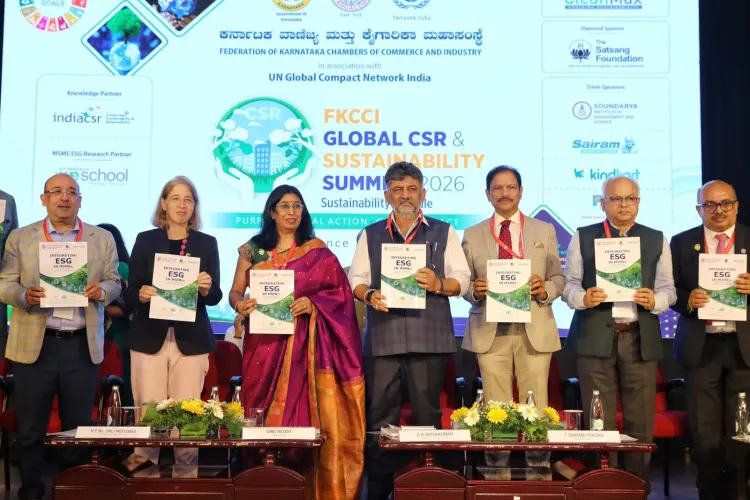
Chief Minister D.K. Shivakumar addressed the FKCCI Global CSR & Sustainability Summit 2026 on Thursday, July 24, 2026, urging industry leaders to treat Corporate Social Responsibility as an engine of lasting social transformation rather than a compliance exercise. The summit, organised by the Federation of Karnataka Chambers of Commerce and Industry (FKCCI) in association with the UN Global Compact Network India, brought together diplomats, industry heads, and UN officials in Bengaluru.
Context
Speaking at the summit, CM Shivakumar laid down a clear expectation for the corporate sector: 'every rupee of CSR spent in Karnataka must remain in Karnataka and create visible, lasting impact.' The remark signals the state government's intent to tighten the geographic focus of CSR deployments, ensuring funds do not flow to projects outside the state even when companies are headquartered elsewhere.
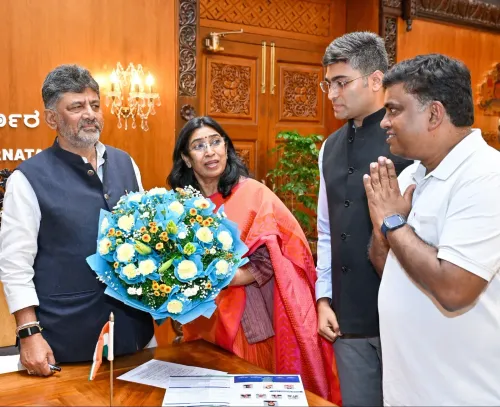
The event was attended by Mr. Stefan Priesner, Country Head and UN Resident Coordinator for India; H.E. Ms. Orli Weitzman, Consul General of Israel to South India; Mr. Ratnesh, Executive Director of UN Global Compact Network India; Mr. Girish Luthra, Chairman of Luthra Group and President of CMSME at FICCI; and Ms. Uma Reddy, President of FKCCI.
Policy Backdrop
FKCCI, founded in 1916, is Karnataka's apex trade body and a longstanding interlocutor between the state government and the private sector. The UN Global Compact Network India is the national chapter of the world's largest corporate sustainability initiative, making its co-organisation of the summit a signal of alignment between state priorities and global ESG frameworks.
Karnataka has a track record of channelling private capital into public goods. The Karnataka Skill Development Corporation, established in 2008, has been a vehicle for state-industry skilling partnerships, and the state has consistently aligned its programmes with national missions such as Digital India and Skill India. The Aspirational Districts Programme, launched by NITI Aayog in 2018, provides the national scaffolding for the kind of district-level convergence CM Shivakumar is now seeking through CSR.
Stakeholders and Impact
The Chief Minister invited corporates to partner with the government on three specific fronts: transforming 2,000 government schools, strengthening AI and digital skilling initiatives, and adopting aspirational districts to extend opportunities to underserved regions. These asks translate into direct benefits for government school students, residents of lagging districts, and the broader workforce seeking digital employment pathways.
The presence of Israel's Consul General and the UN Resident Coordinator at the summit suggests Karnataka is also positioning its CSR agenda as an entry point for international expertise and development finance, extending the state's public-private partnership model beyond domestic players.
What's Next
CM Shivakumar reaffirmed that stronger partnerships between government, industry, academia, and civil society are Karnataka's path to 'a more equitable, future-ready and inclusive growth model.' The immediate markers to watch are corporate adoption agreements for the 2,000 government schools and the launch of specific AI skilling modules under state-industry memoranda of understanding. Whether the government introduces a formal Karnataka CSR registration or tracking mechanism — to enforce the 'stays in Karnataka' principle — will be a key policy development in the months ahead.
Point of View
AI skilling, and aspirational district adoption — the Chief Minister is effectively creating a menu for corporate partners that maps neatly onto his government's electoral priorities in education and employment. The UN co-branding and the presence of the Israeli Consul General also serve a dual purpose: lending international credibility to what is essentially a domestic resource-mobilisation push. This approach reflects a wider pattern among large Indian states of using CSR frameworks as a quasi-fiscal instrument to supplement constrained public budgets.
NationPress
23 Jul 2026
Frequently Asked Questions
What did CM DK Shivakumar say at the FKCCI CSR Summit 2026?
CM D.K. Shivakumar called on industry to make CSR a catalyst for social transformation, insisting that every rupee of CSR spent in Karnataka must stay within the state and produce visible impact. He invited corporates to partner on transforming 2,000 government schools, boosting AI and digital skilling, and adopting aspirational districts.
What is the FKCCI Global CSR and Sustainability Summit?
It is a summit organised by the Federation of Karnataka Chambers of Commerce and Industry (FKCCI), founded in 1916, in association with the UN Global Compact Network India. The 2026 edition focused on channelling corporate CSR resources toward sustainable and equitable development in Karnataka.
Which international officials attended the FKCCI CSR Summit 2026?
The summit was attended by Stefan Priesner, UN Resident Coordinator for India; H.E. Ms. Orli Weitzman, Consul General of Israel to South India; and Mr. Ratnesh, Executive Director of UN Global Compact Network India, among other industry leaders.
What is the Aspirational Districts Programme mentioned by CM Shivakumar?
The Aspirational Districts Programme is a NITI Aayog initiative launched in 2018 that targets socio-economically backward districts for rapid development. CM Shivakumar invited corporates to adopt such districts in Karnataka to ensure development opportunities reach every corner of the state.
How does Karnataka plan to use CSR funds for government schools?
CM Shivakumar invited corporates to partner with the Karnataka government in transforming 2,000 government schools as part of a broader public-private partnership model. Specific adoption agreements and MoUs are expected to follow the summit.