CM Shivakumar pays tribute to Karnataka's first CM Nijalingappa
Synopsis
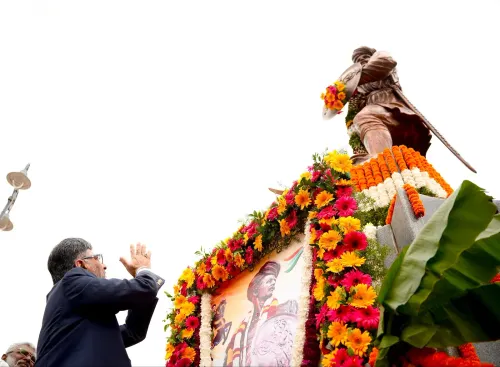
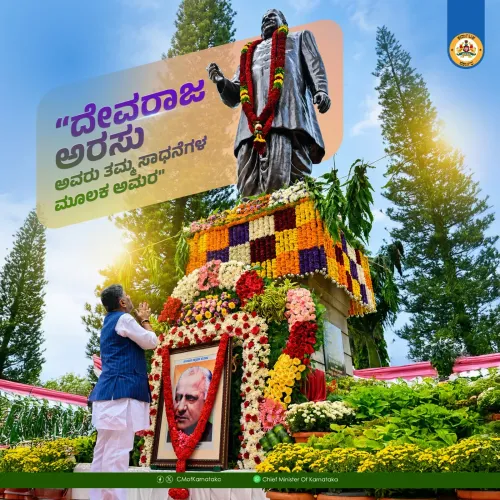
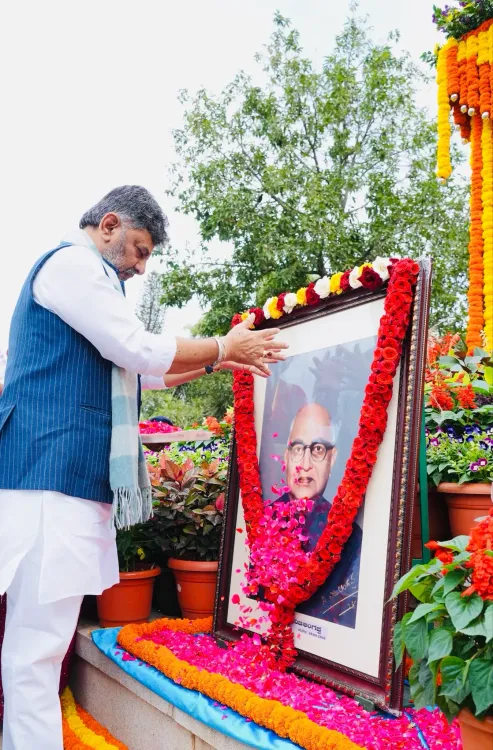
Chief Minister D.K. Shivakumar paid floral tributes to S. Nijalingappa, the first Chief Minister of unified Karnataka, at his statue at Vidhana Soudha's western gate on his death anniversary, honouring his legacy in unification, education, and administrative reform.
Key Takeaways
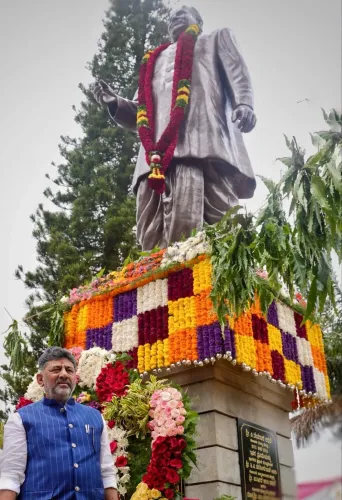
Shivakumar offered floral tributes at the statue of S.
Nijalingappa at the western gate of Vidhana Soudha, Bengaluru on 8 August 2026 .
Nijalingappa was the first Chief Minister of unified Karnataka, taking office after the States Reorganisation Act of 1956 merged Kannada-speaking regions into one state.
The Chief Minister's Office highlighted Nijalingappa's contributions to Karnataka's unification, administrative reforms, education, and overall state development.
The tribute was held on Nijalingappa's death anniversary, a commemoration that has become an annual ritual at the Vidhana Soudha statue.
Nijalingappa was a senior Indian National Congress leader, and the tribute underlines the current Congress government's claim to that founding political lineage.
A garland placed at a stone statue at the western gate of Vidhana Soudha — that quiet gesture on Saturday, 8 August 2026 carried the weight of seven decades of Karnataka's journey as a unified state. The Chief Minister's Office of Karnataka announced that Chief Minister D.K. Shivakumar offered floral tributes to the portrait and statue of the late S. Nijalingappa, the first Chief Minister of unified Karnataka, on the occasion of his death anniversary.
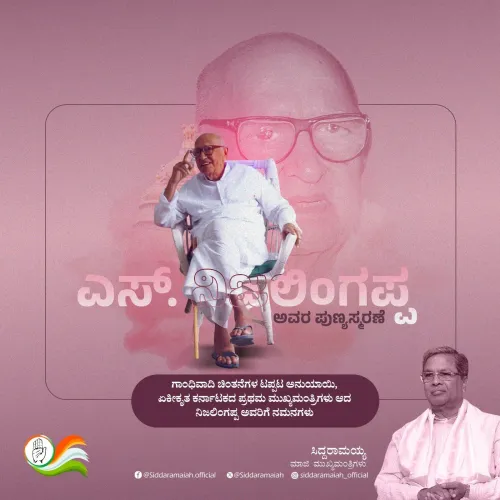
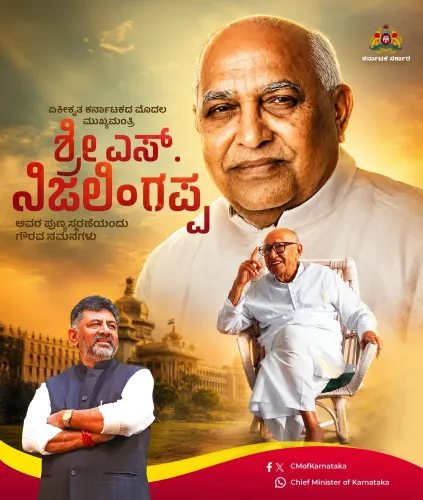
The post, shared in Kannada, noted that Nijalingappa's contributions to Karnataka Ekikarana (Karnataka's unification), administrative reforms, education, and the state's overall development remain 'eternally memorable.' It described his life and ideals as 'an inspiration to all' and a 'model of people-centric governance.'
The man who held unified Karnataka together first
S. Nijalingappa became Chief Minister of the newly unified state of Mysore — later renamed Karnataka — following the States Reorganisation Act of 1956, which merged Kannada-speaking regions from across multiple provinces into a single administrative unit. That reorganisation was one of the most consequential political events in post-independence India, redrawing the map along linguistic lines and giving Kannadigas a state of their own. Nijalingappa was the man handed the task of making it work from day one. His tenure set early precedents in administrative structure, education policy, and development priorities that shaped the state's institutional character. He later rose to national prominence within the Indian National Congress, making him one of the few regional leaders of that era to leave a mark both at the state and national level.Vidhana Soudha: where legacy meets legislature
The tribute was held at Nijalingappa's statue at the western gate of Vidhana Soudha, Bengaluru — the grand seat of the Karnataka Legislature and one of the most recognisable public buildings in South India. The choice of venue is deliberate: Vidhana Soudha is itself a symbol of Karnataka's post-unification statehood, and the statue's placement there anchors Nijalingappa's legacy permanently within the architecture of Karnataka's democracy. Annual death-anniversary commemorations at this site have become a consistent ritual for Karnataka's ruling establishment, a way of drawing a visible line between the founding generation's priorities — unification, education, reform — and the governance agenda of the present. For Chief Minister Shivakumar and the Congress government, the tribute is also a reminder of the party's deep roots in Karnataka's foundational political history. Nijalingappa himself was a Congress stalwart, and invoking his legacy reinforces that continuity — even as the state navigates a very different set of governance challenges today. Seventy years on, the garland at the western gate is Karnataka's way of saying it has not forgotten where it started.Point of View
Invoking the architect of Karnataka Ekikarana is never purely ceremonial. The ritual also reflects a broader pattern across Indian states where ruling parties use founding-generation anniversaries to legitimise current governance priorities — in this case, education and administrative reform — by tracing them back to a revered predecessor. What bears watching is whether the Shivakumar government moves beyond symbolism to cite Nijalingappa-era policy frameworks in concrete legislative or budgetary action.
NationPress
22 Sept 2026
Frequently Asked Questions
Who was S. Nijalingappa?
S. Nijalingappa was the first Chief Minister of unified Karnataka, taking office after the States Reorganisation Act of 1956 merged Kannada-speaking regions into the state then called Mysore. He was known for contributions to Karnataka's unification, administrative reforms, and education, and later became a prominent national leader within the Indian National Congress.
Why did CM Shivakumar pay tribute to Nijalingappa?
Chief Minister D.K. Shivakumar paid floral tributes on S. Nijalingappa's death anniversary on 8 August 2026 , honouring his legacy as the founding Chief Minister of unified Karnataka and his contributions to governance, education, and state development.
Where is Nijalingappa's statue in Bengaluru?
S. Nijalingappa's statue is located at the western gate of Vidhana Soudha in Bengaluru, the seat of the Karnataka Legislature.
What was the States Reorganisation Act of 1956?
The States Reorganisation Act of 1956 reorganised India's state boundaries along linguistic lines, merging Kannada-speaking regions from multiple provinces into a single unified state initially called Mysore, which was later renamed Karnataka . Nijalingappa became its first Chief Minister.
What did the Karnataka CMO say about Nijalingappa's legacy?
The Chief Minister's Office of Karnataka stated that Nijalingappa's contributions to Karnataka's unification, administrative reforms, and education are 'eternally memorable,' and described his life and ideals as 'an inspiration to all' and a 'model of people-centric governance.'