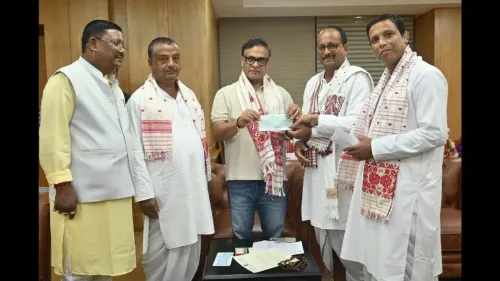
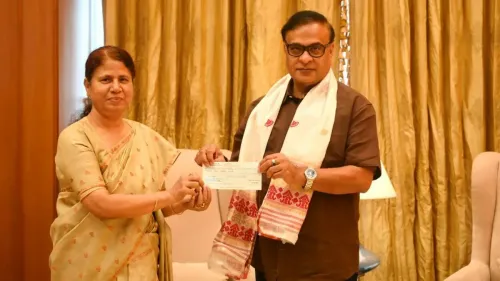
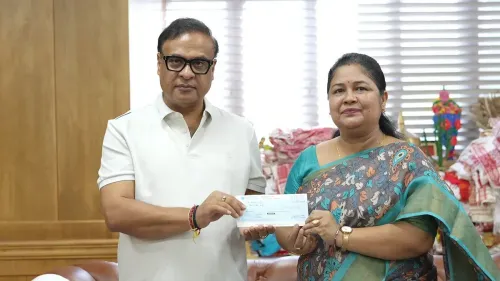
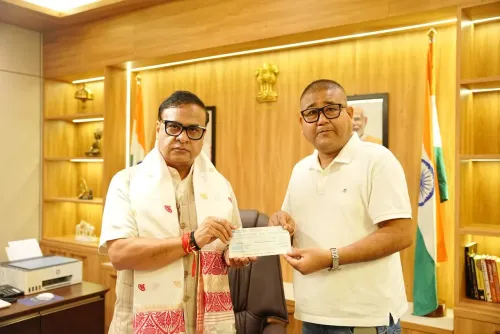
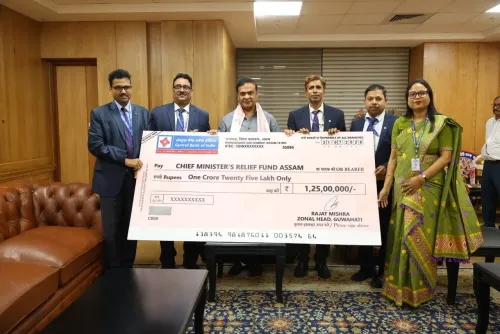
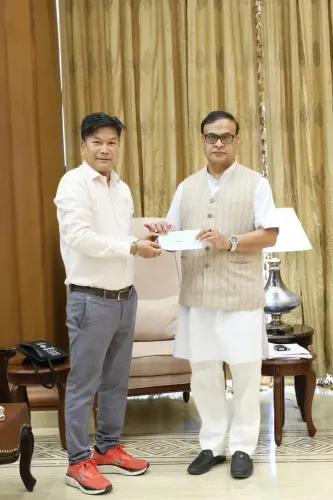
Assam SRLM staff hand ₹32.3 lakh cheque to CM Relief Fund
Synopsis
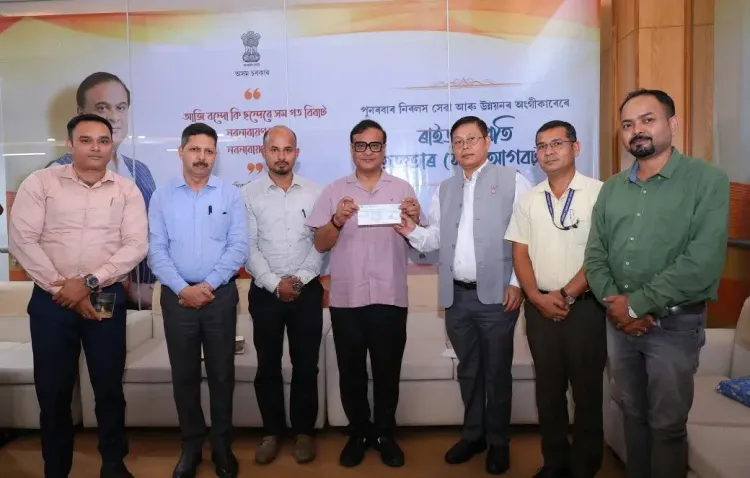
Employees of the Assam State Rural Livelihoods Mission handed CM Dr Himanta Biswa Sarma a cheque of ₹32,30,191 at Lok Sewa Bhawan for the Chief Minister's Relief Fund, reinforcing the state's internal solidarity with disaster-relief efforts.
Key Takeaways
A delegation from the Assam State Rural Livelihoods Mission met CM Dr Himanta Biswa Sarma at Lok Sewa Bhawan on 6 November 2026 .
The team presented a cheque for ₹32,30,191 to the Chief Minister's Relief Fund .
The CM appreciated the staff's 'generous contribution and commitment to the welfare of the State.' The ASRLM has operated in Assam since 2011 as the state arm of the National Rural Livelihoods Mission.
The CM's Relief Fund primarily supports disaster-affected families in one of India's most flood-prone states.
Such employee contributions from Assam government missions form a periodic pattern of institutional solidarity with relief efforts.
A delegation of employees from the Assam State Rural Livelihoods Mission (ASRLM) walked into Lok Sewa Bhawan on Friday, 6 November 2026, and placed a cheque for ₹32,30,191 in the hands of Chief Minister Dr Himanta Biswa Sarma — a voluntary contribution from mission staff to the Chief Minister's Relief Fund.
CM Sarma acknowledged the gesture with appreciation, commending the team for what his office described as their 'generous contribution and commitment to the welfare of the State.'ASRLM's roots in rural self-reliance
The Assam State Rural Livelihoods Mission is the state-level arm of the National Rural Livelihoods Mission, operational in Assam since 2011. Its mandate spans organising women into self-help groups, building financial literacy, and creating sustainable income pathways in rural communities. That its own employees now channel resources back into state relief speaks to the institutional culture the mission has cultivated over more than a decade.Why the CM's Relief Fund matters in a flood-prone state
Assam is among India's most flood-vulnerable states, with the Brahmaputra and its tributaries inundating districts almost every monsoon season. The Chief Minister's Relief Fund serves as a first-response kitty — disbursing emergency aid to displaced families, funding rescue operations, and supporting reconstruction in the aftermath of disasters. Employee contributions like this one — which periodically arrive from various Assam government departments — reflect an internal solidarity loop: public servants whose work targets poverty alleviation also backstopping the state's disaster-response capacity.A pattern of institutional solidarity
The ₹32,30,191 contribution is not an isolated act. Government mission employees and departments in Assam have made similar voluntary donations to the relief fund in past years, particularly in the wake of severe flood seasons. The cumulative effect of such contributions keeps the fund replenished between legislative budget cycles, giving the administration a nimble pool of resources to deploy when emergencies demand speed over procedure.
With the state awaiting an announcement on exactly how these funds will be deployed, the gesture lands as both a financial top-up and a public signal — mission employees choosing solidarity with disaster-affected communities over passive observation.
Point of View
Blurring the line between programme delivery and civic solidarity. For CM Sarma, publicly receiving and acknowledging such cheques reinforces his administration's welfare narrative ahead of potential relief announcements. More broadly, recurring contributions from state agencies to the CM's Relief Fund reflect Assam's annual reckoning with flood vulnerability, where non-budgetary pools of emergency money carry real operational weight.
NationPress
6 Nov 2026
Frequently Asked Questions
What is the Assam Chief Minister's Relief Fund used for?
The Chief Minister's Relief Fund is administered by the Assam government to provide emergency financial assistance to families affected by floods, natural disasters, and other crises in the state.
What is the Assam State Rural Livelihoods Mission?
The Assam State Rural Livelihoods Mission (ASRLM) is the state-level implementation body of the National Rural Livelihoods Mission, working since 2011 to organise rural self-help groups and reduce poverty across Assam.
How much did ASRLM employees donate to the CM's Relief Fund?
ASRLM employees donated ₹32,30,191 to the Chief Minister's Relief Fund, handing over the cheque to CM Dr Himanta Biswa Sarma at Lok Sewa Bhawan on 6 November 2026.
Where is Lok Sewa Bhawan in Assam?
Lok Sewa Bhawan is the secretariat complex located in Dispur, Guwahati, that houses the Chief Minister's Office and several key Assam government departments.
Do Assam government employees regularly contribute to the CM's Relief Fund?
Yes, employee contributions from Assam government missions and departments to the CM's Relief Fund occur periodically, particularly in the context of the state's annual flood relief needs.