CM Shivakumar, Malaysia PM Anwar Ibrahim Hold Talks on Karnataka Ties
Synopsis
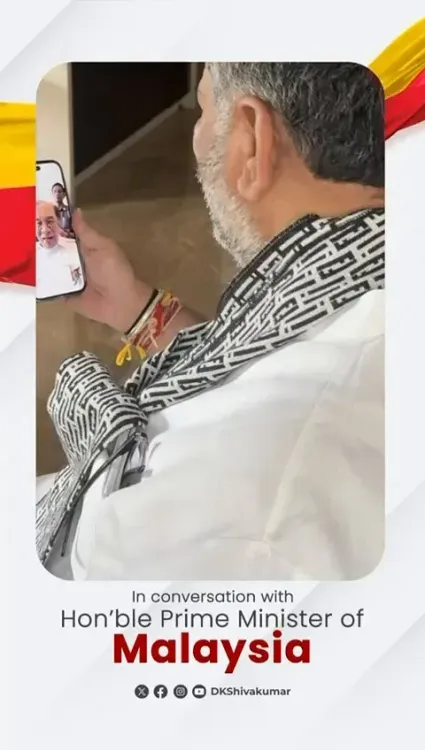
Karnataka Chief Minister D.K. Shivakumar and Malaysian Prime Minister Anwar Ibrahim held a telephonic conversation on June 7, 2026, exchanging mutual visit invitations and pledging to deepen ties in trade, technology, education, and cultural cooperation, with Malaysian student flows in Karnataka cited as a foundation for broader partnership.
Key Takeaways
Shivakumar and Malaysian PM Anwar Ibrahim held a telephonic conversation on June 7, 2026 .
PM Anwar Ibrahim extended a formal invitation to CM Shivakumar to visit Malaysia to strengthen bilateral cooperation.
CM Shivakumar reciprocated by inviting the Malaysian Prime Minister to visit Karnataka .
Focus areas for collaboration include trade, investment, technology, education, talent exchange, and cultural cooperation .
Thousands of Malaysian students studying in Karnataka were cited as an existing people-to-people foundation for deeper ties.
The outreach aligns with India's Act East Policy and Karnataka's broader strategy of sub-national economic diplomacy with ASEAN nations.
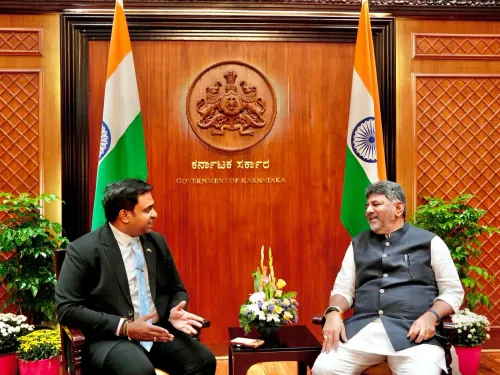
The Chief Minister's Office of Karnataka announced on Sunday, June 7, 2026, that Chief Minister Shri D.K. Shivakumar held a telephonic conversation with Malaysian Prime Minister Anwar Ibrahim, during which both leaders exchanged mutual invitations to visit each other's jurisdictions and discussed deepening bilateral cooperation across trade, technology, and education.
Context
According to the official post, Prime Minister Anwar Ibrahim conveyed his greetings to CM Shivakumar and extended a formal invitation to visit Malaysia to strengthen cooperation with Karnataka. The Chief Minister thanked him for the 'gracious invitation' and expressed hope to visit at a 'mutually convenient time.' In turn, Shivakumar extended a reciprocal invitation to the Malaysian Prime Minister to visit Karnataka and experience the state's strengths in 'innovation, industry, technology, education and culture.'
The conversation reflects an expanding trend of Indian states conducting direct diplomatic outreach with foreign heads of government, complementing the central government's foreign policy framework rather than replacing it.
Policy Backdrop
India and Malaysia have maintained structured economic ties since the India-Malaysia Comprehensive Economic Cooperation Agreement signed in 2011, which expanded the framework for trade in goods, services, and investment. Karnataka, anchored by its capital Bengaluru — one of Asia's foremost technology and higher-education hubs — has long positioned itself as a natural partner for ASEAN nations seeking skilled talent pipelines and innovation ecosystems.
This outreach fits within India's broader Act East Policy, which encourages sub-national actors, including state governments, to deepen economic and people-to-people ties with Southeast Asian partners. States like Karnataka, Tamil Nadu, and Telangana have increasingly pursued independent investment diplomacy with ASEAN capitals, leveraging their technology and academic institutions as primary assets.
Stakeholders and Impact
The Chief Minister's Office highlighted that 'thousands of Malaysian students' are currently pursuing higher education in Karnataka, describing this existing student mobility as 'a strong people-to-people connect that can serve as a foundation for even greater shared growth and prosperity.' This positions the education corridor as a strategic lever for broader economic engagement, including talent exchange and institutional partnerships.
Key sectors identified by both sides for deeper collaboration include trade, investment, technology, education, talent exchange, and cultural cooperation. For Karnataka's technology and startup ecosystem, closer ties with Malaysia — itself a growing digital economy hub in Southeast Asia — could open new avenues for cross-border investment and joint ventures.
What's Next
Both leaders signalled intent to follow through on the mutual invitations, with CM Shivakumar expressing hope for a visit to Malaysia at a 'mutually convenient time.' Observers will watch for any formal follow-up delegations, potential Memoranda of Understanding on education or technology, and whether Prime Minister Anwar Ibrahim accepts the invitation to visit Karnataka.
Should either visit materialise, it could accelerate the formalisation of bilateral frameworks between Karnataka and Malaysia, setting a template for other Indian states seeking structured sub-national partnerships with ASEAN governments.
Point of View
Where state governments are no longer passive recipients of central foreign policy but active architects of their own international economic relationships. Karnataka's pitch — anchored in its technology ecosystem and existing student flows from Malaysia — is a deliberate effort to convert soft power into hard investment commitments. For Anwar Ibrahim, engaging directly with one of India's most economically consequential states signals Malaysia's interest in diversifying its India relationship beyond New Delhi. Whether this warmth translates into formal MoUs or ministerial visits will be the true test of the conversation's diplomatic weight.
NationPress
21 Oct 2026
Frequently Asked Questions
Why did CM Shivakumar speak with the Malaysian Prime Minister?
CM D.K. Shivakumar held a telephonic conversation with Malaysian PM Anwar Ibrahim to exchange mutual visit invitations and discuss deepening cooperation between Karnataka and Malaysia in trade, technology, education, and culture.
What areas of cooperation did Karnataka and Malaysia discuss?
The two leaders discussed collaboration in trade, investment, technology, education, talent exchange, and cultural cooperation , with existing Malaysian student flows in Karnataka highlighted as a strong foundation.
Is CM Shivakumar visiting Malaysia?
CM Shivakumar expressed hope to visit Malaysia at a 'mutually convenient time' after accepting PM Anwar Ibrahim 's invitation, but no specific date has been announced.
How many Malaysian students study in Karnataka?
The Chief Minister's Office of Karnataka stated that 'thousands of Malaysian students' are currently pursuing higher education in Karnataka , though an exact figure was not specified in the official post.
How does this fit into India's Act East Policy?
India's Act East Policy encourages Indian states to build direct economic and people-to-people ties with ASEAN nations; Karnataka 's outreach to Malaysia is a prominent example of this sub-national diplomatic strategy in action.