CM Shivakumar Mourns Death of Padma Shri Dr. Girish Bharadwaj
Synopsis
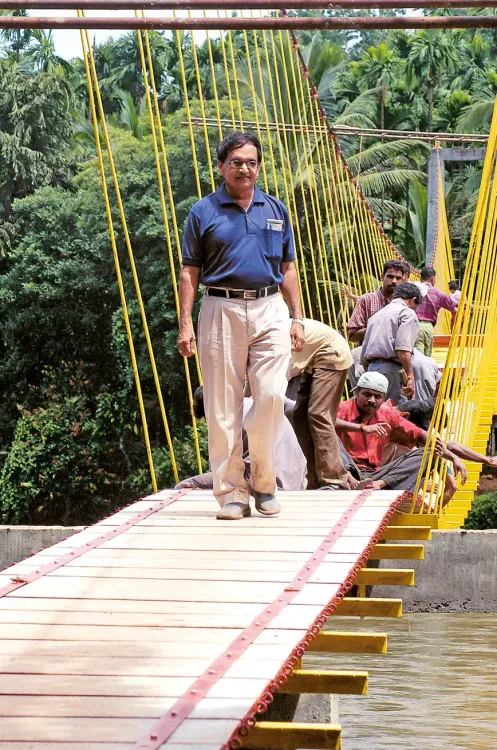
Chief Minister DK Shivakumar and the Karnataka CMO mourned the passing of Padma Shri Dr. Girish Bharadwaj on 7 July 2026. Known as the 'Sardar of Suspension Bridges,' Dr. Bharadwaj built over 140 low-cost suspension bridges connecting remote rural villages across India over a four-decade career.
Key Takeaways
The Chief Minister's Office of Karnataka officially mourned the death of Padma Shri Dr.
Girish Bharadwaj on 7 July 2026 .
Bharadwaj constructed more than 140 suspension bridges across remote and hilly regions of India over a four-decade career.
He was popularly called 'Sulya's Visvesvaraya' and 'Sardar of Suspension Bridges' by the communities he served.
The Government of India awarded him the Padma Shri in 2017 for his contributions to rural connectivity engineering.
CM DK Shivakumar described his passing as the loss of 'a rare technical achiever' for Karnataka.
His low-cost bridge designs benefited rural and tribal communities in hilly terrain across multiple Indian states.
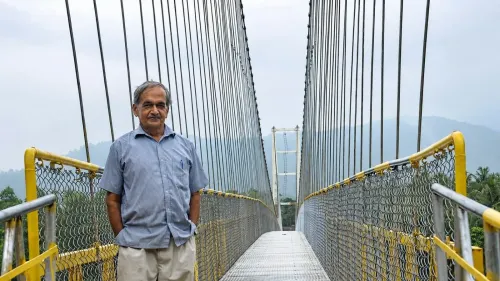
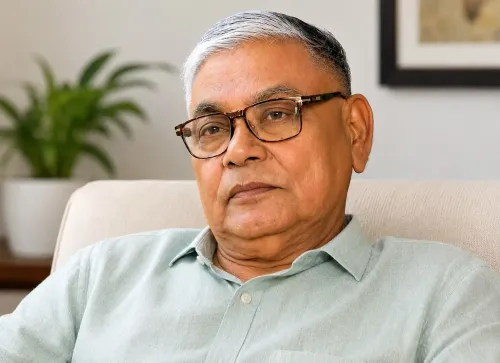
The Chief Minister's Office of Karnataka on Tuesday, 7 July 2026, conveyed deep condolences on the passing of Padma Shri Dr. Girish Bharadwaj, the celebrated engineer widely known as the 'Sardar of Suspension Bridges' for constructing more than 140 suspension bridges across remote and hilly regions of India.
Chief Minister DK Shivakumar, posting from the official CMO account, said the news of Dr. Bharadwaj's passing had brought 'deep sorrow,' adding that the state had lost a rare technical achiever with his departure. In Kannada, he wrote: 'ರಾಜ್ಯವು ಅಪರೂಪದ ತಾಂತ್ರಿಕ ಸಾಧಕನೊಬ್ಬನನ್ನು ಕಳೆದುಕೊಂಡಂತಾಗಿದೆ' ['The state has lost a rare technical achiever']. He prayed for peace for Dr. Bharadwaj's soul and for strength for his family and admirers, closing with 'Om Shanti.'
Context
Dr. Girish Bharadwaj built his reputation over a four-decade career designing and constructing low-cost suspension bridges that linked isolated villages in steep, difficult terrain to mainstream road networks. Locals in Sulya, the taluk in Dakshina Kannada district where he was based, affectionately called him 'Sulyada Vishveshvaraya' — 'Sulya's Visvesvaraya' — drawing a direct parallel to Sir M. Visvesvaraya, Karnataka's most celebrated engineer. The title 'Toogusethuve Sardara' ('Sardar of Suspension Bridges') followed him nationally.
His bridges were not prestige infrastructure projects. They were functional, affordable crossings over rivers and gorges that had for generations forced villagers — including schoolchildren and patients — to take hours-long detours or rely on seasonal rope ferries.
Policy Backdrop
The Government of India recognised Dr. Bharadwaj's contribution with the Padma Shri in 2017, one of the country's highest civilian honours, specifically for his work in rural connectivity engineering. His model of low-cost suspension bridge construction drew attention as a replicable solution for last-mile infrastructure in hilly states.
Karnataka state governments have periodically issued public tributes to engineers and innovators whose work addressed rural infrastructure gaps in difficult terrain, and Dr. Bharadwaj's recognition fits squarely within that tradition of honouring grassroots technical contributors over large-scale urban project builders.
Stakeholders and Impact
The more than 140 bridges Dr. Bharadwaj built span multiple states, directly benefiting rural and tribal communities in hilly regions who had limited or no all-weather road access. For these communities, each bridge represented reduced travel time for medical emergencies, uninterrupted school attendance, and access to markets.
His passing is felt not just in Karnataka but across the states where his bridges stand as working infrastructure. Engineers and rural development practitioners who followed his low-cost design methodology will carry forward a body of practical knowledge he developed largely outside formal government contracts.
What's Next
Following tributes of this nature from the Chief Minister's Office, state governments have in past cases explored naming public infrastructure — bridges, roads, or technical institutions — after the honoured individual, or instituting awards in their memory. It remains to be seen whether the Karnataka government will announce any such memorial recognition for Dr. Bharadwaj or commission further rural bridge projects citing his low-cost suspension bridge design methods.
His death closes a chapter of independent, community-driven engineering in India, but the 140-plus bridges he leaves behind will continue to carry the daily lives of rural communities for decades to come.
Point of View
CM Shivakumar places Dr. Bharadwaj within Karnataka's foundational engineering identity, a politically resonant framing in a state that takes deep pride in its technical heritage. The tribute also implicitly endorses the model of low-cost, community-first infrastructure as a policy ideal at a time when last-mile rural connectivity remains an unfinished agenda. Whether the government follows words with institutional memory — a named award, a bridge, a design centre — will determine how substantive this recognition truly is.
NationPress
5 Oct 2026
Frequently Asked Questions
Who was Dr. Girish Bharadwaj?
Dr. Girish Bharadwaj was a Padma Shri-awarded engineer from Sulya in Karnataka's Dakshina Kannada district, famous for building over 140 low-cost suspension bridges that connected remote rural and hilly villages across India over a four-decade career.
Why was Dr. Girish Bharadwaj called 'Sulya's Visvesvaraya'?
Villagers and communities he served gave him the affectionate title 'Sulya's Visvesvaraya' because his engineering work for rural communities drew comparison to Sir M. Visvesvaraya, Karnataka's most celebrated engineer. He was also widely known as the 'Sardar of Suspension Bridges.'
When did Dr. Girish Bharadwaj receive the Padma Shri?
Dr. Girish Bharadwaj received the Padma Shri in 2017, awarded by the Government of India in recognition of his four-decade contribution to rural connectivity through low-cost suspension bridge construction.
How many suspension bridges did Dr. Girish Bharadwaj build?
Dr. Girish Bharadwaj built more than 140 suspension bridges across India, primarily in steep, hilly, and remote rural areas that lacked all-weather road access.
What did CM DK Shivakumar say about Dr. Girish Bharadwaj's death?
CM DK Shivakumar, posting from the official Chief Minister's Office of Karnataka account on 7 July 2026, said the news brought deep sorrow and that the state had lost a rare technical achiever. He prayed for peace for Dr. Bharadwaj's soul and strength for his family, closing with 'Om Shanti.'