CM Siddaramaiah Calls for Unity in SC/ST Welfare Push

Synopsis
Chief Minister D.K. Shivakumar, at a Bengaluru meeting on SC/ST comprehensive development, called for unity across all castes, transparent use of earmarked welfare funds, and strict adherence to Supreme Court guidelines and the Constitution.
Key Takeaways
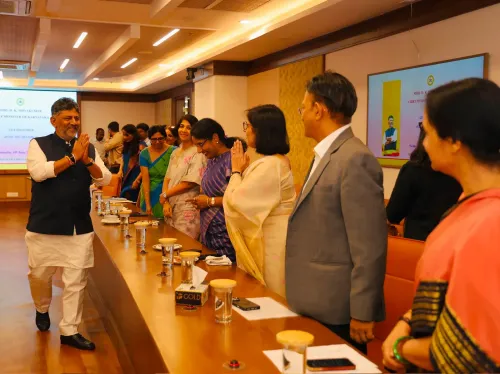
Shivakumar addressed a meeting on SC/ST comprehensive development in Bengaluru on 12 November 2026 .
He stressed unity across SC, ST, OBC, and minority communities as the foundation of government welfare success.
Earmarked funds for Scheduled Castes and Scheduled Tribes must be used transparently and produce tangible outcomes.
All welfare work must comply with Supreme Court guidelines and the constitutional framework.
The Chief Minister invoked the state's Guarantee schemes as tools to earn lasting public goodwill.
Shivakumar declared himself open to guidance, saying 'this is your government, your programme.'
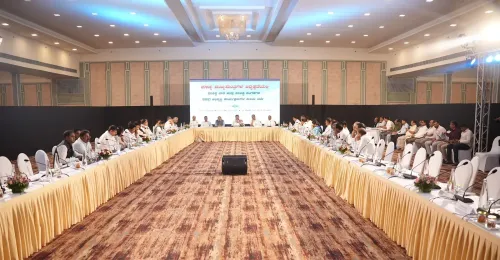
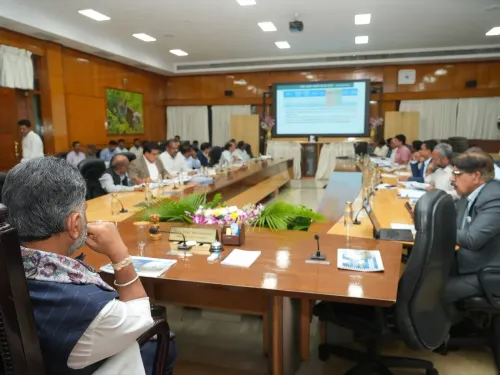
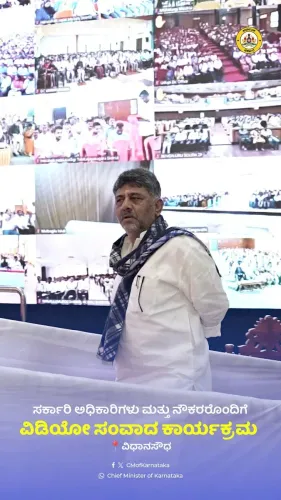
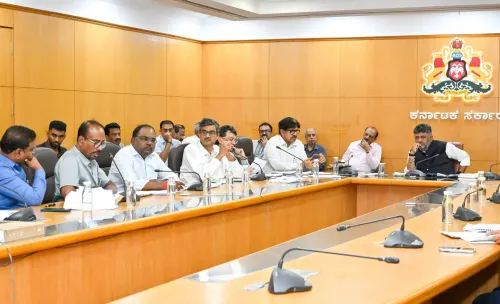
Unity, transparency, and constitutional fidelity — these were the three pillars Chief Minister D.K. Shivakumar laid down at a high-level meeting on Scheduled Caste and Scheduled Tribe comprehensive development held in Bengaluru on Thursday, 12 November 2026. Speaking at the gathering, the Chief Minister made clear that the government's welfare agenda stands or falls on collective resolve.
What Shivakumar told the meeting
Addressing participants in Kannada, the Chief Minister opened with a core conviction: 'ಒಗ್ಗಟ್ಟಿನಲ್ಲಿ ಬಲವಿದೆ' — 'there is strength in unity.' He stressed that the success of the government's pro-people programmes depends on this same unity, and that the trust and strength of every community — SC, ST, Other Backward Classes, and minorities — matters equally to his administration.
Shivakumar called on officials and party workers to work within the framework of Supreme Court guidelines and the Constitution, saying that progress for Scheduled communities must be pursued within those boundaries. He was equally pointed on money: funds earmarked exclusively for SC and ST welfare must be utilised transparently, and that spending must yield real, measurable outcomes on the ground.
Guarantee schemes and the trust calculus
The Chief Minister invoked the state's flagship Guarantee schemes — the basket of welfare programmes that became a defining political promise of the Karnataka Congress government — as instruments that must earn genuine public goodwill, not just administrative credit. 'Think positively, work positively,' he urged, in a pointed directive to those in the room.
He also struck a notably open note: 'I am open-minded to receiving your suggestions, advice, and guidance,' he said, adding, 'This is your government, your programme.' The statement signals an intent to run the SC/ST welfare machinery as a participatory exercise rather than a top-down directive.
Constitutional bedrock behind the directive
The meeting sits within a long arc of affirmative action policy. Articles 15, 16, and 335 of the Indian Constitution have mandated reservations and welfare measures for Scheduled communities since 1950. The Scheduled Castes Sub-Plan framework — operational since the 1970s — requires state governments to allocate budgetary funds proportionally for SC development, a mandate Karnataka is constitutionally bound to honour.
The Chief Minister's explicit reference to Supreme Court guidelines is particularly significant: apex-court jurisprudence on sub-classification within SC reservations and on the proper utilisation of earmarked funds has tightened accountability expectations on state governments across India.
With legislative budget sessions on the horizon, how Karnataka tracks and reports SC/ST fund utilisation will be the real measure of these pledges — and the communities waiting on them know it.
Point of View
Not just political rhetoric. The explicit invocation of Supreme Court guidelines suggests the administration is anticipating legal and legislative scrutiny on SC/ST budget allocations. Embedding the Guarantee schemes within the SC/ST welfare narrative is a deliberate move to weld the government's headline welfare brand to its constitutional obligations. How transparently Karnataka reports these allocations in the next budget session will determine whether this speech becomes policy or simply posture.
NationPress
12 Nov 2026
Frequently Asked Questions
What did CM D.K. Shivakumar say at the SC/ST development meeting in Bengaluru?
CM Shivakumar called for unity across all communities, demanded transparent utilisation of SC/ST earmarked funds, and stressed that all welfare work must comply with Supreme Court guidelines and constitutional provisions.
What are Karnataka's Guarantee schemes mentioned by the Chief Minister?
The Guarantee schemes are a set of flagship welfare programmes launched by the Karnataka Congress government to deliver direct benefits to citizens; Shivakumar cited them as instruments to earn genuine public goodwill across communities.
Why did Shivakumar invoke Supreme Court guidelines at the SC/ST meeting?
The Supreme Court has issued directives on sub-classification within SC reservations and on proper utilisation of earmarked welfare funds, making constitutional compliance a legal obligation for state governments like Karnataka.
What is the Scheduled Castes Sub-Plan and how does it apply to Karnataka?
Operational since the 1970s, the Scheduled Castes Sub-Plan requires state governments to allocate budget funds proportionally for SC development; Karnataka is constitutionally bound to report and utilise these funds transparently.
Where was the SC/ST comprehensive development meeting held?
The meeting was held in Bengaluru , the capital of Karnataka, on 12 November 2026 .