CM Siddaramaiah Launches 'Freedom from Waste' Drive in Bengaluru
Synopsis
Karnataka CM D.K. Shivakumar launched the 'Freedom from Waste' (Tyajyadinda Swatantrya) campaign at Hebbala, Bengaluru on August 1, targeting clearance of 22,372 tonnes of construction debris, solid waste, and overgrown vegetation from the city's roads and public spaces.
Key Takeaways
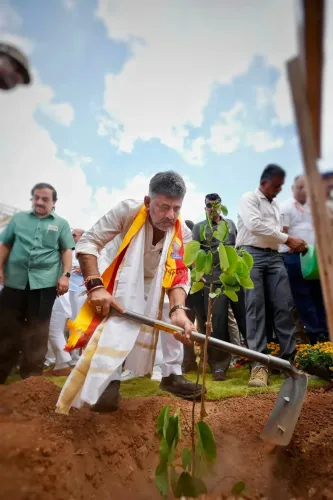
Shivakumar launched the 'Freedom from Waste' campaign at the Nadaprabhu Kempegowda statue near Hebbala flyover on August 1, 2026 .
The drive targets removal of 22,372 tonnes of waste including construction debris, solid waste, old electric poles, pipes, soil mounds, and overgrown vegetation.
Greater Bengaluru Development Minister Krishna Byre Gowda co-launched the campaign, signalling cross-departmental coordination.
Senior officials including the Greater Bengaluru Authority Chief Commissioner and Bengaluru City Police Commissioner attended, indicating enforcement intent.
The campaign covers major roads, flyovers, footpaths, and public spaces across Bengaluru, with the government seeking public cooperation.
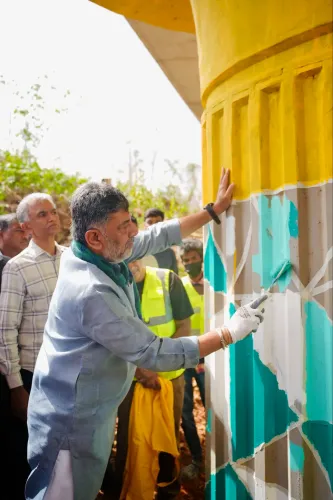
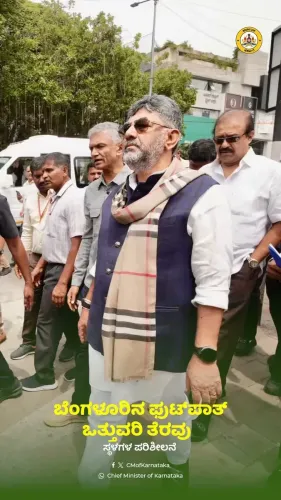
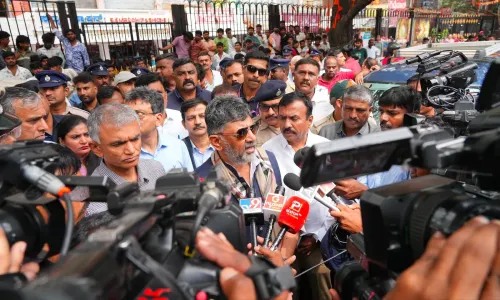
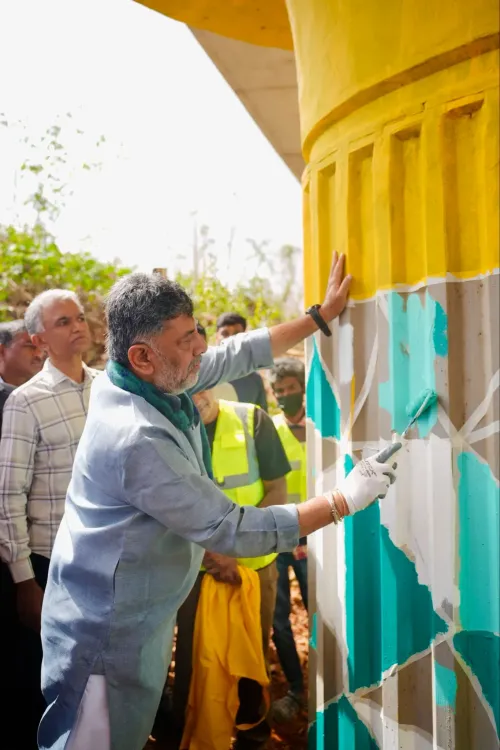
A city choking on 22,372 tonnes of accumulated debris — construction rubble, old electric poles, overgrown weeds, broken pipes, and mounds of solid waste — is getting a reckoning. Karnataka Chief Minister D.K. Shivakumar launched the 'Tyajyadinda Swatantrya' (Freedom from Waste) campaign on Saturday, August 1, at the statue of Nadaprabhu Kempegowda near the Hebbala flyover in Bengaluru, signalling the government's most coordinated civic cleanliness push in recent memory.
What the Campaign Targets — and Why the Number Matters
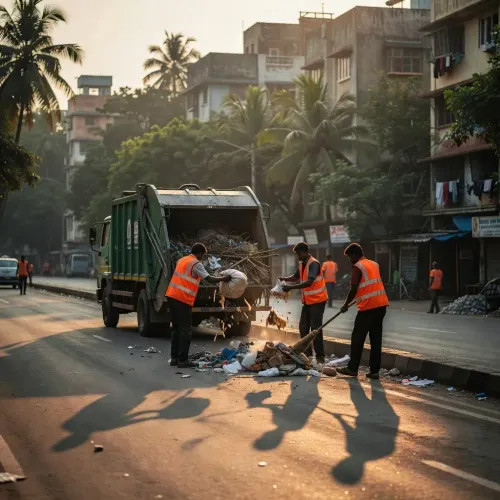
The drive sets an explicit, quantified goal: clear 22,372 tonnes of waste from Bengaluru's major roads, flyovers, footpaths, and public spaces. The categories are telling — construction debris, solid waste, disused utility poles, pipe stacks, soil mounds, overgrown vegetation, and fallen branches. These are not fresh litter; they are the slow sediment of years of deferred civic maintenance on a city that grew faster than its systems.
Greater Bengaluru Development Minister Krishna Byre Gowda co-launched the campaign alongside the Chief Minister, underscoring that this is a cross-departmental effort, not a single-agency sweep. The government has stated it is 'committed to building a waste-free Bengaluru with public cooperation' — Saarvajanikaara sahakaaradondige tyajya mukta Bengaluruvannu roopisialu sarkara baddhavaagide.
Who Was at Hebbala — and What the Gathering Signals
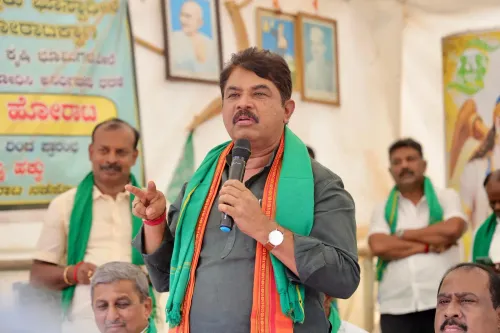
The launch drew a notable cross-section of state power. Energy Minister K.J. George, MP Shobha Karandlaje, legislators S.R. Vishwanath and A.C. Srinivas, Greater Bengaluru Authority Chief Commissioner M. Maheshwar Rao, and Bengaluru City Police Commissioner Seemant Kumar Singh were all present. When the police commissioner and the civic authority chief share a stage with elected ministers for a cleanliness drive, it signals enforcement intent, not just aspiration.
Bengaluru's Waste Problem and the Pattern Behind These Drives
India's technology capital has long carried a paradox: a globally recognised innovation economy sitting atop a civic infrastructure that has struggled to keep pace with explosive urban growth. Waste accumulation on arterial roads and under flyovers has been a persistent flashpoint for resident frustration. Karnataka governments across administrations have periodically launched targeted drives — each aligning, at least in framing, with the national Swachh Bharat Mission launched in 2014 to improve urban sanitation and waste management nationwide.
What distinguishes this campaign is the specificity of the tonnage target and the breadth of the official presence at the launch — a deliberate signal that accountability is being attached to the exercise. The real test, as with every such drive, will be in the clearance numbers that follow.
Bengaluru has been promised cleaner streets before. The government has now put a number on it — 22,372 tonnes — and a stage full of officials to own the outcome.
Point of View
Legislators, and enforcement officials on one stage, the Shivakumar government is creating a measurable accountability benchmark ahead of what is likely to be a scrutinised urban governance cycle. Bengaluru's waste and infrastructure woes have historically been a vulnerability for state administrations, and a high-visibility, quantified drive is a deliberate attempt to reframe the narrative. Whether the 22,372-tonne target is met and whether the clearance is sustained beyond the campaign window will determine if this registers as genuine urban reform or a well-photographed one-day event.
NationPress
1 Aug 2026
Frequently Asked Questions
What is the 'Tyajyadinda Swatantrya' or 'Freedom from Waste' campaign in Bengaluru?
It is a civic cleanliness campaign launched by Karnataka CM D.K. Shivakumar on August 1, 2026, aimed at clearing 22,372 tonnes of waste — including construction debris, solid waste, old utility poles, pipes, and overgrown vegetation — from Bengaluru's roads, flyovers, and public spaces.
Who launched the Freedom from Waste campaign in Bengaluru?
Chief Minister D.K. Shivakumar launched the campaign alongside Greater Bengaluru Development Minister Krishna Byre Gowda at the Nadaprabhu Kempegowda statue near the Hebbala flyover.
How much waste will be cleared under the Bengaluru Freedom from Waste drive?
The campaign targets clearing a total of 22,372 tonnes of waste, covering construction debris, solid waste, old electric poles, pipes, soil mounds, and overgrown trees and weeds.
Which areas of Bengaluru will be covered under the waste clearance campaign?
The campaign covers major roads, flyovers, footpaths, and public spaces across Bengaluru city.
How does the Bengaluru waste campaign relate to the Swachh Bharat Mission?
The campaign aligns with the national Swachh Bharat Mission framework launched in 2014, which encourages state and city governments to undertake targeted waste removal and sanitation drives in urban areas.