CM Siddaramaiah Joins Kempegowda Jayanti Tree Drive in Bengaluru
Synopsis
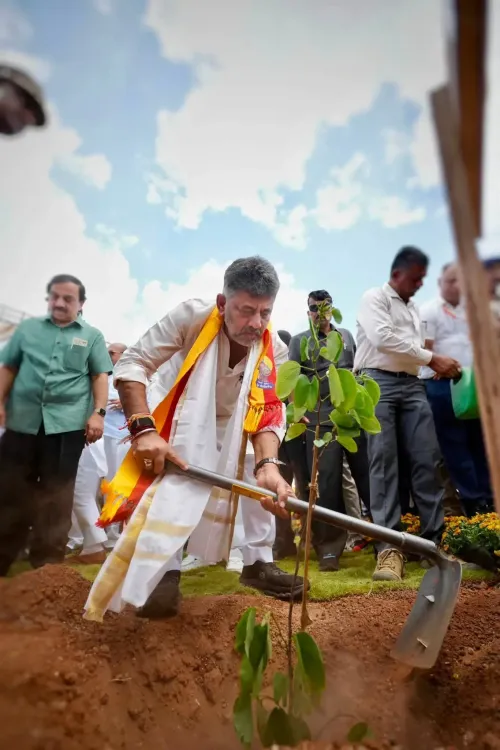
Chief Minister D K Shivakumar joined over 50,000 Bengalureans on Kempegowda Jayanti, 27 June 2026, to plant more than 15 lakh native saplings across the city, framing the drive as a generational commitment to keeping Bengaluru's green cover pace with its urban growth.
Key Takeaways
The drive was held on 27 June 2026 to mark Kempegowda Jayanti , the birth anniversary of Bengaluru's 16th-century founder.
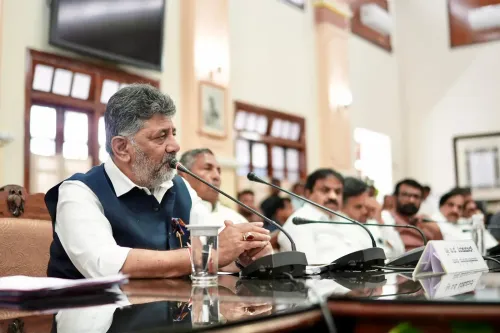
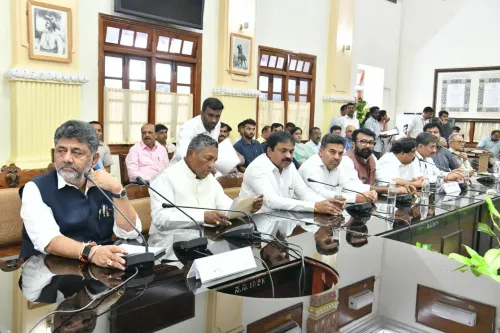
Chief Minister D K Shivakumar personally participated alongside thousands of residents.
The campaign targets planting more than 15 lakh native-species saplings across Bengaluru .
Over 50,000 citizens are participating, making it a large-scale civic co-ownership model.
The focus on native species is intended to maximise ecological benefit and long-term survival rates.
Karnataka has conducted organised tree-planting campaigns since the Vanamahotsava tradition of the 1950s, with this drive among the most ambitious in scale.
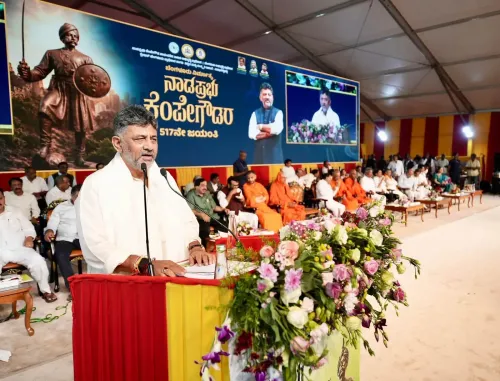
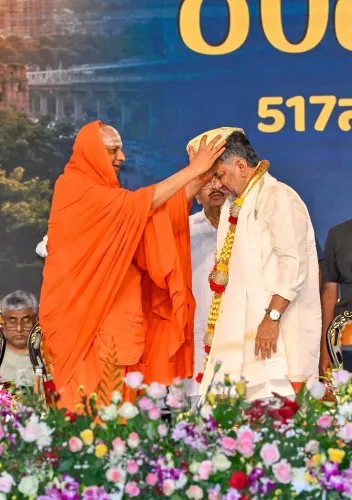
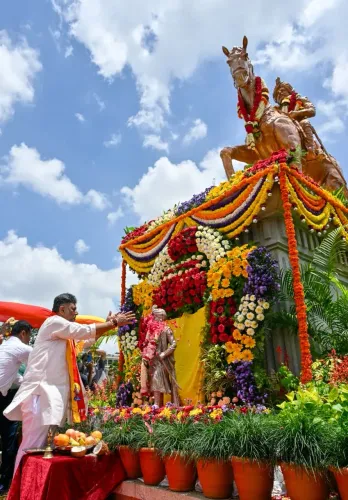
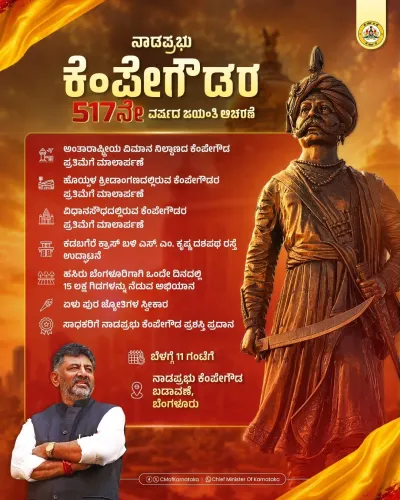
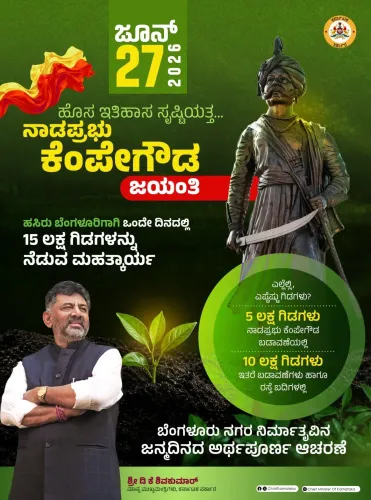
The Chief Minister's Office of Karnataka announced on Saturday, 27 June 2026 that Chief Minister D K Shivakumar joined thousands of Bengaluru residents in a large-scale tree-planting drive held to mark Kempegowda Jayanti, the birth anniversary of the city's 16th-century founder, Nadaprabhu Kempegowda.
Context
The post, written in Kannada and signed by Chief Minister Shivakumar, states that the government joined 'thousands of Bengalureans' to plant saplings to make the celebration of Kempegowda Jayanti 'eternally memorable.' It reflects on the bond between nature and humanity: 'ನಾವು ಪರಿಸರಕ್ಕೆ ಹಸಿರನ್ನು ನೀಡಿದರೆ ಅದು ನಮಗೆ ಉಸಿರಾಡಲು ಸ್ವಚ್ಚ ಗಾಳಿಯನ್ನು, ಕುಡಿಯಲು ಶುದ್ಧ ನೀರನ್ನು ನೀಡುತ್ತದೆ' — 'If we give green to the environment, it gives us clean air to breathe and pure water to drink.'
The campaign aims to plant more than 15 lakh native-species saplings across Bengaluru with the participation of over 50,000 citizens. The Chief Minister expressed a firm resolve: as the city grows, its green cover must grow alongside it.
Policy Backdrop
Karnataka has a long tradition of organised tree-planting, dating back to the Vanamahotsava weeks initiated in the 1950s to expand forest and urban canopy. Municipal and state bodies in Bengaluru stepped up targeted urban greening drives from the 2010s onward to compensate for tree loss caused by rapid infrastructure expansion.
The current campaign follows that lineage but is notable for its scale and its explicit focus on native, locally adapted species — a departure from earlier drives that sometimes planted ornamental or non-native varieties with lower ecological value. Citizen co-ownership is also central: public participation models reduce long-term municipal maintenance costs and build neighbourhood-level stewardship.
Stakeholders and Impact
Bengaluru, now one of India's fastest-growing metropolitan regions, has seen documented declines in tree cover and rising concerns over air quality and water security as concrete expands. Residents stand to benefit most directly if the planted saplings survive to maturity, improving local air quality, groundwater recharge, and urban heat mitigation.
The choice of Kempegowda Jayanti as the occasion links environmental action to civic identity and heritage pride — a framing that broadens the campaign's appeal beyond environmental advocates to the wider Kannada-speaking public. The emphasis on native species also signals alignment with ecological best practices supported by urban forestry experts.
What's Next
The credibility of the drive will depend on post-planting survival audits, which have historically been the weak link in large government-led greening campaigns. Observers will watch whether the state publishes transparent data on sapling survival rates in the months following the drive.
If the Bengaluru model proves effective, it could be extended to other urban centres in Karnataka in future budget cycles — a prospect that would significantly scale the state's urban greening footprint and set a replicable template for civic-led environmental action across southern India.
Point of View
Making the green drive harder to dismiss as routine. For D K Shivakumar, who governs a city under sustained criticism for concretisation and tree felling linked to infrastructure projects, the optics of planting 15 lakh native saplings with 50,000 citizens offers a visible counter-narrative. The emphasis on native species and citizen stewardship also signals a maturing of Karnataka's greening approach — moving from headline numbers toward ecological quality. The real test, however, will be whether survival audits follow, or whether this remains a well-photographed one-day event.
NationPress
26 Sept 2026
Frequently Asked Questions
What is Kempegowda Jayanti and why is it celebrated in Bengaluru?
Kempegowda Jayanti is the birth anniversary of Nadaprabhu Kempegowda, the 16th-century chieftain credited with founding Bengaluru in 1537. It is observed annually on 27 June and is a major civic occasion in the city, often linked to heritage and community activities.
How many trees were planted on Kempegowda Jayanti 2026 in Bengaluru?
The Karnataka government's campaign aimed to plant more than 15 lakh (1.5 million) native-species saplings across Bengaluru, with the participation of over 50,000 citizens, according to the Chief Minister's Office post dated 27 June 2026.
Why did CM DK Shivakumar plant trees on Kempegowda Jayanti?
Chief Minister D K Shivakumar participated in the tree-planting drive to mark Kempegowda Jayanti and to reinforce the state's commitment to expanding Bengaluru's green cover as the city grows. He stated that giving greenery to the environment returns clean air and pure water to residents.
What are native species saplings and why does Karnataka prefer them for urban planting?
Native species are plants that naturally occur in a region and are adapted to local soil, climate, and rainfall. Karnataka's focus on native saplings in Bengaluru is intended to improve survival rates, support local biodiversity, and deliver greater ecological benefits compared to ornamental or non-native varieties.
Does Karnataka have a history of government-led tree planting drives?
Yes. Karnataka has conducted organised tree-planting campaigns since the Vanamahotsava tradition begun in the 1950s. Bengaluru's municipal and state bodies intensified urban greening efforts from the 2010s onward to offset tree loss from infrastructure development.