CM Siddaramaiah pays tribute to Rani Lakshmibai on her birth anniversary
Synopsis
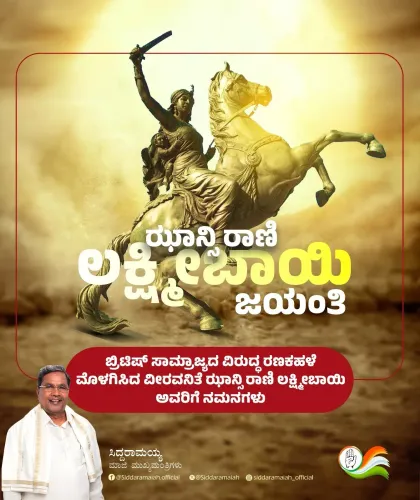
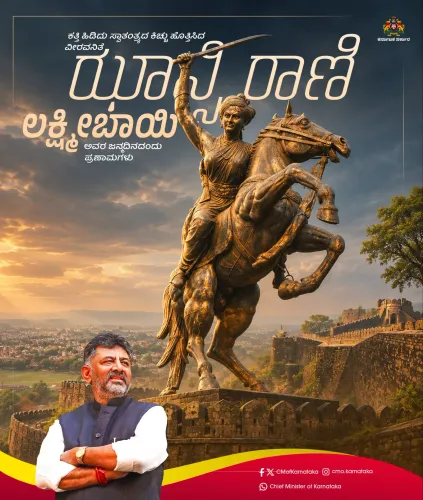
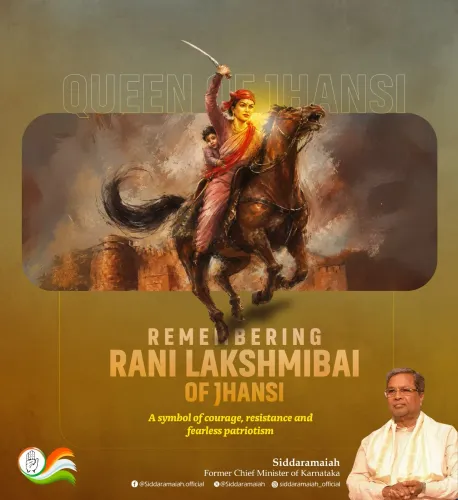
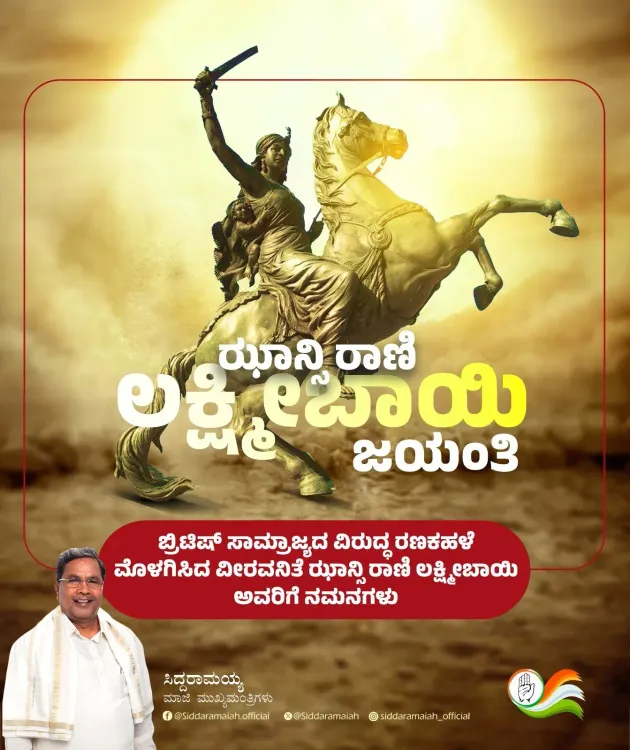
Karnataka Chief Minister Siddaramaiah paid tribute to Rani Lakshmibai on her birth anniversary on 19 November 2026, honouring the Queen of Jhansi as an immortal symbol of resistance against British colonial rule and a timeless inspiration for India.
Key Takeaways
Karnataka CM Siddaramaiah posted a tribute to Rani Lakshmibai of Jhansi on her birth anniversary on 19 November 2026 .
The tribute was posted in Kannada on X, calling her courage and sacrifice 'immortal in the hearts of the people.' Rani Lakshmibai led forces against the British East India Company during the 1857 uprising , one of India's first major anti-colonial rebellions.
Siddaramaiah described her life as 'a perennial source of inspiration for present and future generations.' Tributes to 1857-era freedom fighters on birth anniversaries are a consistent feature of Indian political discourse across party lines.
She defied an empire with a sword — and her name has never stopped resonating. Karnataka Chief Minister Siddaramaiah on Thursday, 19 November 2026, paid a respectful tribute to Rani Lakshmibai of Jhansi on her birth anniversary, honouring the warrior queen whose resistance against British colonial rule made her one of the most enduring symbols of India's freedom struggle.
Posting in Kannada, the Chief Minister wrote: 'ಬ್ರಿಟಿಷರ ಸರ್ವಾಧಿಕಾರಿ ಸಾಮ್ರಾಜ್ಯಕ್ಕೆ ಸೆಡ್ಡುಹೊಡೆದು...' — 'She defied the autocratic British empire and spread the flame of freedom across the length and breadth of this nation.' He called her courage, bravery, and fighting spirit 'immortal in the hearts of the people' and described her life story as 'a perennial source of inspiration for present and future generations.'
Who was Rani Lakshmibai?
Born Manikarnika Tambe, she became the Queen of Jhansi and emerged as one of the foremost leaders of the 1857 uprising — India's first major organised rebellion against British rule. When the British East India Company moved to annex Jhansi under the Doctrine of Lapse, she famously refused to surrender, taking command of her own forces. She died fighting in battle, sword in hand, a moment so vivid it has anchored Indian historical memory for over 160 years.
Siddaramaiah's tribute underscores a broad, cross-party pattern in Indian political culture: on the birth anniversaries of 1857-era and independence movement figures, leaders invoke anti-colonial resistance as a shared national reference point — a living thread connecting past sacrifice to present public life.
Point of View
Reinforcing anti-colonial heritage as a unifying public value. For Siddaramaiah, a senior Congress leader heading a southern state, invoking a north Indian freedom icon signals the party's effort to maintain a pan-Indian patriotic narrative. The 1857 uprising continues to serve as a touchstone across ideological lines — rarely contested, always potent. What matters is the consistency: keeping freedom-struggle memory alive in mainstream political communication speaks to how foundational that legacy remains in shaping India's democratic identity.
NationPress
19 Nov 2026
Frequently Asked Questions
When is Rani Lakshmibai's birth anniversary?
Rani Lakshmibai was born on 19 November 1828 , and her birth anniversary is observed annually on 19 November .
Who was Rani Lakshmibai of Jhansi?
Rani Lakshmibai was the Queen of Jhansi who led armed resistance against the British East India Company during the 1857 uprising , becoming one of India's most celebrated freedom fighters.
Why did Siddaramaiah pay tribute to Rani Lakshmibai?
Karnataka CM Siddaramaiah paid tribute on her birth anniversary, honouring her sacrifice and calling her courage an immortal inspiration for present and future generations of Indians.
What did Siddaramaiah say about Rani Lakshmibai?
He described her as a 'great freedom fighter' who defied British autocratic rule and spread the flame of freedom across India, saying her bravery and fighting spirit remain 'forever alive in the hearts of the people.'
What was the Doctrine of Lapse and why did it matter to Jhansi?
The Doctrine of Lapse was a British annexation policy under which Indian kingdoms without a male heir reverted to the East India Company. When it was applied to Jhansi , Rani Lakshmibai refused to accept it and mounted armed resistance, triggering her role in the 1857 rebellion.