CM Sukhu Eyes AI and Coding in HP School Curriculum
Synopsis
Chief Minister Sukhvinder Singh Sukhu, responding to a student's question at Rajkiya Model Senior Secondary School in Mehla, said the Himachal Pradesh government is considering adding AI, Machine Learning, Data Science, and Coding to school curricula, with Technical Education Minister Rajesh Dharmani leading the study.
Key Takeaways
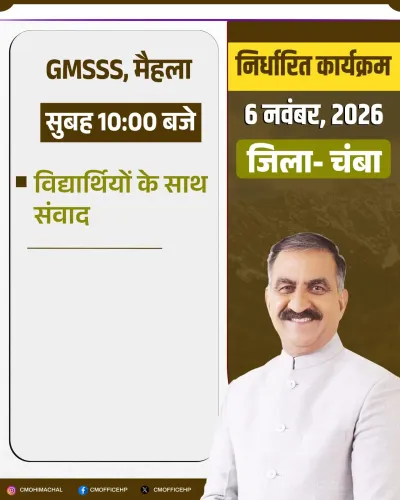
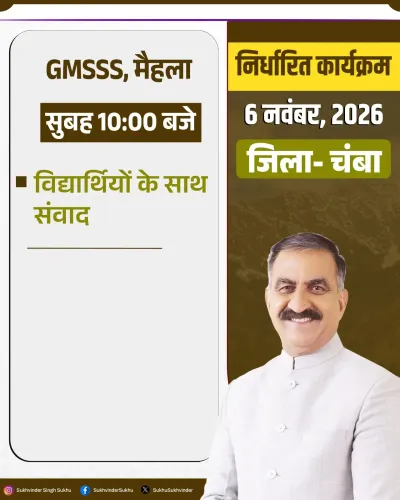
CM Sukhvinder Singh Sukhu visited Rajkiya Model Senior Secondary School, Mehla on 6 November 2026 .
A student asked what the state is doing to prepare students for the AI era — prompting Sukhu's on-record policy signal.
The HP government is considering adding AI, Machine Learning, Data Science, and Coding to the school curriculum.
Technical Education Minister Rajesh Dharmani is currently conducting a formal study on the integration.
The National Education Policy 2020 had already recommended coding and computational thinking from Class 6, giving this move a national policy foundation.
No formal timeline or curriculum notification has been issued yet.
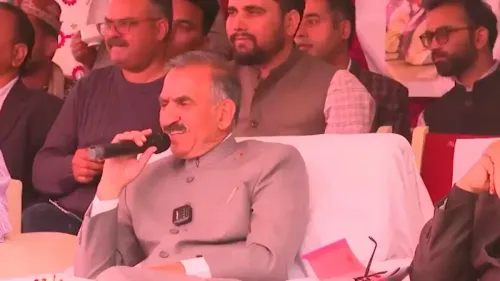
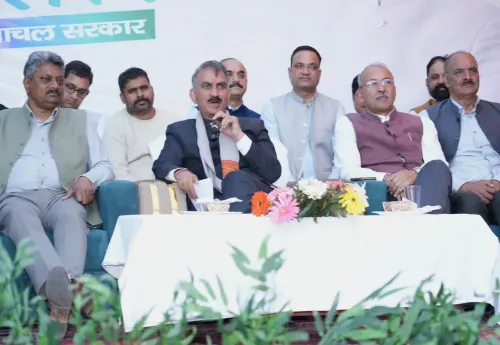
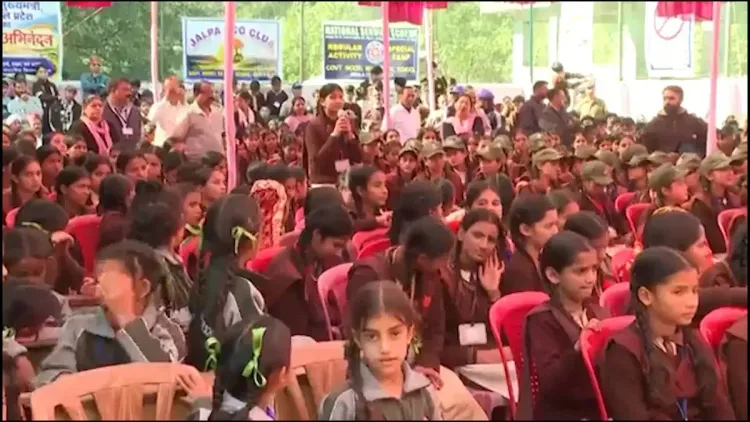
A student's sharp question at a government school in Mehla may have just nudged Himachal Pradesh's education policy forward. Himachal Pradesh Chief Minister Sukhvinder Singh Sukhu visited Rajkiya Model Senior Secondary School, Mehla on Friday, 6 November 2026, where a young girl asked him directly: in the age of AI, what is the state doing to secure students' futures?
Sukhu's answer was candid. The state government, he said, is actively considering adding Artificial Intelligence, Machine Learning, Data Science, and Coding to the school curriculum. He added that Technical Education Minister Rajesh Dharmani is currently studying the matter — a signal that the idea has moved from conversation to formal examination.
A Student's Question That Reflects a Wider Demand
The exchange at Mehla was not just a photo moment. Government school students across Himachal Pradesh — many from rural and semi-urban backgrounds — are increasingly aware that the job market is shifting beneath their feet. The girl's question captured a generational anxiety: will the system equip us, or leave us behind?
That anxiety has a policy anchor. The National Education Policy 2020 explicitly recommended introducing coding, AI concepts, and computational thinking from Class 6 onwards, pushing states to align their curricula with digital-era demands. Several Indian states have already launched pilots or formal revisions to bring AI and coding into government classrooms.
Where Himachal Pradesh Stands — and What Comes Next
Himachal Pradesh has not yet issued a formal curriculum notification. The Chief Minister was careful to frame the development as a consideration under study, not a done deal. Minister Dharmani's review is the next critical step — its outcome will determine whether teacher training, textbook revisions, and infrastructure investments follow in the next academic year.
The stakes are real. Bridging the urban-rural digital divide in emerging technologies is precisely the kind of intervention that can either compound inequality or begin to close it, depending on how rigorously the rollout is designed. A curriculum line item without trained teachers and working computers changes very little on the ground.
The student at Mehla asked the right question. Now the government has to deliver the right answer — in classrooms, not just on social media.
Point of View
The ambition is exactly right; the execution risk lies in teacher readiness and infrastructure gaps that no curriculum revision alone can fix. If the state follows through with a formal notification and training rollout, it could become a credible model for smaller Indian states navigating the AI-skills gap in public education.
NationPress
6 Nov 2026
Frequently Asked Questions
Is Himachal Pradesh adding AI and coding to school curriculum?
The HP government is currently considering adding AI, Machine Learning, Data Science, and Coding to its school curriculum. CM Sukhu confirmed the consideration on 6 November 2026, and Technical Education Minister Rajesh Dharmani is studying the proposal. No formal notification has been issued yet.
What did CM Sukhu say about AI in government schools?
During a visit to Rajkiya Model Senior Secondary School in Mehla, CM Sukhu said the state government is weighing the introduction of AI, Machine Learning, Data Science, and Coding into the school syllabus, in response to a student's direct question about career readiness in the AI era.
What is Rajesh Dharmani's role in HP's AI education plan?
Rajesh Dharmani is Himachal Pradesh's Technical Education Minister. CM Sukhu confirmed that Dharmani is formally studying how AI and coding can be integrated into the state's school curriculum.
Does India's National Education Policy recommend coding in schools?
Yes. The National Education Policy 2020 recommended introducing coding, AI concepts, and computational thinking from Class 6 onwards. Himachal Pradesh's consideration aligns with this national framework.
Which school did CM Sukhu visit in November 2026?
CM Sukhu visited Rajkiya Model Senior Secondary School in Mehla, Himachal Pradesh, on 6 November 2026, where he interacted with students and answered questions about the state's education and technology policy.