CM Sukhu: HP restored OPS, BJP states shut it down
Synopsis
Himachal Pradesh CM Sukhvinder Singh Sukhu has reaffirmed his government's restoration of the Old Pension Scheme, fulfilled in the first cabinet meeting after the 2022 elections, contrasting sharply with BJP-ruled states that have retained the New Pension Scheme introduced in 2004.
Key Takeaways
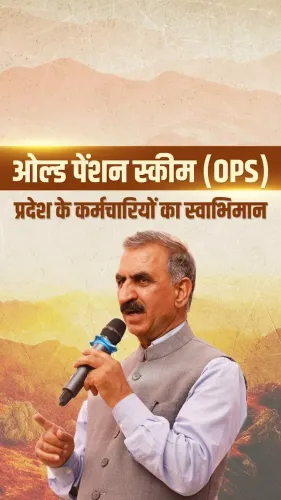
CM Sukhvinder Singh Sukhu confirmed that Himachal Pradesh restored the Old Pension Scheme (OPS) in its very first cabinet meeting after the 2022 election victory.
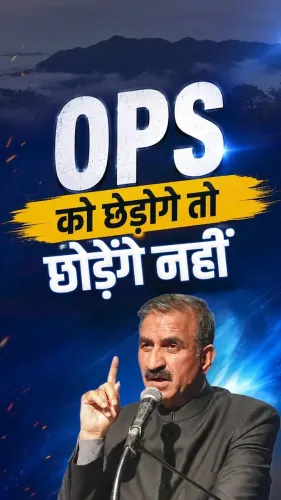
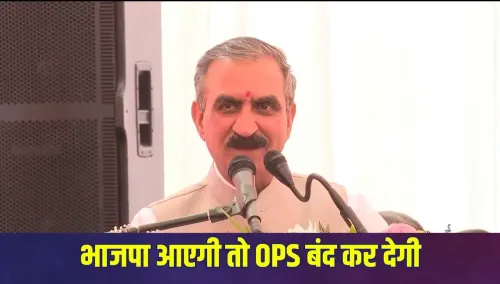
Sukhu directly accused BJP-governed states of shutting down OPS, framing pension policy as a key distinction between Congress and BJP governance.
OPS guarantees a defined payout — typically 50% of last drawn salary — unlike the market-linked New Pension Scheme introduced nationally in 2004 .
Other Congress-ruled states including Rajasthan and Chhattisgarh also restored OPS after their respective election wins, establishing a party-wide pattern.
The fiscal sustainability of OPS for revenue-constrained states like Himachal Pradesh remains a contested question among economists and finance bodies.
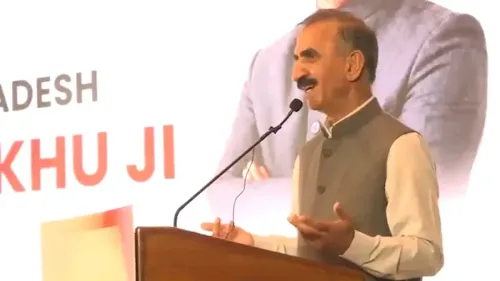
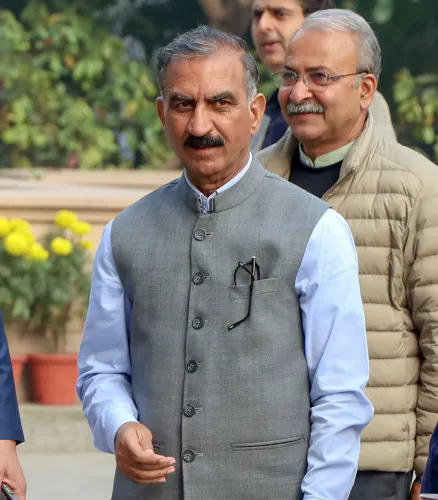
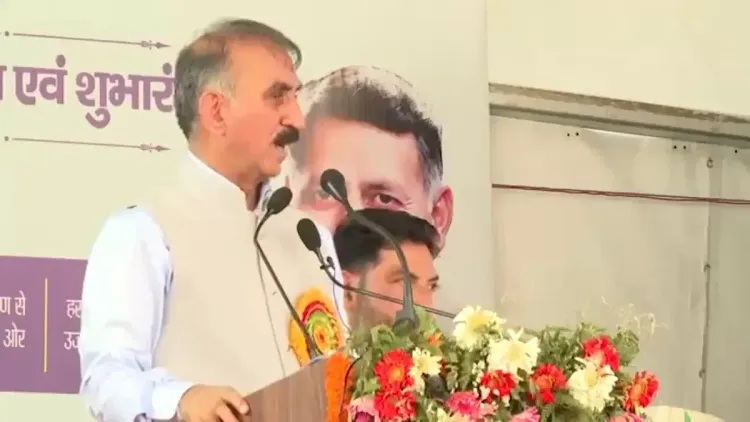
When Himachal Pradesh Chief Minister Sukhvinder Singh Sukhu made a promise to state employees before the 2022 assembly elections, he attached a deadline to it — the very first cabinet meeting. On Wednesday, 12 August 2026, he reminded the public that the promise was kept, and drew a sharp contrast with Bharatiya Janata Party-ruled states where he says the Old Pension Scheme (OPS) has been shut out entirely.
In his post, Sukhu wrote: 'देश में जहाँ-जहाँ बीजेपी की सरकारें हैं, वहाँ उन्होंने ओल्ड पेंशन स्कीम को बंद कर दिया है।' ('Wherever BJP governments exist in the country, they have shut down the Old Pension Scheme.') He added that his government had guaranteed OPS implementation in the first cabinet sitting — and delivered on it — so that retiring employees need not 'hold out their hands and plead before anyone,' but instead live with aatmsamman aur garima — self-respect and dignity.
What OPS means for a retiring government employee
The difference between the two pension systems is not abstract. The Old Pension Scheme guarantees a defined monthly payout — typically 50 per cent of the last drawn salary — funded entirely by the government, with no market risk to the employee. The New Pension Scheme (NPS), introduced nationally in 2004, shifted a portion of retirement savings into market-linked instruments, meaning the final corpus — and therefore the monthly payout — depends on investment performance. For a low-to-middle-ranking state employee with no other savings, that uncertainty is existential.
Sukhu's framing — that OPS lets employees retire with dignity rather than dependence — speaks directly to that anxiety. It is a political argument, but it is also a lived reality for hundreds of thousands of Himachal Pradesh government workers.
Congress states versus BJP states: the pension fault line
Himachal Pradesh is not alone. Several Congress-governed states — including Rajasthan and Chhattisgarh — moved to restore OPS after their respective election wins, turning pension policy into one of the clearest ideological divides between the two national parties at the state level. BJP-ruled states have largely held the line on NPS, arguing that OPS creates long-term fiscal liabilities that crowd out development spending.
That fiscal argument is real. Economists and finance commissions have flagged that a return to defined-benefit pensions places an open-ended burden on state treasuries, particularly in smaller, revenue-constrained states like Himachal Pradesh. How Shimla manages that pressure over the next decade will be a test case watched closely by both pension reformers and employee unions across India.
A poll promise, a cabinet stamp, a political signal
The political choreography matters here. By restoring OPS in the first cabinet meeting after taking office, the Sukhu government converted an election guarantee into a governing credential — and into a replicable template for Congress campaigns in other states. The post on 12 August 2026 is a reminder that the credential still holds, still differentiates, and still resonates with a large, organised constituency: state government employees and their families.
For those employees, the message is simple — your retirement is not a market bet. For everyone else watching Indian pension politics, the message is equally clear: this debate is far from settled.
Point of View
Timed well beyond the initial implementation to keep the issue alive. The OPS debate has become one of the most effective mobilisation tools for Congress in state elections, because it speaks to a large, cohesive, and politically active constituency. However, the long-term fiscal arithmetic of defined-benefit pensions in smaller states is a genuine vulnerability — one that BJP is likely to press harder as state budgets come under scrutiny. The real test of this policy's political durability will come when Himachal Pradesh's pension liabilities start showing up prominently in budget documents.
NationPress
12 Aug 2026
Frequently Asked Questions
What is the Old Pension Scheme and why does it matter for government employees?
The Old Pension Scheme (OPS) guarantees government employees a fixed monthly pension — typically 50% of the last drawn salary — entirely funded by the government, with no market risk. It was replaced nationally by the New Pension Scheme in 2004, which links retirement payouts to market performance, creating uncertainty for employees with no other savings.
Did Himachal Pradesh actually restore the Old Pension Scheme?
Yes. After winning the 2022 Himachal Pradesh assembly elections, the Congress government led by CM Sukhvinder Singh Sukhu restored OPS in its first cabinet meeting, fulfilling a pre-election guarantee made to state employees and officers.
Which states have restored the Old Pension Scheme in India?
Several Congress-governed states including Himachal Pradesh, Rajasthan, and Chhattisgarh moved to restore OPS after their respective election victories since 2022. BJP-ruled states have generally retained the New Pension Scheme introduced in 2004.
Why do BJP-ruled states not implement the Old Pension Scheme?
BJP-governed states have argued that OPS creates large, open-ended fiscal liabilities for state governments, potentially crowding out spending on infrastructure and development. Economists and finance bodies have also flagged concerns about the long-term sustainability of defined-benefit pensions.
What did CM Sukhu say about OPS on 12 August 2026?
CM Sukhu posted that wherever BJP governments exist, they have shut down OPS, while his government had promised and delivered OPS in its first cabinet meeting so that retiring employees could live with self-respect and dignity rather than depending on others.