CM Sukhu: HP to earn Rs 600 cr annually at zero investment
Synopsis
Chief Minister Sukhvinder Singh Sukhu announced on 26 June 2026 that Himachal Pradesh has secured an achievement that will generate approximately Rs 600 crore in annual revenue for the state without requiring any investment, reaffirming his government's commitment to protecting state rights and interests.
Key Takeaways
CM Thakur Sukhvinder Singh Sukhu announced a new achievement that will bring Himachal Pradesh approximately Rs 600 crore per year.
The revenue will be generated without any investment from the state exchequer, making it a structurally significant fiscal gain.
The Chief Minister described protecting the state's 'rights, dignity, and future' as his government's unwavering resolve.
Himachal Pradesh has long sought non-tax revenue sources to reduce reliance on central government transfers.
Specific details of the achievement are yet to be disclosed through official state finance documents or assembly proceedings.
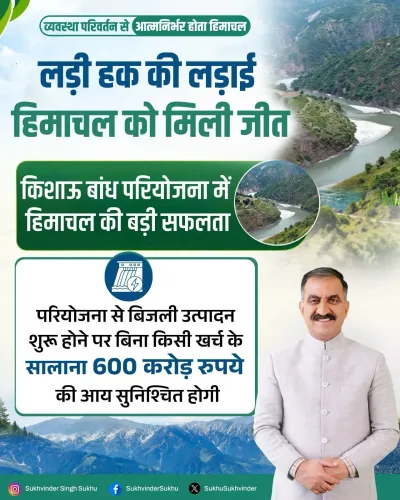
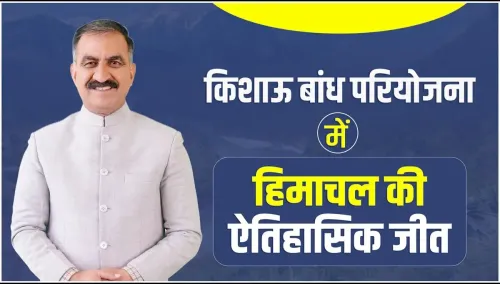
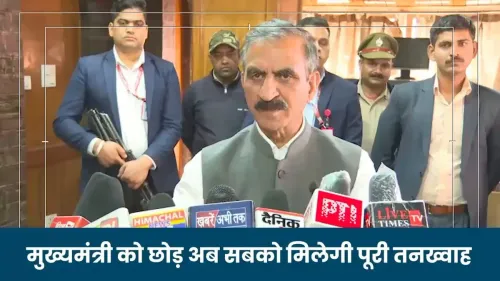
The Chief Minister's Office of Himachal Pradesh, on Friday, 26 June 2026, shared a statement from Chief Minister Thakur Sukhvinder Singh Sukhu announcing that a recent achievement will secure the state an annual income of approximately Rs 600 crore without any investment from the state exchequer.
In the post, CM Sukhu stated — 'इस उपलब्धि से प्रदेश को बिना किसी निवेश के प्रतिवर्ष लगभग 600 करोड़ रुपये की आय सुनिश्चित होगी' ('This achievement will ensure the state an annual income of approximately Rs 600 crore without any investment') — and reaffirmed his government's resolve to protect the rights, dignity, and future of Himachal Pradesh.
Context
The statement, attributed directly to CM Thakur Sukhvinder Singh Sukhu, frames the development as a milestone in the state's pursuit of independent, non-tax revenue streams. The Chief Minister described the state's interests as 'our highest priority at all times,' signalling that the achievement is tied to a broader assertion of state rights under the federal fiscal framework.
Himachal Pradesh has historically relied on central government transfers and grants, given its limited industrial base and the fiscal demands of maintaining a hilly, geographically dispersed administration. Any recurring revenue source that requires no annual capital outlay would represent a structurally significant gain for the state's finances.
Policy Backdrop
Himachal Pradesh is a hydropower-rich state, and successive governments have sought to maximise returns from the state's natural resources — particularly water and power — to reduce dependence on central devolution. The state's economy also leans on tourism and horticulture, sectors that generate employment but are vulnerable to seasonal and climate-related disruptions.
Indian states periodically negotiate or litigate over revenue entitlements from natural resources, central schemes, and royalty arrangements. A zero-investment annual inflow of Rs 600 crore would be a meaningful addition to the state's own-revenue pool, potentially easing fiscal pressure without requiring new taxation or borrowing.
Stakeholders and Impact
The primary beneficiaries, as framed by the Chief Minister's Office, are the residents of Himachal Pradesh. A sustained, investment-free revenue stream of this scale could support state spending on welfare schemes, infrastructure, and public services without adding to the state's debt burden.
CM Sukhu, who has led the state since December 2022, has consistently positioned his administration as a defender of state autonomy and resource rights. The language used — 'rights, dignity, and future' of the state — suggests the achievement may also carry a political dimension, reinforcing the government's standing ahead of future electoral cycles.
What's Next
Formal details of the specific achievement, including the revenue head and the mechanism through which the Rs 600 crore will be realised, are expected to emerge through state budget documents or finance department orders. Assembly debates and official government notifications will be the key documents to watch for a complete picture.
The Chief Minister's unequivocal language — 'our resolve is unwavering' — indicates that this announcement may be the opening of a longer public communication campaign around the state's resource rights, with further policy or legislative steps likely to follow.
Point of View
Rs 600 crore annually' — is designed to resonate with voters who associate Congress governance in Himachal Pradesh with welfare delivery and state pride. The deliberate invocation of state 'rights and dignity' suggests the revenue gain may have been secured against resistance, possibly from a central agency or a private entity, lending it a narrative of struggle and victory. Until the specific mechanism is disclosed, the announcement functions primarily as a political signal, but if the revenue stream is institutionalised, it could meaningfully shift the state's fiscal arithmetic.
NationPress
26 Jun 2026
Frequently Asked Questions
What is the Rs 600 crore annual revenue CM Sukhu announced for Himachal Pradesh?
CM Sukhvinder Singh Sukhu announced on 26 June 2026 that a recent achievement will secure Himachal Pradesh approximately Rs 600 crore in annual income without requiring any investment from the state. The specific source or mechanism has not yet been publicly detailed.
Who is CM Sukhu of Himachal Pradesh?
Thakur Sukhvinder Singh Sukhu is a Congress leader who has served as Chief Minister of Himachal Pradesh since December 2022.
How does Himachal Pradesh earn revenue from natural resources?
Himachal Pradesh earns revenue primarily through hydropower royalties, tourism, and horticulture. The state has long sought to maximise returns from its water and power resources to reduce dependence on central government transfers.
What does 'zero investment revenue' mean for a state government?
Zero-investment revenue refers to income a state receives without having to deploy its own capital — such as royalties, revenue-sharing arrangements, or entitlements from central schemes. For a fiscally constrained state like Himachal Pradesh, such streams can ease budget pressure without adding to debt.
What is the fiscal situation of Himachal Pradesh?
Himachal Pradesh relies heavily on central devolution and grants due to its limited industrial base and the high cost of administering a hilly terrain. Recurring own-revenue sources are therefore a key policy priority for successive state governments.