CM Sukhu: HP Will Not Let Its Resources Be Plundered
Synopsis
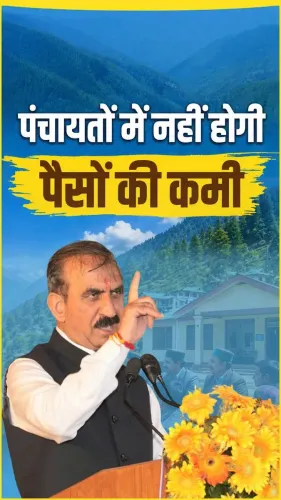
Chief Minister Sukhvinder Singh Sukhu on 14 July 2026 declared Himachal Pradesh will not allow its natural wealth to be plundered, citing the state's hard-won control over Wild Flower Hall, Kishau Dam, and the 1,091 MW Karcham-Wangtoo project as evidence of its resolve to secure resource rights for future generations.
Key Takeaways
CM Sukhvinder Singh Sukhu posted on 14 July 2026 asserting Himachal Pradesh's right over its natural resources.
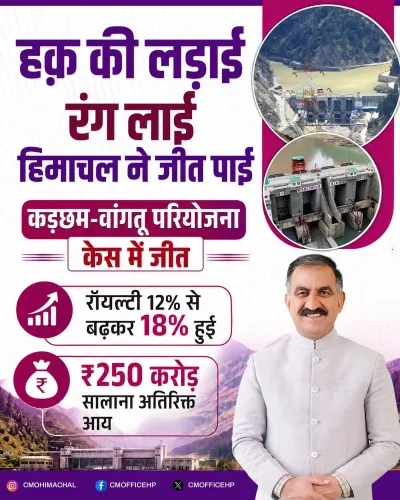
He cited three specific victories: Wild Flower Hall , the Kishau Dam , and the 1,091 MW Karcham-Wangtoo Hydropower Project in Kinnaur .
The Chief Minister pledged to protect the rights of future generations and prevent the 'plundering' of state wealth.
The statement is linked to a broader vision of 'Atmanirbhar Himachal' (self-reliant Himachal Pradesh) through systemic change.
Himachal Pradesh revised its hydropower royalty policy between 2018 and 2022 , increasing free-power entitlements from private developers.
Progress on Kishau Dam clearances and inter-state power-sharing negotiations will be key indicators to watch.
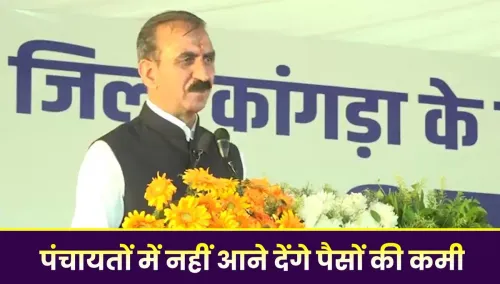
Himachal Pradesh Chief Minister Sukhvinder Singh Sukhu on Tuesday, 14 July 2026, declared that the state will not allow its natural wealth to be appropriated, citing hard-won victories over Wild Flower Hall, the Kishau Dam, and the Karcham-Wangtoo Hydropower Project as proof of the government's resolve to protect state assets.
Context
Posting in Hindi on X, CM Sukhu stated: 'हिमाचल प्रदेश अपने हक की लड़ाई लड़ रहा है' ('Himachal Pradesh is fighting for its rights'). He framed the state's assertion over these three landmark assets as evidence that the government has secured its entitlements through persistent struggle. The message carried a pointed warning: 'We will not let Himachal's wealth be plundered.'
The post also invoked the welfare of future generations, with Sukhu pledging to protect the rights of those yet to come. He closed by linking these battles to a larger vision of 'आत्मनिर्भर हिमाचल' — a self-reliant Himachal Pradesh — to be achieved through systemic transformation.
Policy Backdrop
The three assets cited by CM Sukhu each carry a distinct history of inter-governmental contest. Wild Flower Hall, a heritage property in Mashobra, Shimla, has been at the centre of state government asset-rights disputes. The Kishau Dam, proposed on the Yamuna-Tons river system, has been the subject of negotiations between Himachal Pradesh and Uttarakhand since the early 2000s over equitable sharing of hydropower and irrigation benefits.
The Karcham-Wangtoo Hydropower Project — a 1,091 MW run-of-river project in Kinnaur district — was commissioned around 2011 with royalty and free-power arrangements for the state. Himachal Pradesh revised its hydropower royalty policy between 2018 and 2022, increasing free-power entitlements from private projects, a move that set the tone for the current government's assertive posture on resource revenue.
Himalayan states have long pushed back against legacy agreements that allocated limited shares of hydropower revenues to upstream states. Himachal Pradesh has pursued both litigation and bilateral talks to renegotiate such arrangements, positioning itself as a model for other hill states seeking greater fiscal autonomy from their natural assets.
Stakeholders and Impact
The primary beneficiaries of the state's resource-rights push are the 7.5 million residents of Himachal Pradesh, whose public finances depend significantly on royalties and free power from hydropower projects. Private hydropower developers operating in the state are directly affected by any revision to royalty or free-power norms.
Inter-state dynamics are equally at stake: the Kishau Dam involves shared benefits with Uttarakhand, and any shift in the power-sharing formula has downstream implications for that state's energy planning as well. The Centre's role in mediating such disputes adds a federal dimension to what Sukhu frames as a state-level rights struggle.
What's Next
Observers will watch for concrete movement on Kishau Dam clearances and any fresh inter-state power-sharing pacts that the Sukhu government may be negotiating. State budget statements on hydropower revenue targets will be an early indicator of whether the political assertion translates into fiscal gains.
With CM Sukhu explicitly tying resource sovereignty to the vision of a self-reliant Himachal Pradesh, the statement is likely to set the agenda for the government's economic communication in the months ahead — framing natural-resource revenue as both a rights issue and a development imperative.
Point of View
Sukhu grounds an otherwise broad political pledge in tangible, verifiable wins, lending credibility to the Congress government's narrative of a fighting administration. The invocation of future generations signals that this is being positioned not merely as a governance issue but as an inter-generational equity argument, which has broader electoral salience in a state where hydropower revenue underpins public finances. The framing of 'systemic change' toward self-reliance also echoes Centre-state fiscal debates, suggesting the government may be laying groundwork for more assertive demands in future finance commission or inter-state tribunal proceedings.
NationPress
14 Jul 2026
Frequently Asked Questions
What did CM Sukhu say about Himachal Pradesh's resources?
CM Sukhvinder Singh Sukhu on 14 July 2026 declared that Himachal Pradesh is fighting for its rights and will not allow its natural wealth to be plundered, citing the state's victories over Wild Flower Hall, Kishau Dam, and the Karcham-Wangtoo Hydropower Project as proof of the government's resolve.
What is the Kishau Dam and why is it important for Himachal Pradesh?
The Kishau Dam is a proposed multi-purpose project on the Yamuna-Tons river system that would generate hydropower and provide irrigation benefits shared between Himachal Pradesh and Uttarakhand. Himachal Pradesh has been negotiating since the early 2000s to secure an equitable share of its benefits.
What is the Karcham-Wangtoo Hydropower Project?
The Karcham-Wangtoo Hydropower Project is a 1,091 MW run-of-river project located in Kinnaur district, Himachal Pradesh, commissioned around 2011. The state receives royalty and free power from the project, and revised entitlements were a key policy focus between 2018 and 2022.
What does 'Atmanirbhar Himachal' mean?
'Atmanirbhar Himachal' means a self-reliant Himachal Pradesh. CM Sukhu used the phrase to describe his government's goal of achieving fiscal and economic independence by asserting greater control over the state's natural resources, particularly hydropower revenue.
Why do Himalayan states fight for greater control over hydropower projects?
Himalayan states like Himachal Pradesh are the source of major river systems and host large hydropower projects, but legacy agreements often allocated them limited revenue shares. These states have increasingly pursued litigation and renegotiation to secure royalties, free power, and other benefits that better reflect their contribution as upstream resource providers.