CM Sukhu Orders White Paper on BJP Era Land Deals in HP
Synopsis
Himachal Pradesh CM Sukhvinder Singh Sukhu has announced a white paper on BJP era corruption, citing a 5,000 bigha land deal in Nalagarh and Baddi at ₹1 crore without registration. An eight member committee under Deputy CM Mukesh Agnihotri will compile the report.
Key Takeaways
CM Sukhvinder Singh Sukhu announced a 'white paper' on alleged BJP era corruption at a CLP meeting on November 16, 2026 .
An eight member committee headed by Deputy CM Mukesh Agnihotri has been constituted to compile the report.
The committee also includes ministers Vikramaditya Singh , Harshvardhan Chauhan , and Dhaniraam Shandil .
The central allegation is a 99 year lease of 5,000 bighas of land in Nalagarh and Baddi at just ₹1 crore , claimed to be done without registration.
The Congress government says the white paper will expose 'thousands of crores' in corruption once published.
The BJP governed Himachal Pradesh from 2017 to 2022 before losing to Congress in the state assembly elections.
A five thousand bigha land parcel in Nalagarh and Baddi leased for 99 years at just ₹1 crore — without registration. That single allegation, aired Monday by Himachal Pradesh Chief Minister Sukhvinder Singh Sukhu, is the kind of number that stops a room cold. And now, the Congress government wants it all in writing.
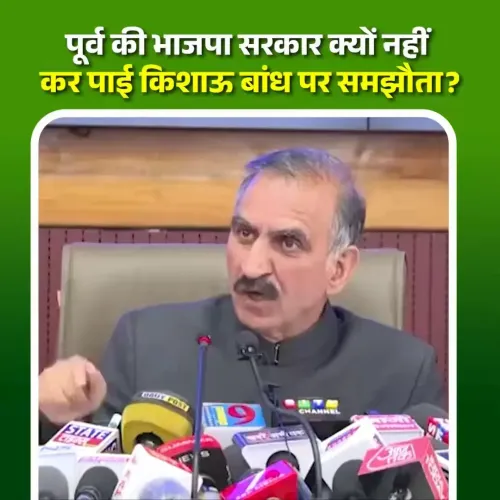
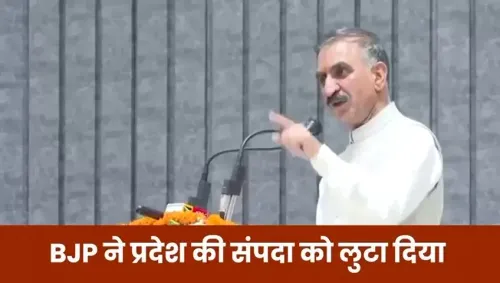
At a Congress Legislature Party (CLP) meeting on November 16, 2026, CM Sukhu announced that the state government has decided to bring out a formal 'white paper' documenting what it describes as large scale corruption during the previous Bharatiya Janata Party government's tenure in Himachal Pradesh (2017–2022). The post on X, written in Hindi, states: 'hamne CLP baithak mein poorv BJP sarkar ke karykaal mein hue bhrashtachar par "shwet patra" laane ka nirnay liya hai' — 'We have decided in the CLP meeting to bring a white paper on the corruption that occurred during the previous BJP government's tenure.'
Eight Members, One Mandate: The Agnihotri Committee
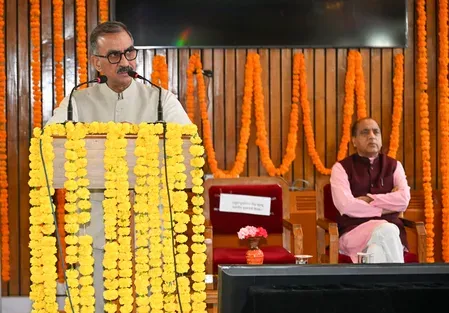
To build the case, an eight member committee has been constituted under the leadership of Deputy Chief Minister Mukesh Agnihotri, a senior Congress figure and one of the most prominent faces of the Himachal Pradesh government. Among the named members are cabinet minister Vikramaditya Singh, along with Harshvardhan Chauhan and Dhaniraam Shandil. The committee's brief is to compile evidence across what CM Sukhu describes as 'numerous cases involving thousands of crores of rupees in corruption.'
The panel's work will feed directly into the white paper — a document the CM says will be placed before 'the court of the people' once the report is ready. That framing is deliberate: white papers in Indian state politics function as much as political weapons as governance instruments.
The Nalagarh–Baddi Land Allegation
The sharpest charge in CM Sukhu's post centres on industrial land in Nalagarh and Baddi — both located in Solan district, the dense pharmaceutical and manufacturing corridor that anchors Himachal Pradesh's industrial economy. According to the CM, 5,000 bighas of land were handed over on a 99 year lease at ₹1 crore — described as being done under the guise of 'customised packages' and, critically, without formal registration.
The 'customised package' scheme was a framework used to attract large industrial investments with tailored incentives including land, power, and tax concessions. Critics have long argued such discretionary frameworks created scope for below market deals. The Congress government says this case is a prime example — and it is not alone.
A Pattern Older Than This Government
Forming committees to investigate a predecessor's industrial and land decisions is a well worn chapter in Indian state politics. After virtually every change of government in states with significant industrial hinterlands — from Uttar Pradesh to Rajasthan to Andhra Pradesh — the incoming party has launched some version of this exercise. The outcomes vary: some produce actionable findings, others expire quietly after serving their political purpose.
What keeps this one worth watching is the specificity of the allegation — a named sum, named places, a named mechanism — and the seniority of the committee's chair. Deputy CM Agnihotri's involvement signals this is not a junior level inquiry designed to gather dust.
The clock is now on the committee. When the report lands, it goes straight to the public domain — and straight into the political arena ahead of the next electoral cycle. In Himachal Pradesh, that arena is never quiet for long.
Point of View
But the specificity of the land lease allegation — a named price, named locations, and a missing registration — gives it sharper legal and political edges than most. Anchoring the committee under Deputy CM Agnihotri rather than a junior minister signals genuine institutional intent, though the ultimate test is whether the report reaches public courts or legislative forums before it loses momentum. With Himachal Pradesh's mountainous electoral terrain always in play, the Congress is simultaneously building a governance record and constructing a campaign narrative — both visible in a single X post.
NationPress
16 Nov 2026
Frequently Asked Questions
What is the Himachal Pradesh white paper on BJP corruption?
It is a proposed government document that will compile allegations of financial irregularities during the BJP's tenure in Himachal Pradesh from 2017 to 2022, as announced by CM Sukhvinder Singh Sukhu at a CLP meeting on November 16, 2026.
Who is heading the committee for the white paper in Himachal Pradesh?
Deputy Chief Minister Mukesh Agnihotri is heading the eight member committee constituted to prepare the white paper, which also includes ministers Vikramaditya Singh, Harshvardhan Chauhan, and Dhaniraam Shandil.
What is the Nalagarh and Baddi land lease controversy?
CM Sukhu alleged that 5,000 bighas of land in Nalagarh and Baddi were leased for 99 years at just ₹1 crore under the name of customised packages during the BJP government's tenure, purportedly without formal registration.
What is a customised package in Himachal Pradesh's industrial policy?
A customised package is a framework under which the Himachal Pradesh government offers tailored incentives — including land, power, and tax concessions — to attract large industrial investments, often with discretionary terms.
When did Congress come to power in Himachal Pradesh?
The Indian National Congress won the Himachal Pradesh assembly elections in December 2022, ending the BJP's five year term from 2017 to 2022, with Sukhvinder Singh Sukhu sworn in as Chief Minister.