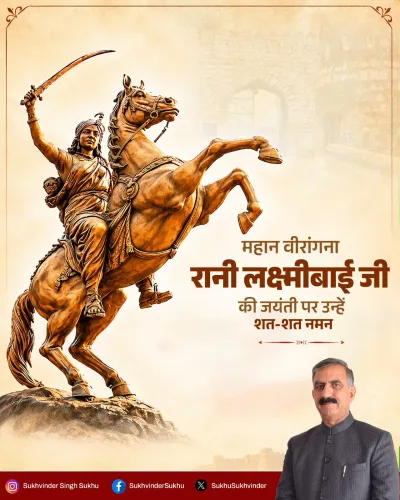
CM Sukhu pays tribute to Rani Lakshmibai on her birth anniversary
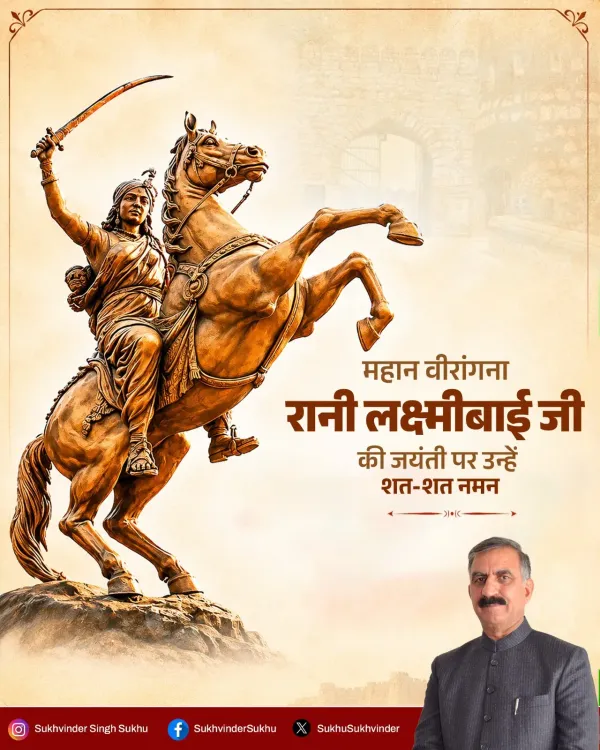
Synopsis
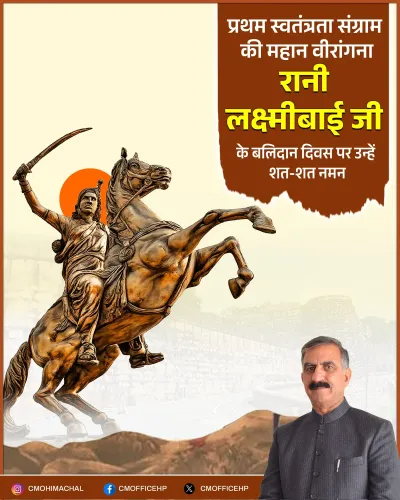
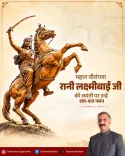
Himachal Pradesh CM Sukhvinder Singh Sukhu paid tribute to Rani Lakshmibai on her birth anniversary, honouring the 1857 warrior queen as an unmatched symbol of women's courage, sacrifice, and dedication to the motherland.
Key Takeaways
CM Sukhvinder Singh Sukhu posted a tribute to Rani Lakshmibai on her birth anniversary on 19 November 2026 .
He described her as an extraordinary example of nari shakti — women's power — and saluted her sacrifice for the motherland.
Rani Lakshmibai led the resistance against British forces during the 1857 Indian Rebellion as Queen of Jhansi.
She died in battle near Gwalior in June 1858 , cementing her status as a national icon of valor and women's agency.
Commemorating 1857 revolt figures on their anniversaries is a widespread, cross-party tradition in Indian political culture.
She rode into battle against the most powerful empire of her age — and Rani Lakshmibai of Jhansi has never stopped inspiring. On her birth anniversary, Himachal Pradesh Chief Minister Sukhvinder Singh Sukhu paid solemn homage to the warrior queen, calling her an unparalleled symbol of nari shakti — women's power — whose courage continues to light the path of national service.
Posting on Thursday, 19 November 2026, CM Sukhu wrote in Hindi: 'On the birth anniversary of the great warrior Rani Lakshmibai ji — an extraordinary example of women's power — I offer my respectful salutations. Her indomitable courage, sacrifice, and valor in defence of the honor of the motherland will forever inspire service to the nation and dedication to duty.'
The queen who refused to surrender Jhansi
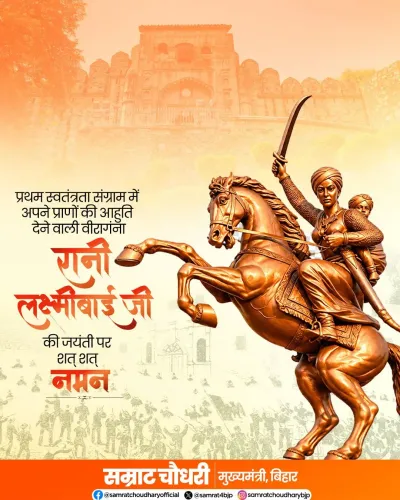
Rani Lakshmibai became the defining face of the 1857 Indian Rebellion against British colonial rule. When British forces moved to annex the kingdom of Jhansi under the Doctrine of Lapse, she refused capitulation and took up arms — personally leading her troops on horseback into combat. Her death in battle near Gwalior in June 1858 sealed her legend as the embodiment of resistance and sacrifice.
Her story carries a particular resonance beyond military valor: she remains one of the earliest and most powerful symbols of women's agency in India's public and political life, nearly a century before independence was won.
A tradition of remembrance across party lines
Tributes to 1857 revolt figures on their birth and death anniversaries are a consistent thread in Indian political culture, cutting across party and ideological lines. Leaders at the state and national level routinely invoke the icons of that era to reinforce themes of patriotism, sacrifice, and national identity — gestures that speak to a shared civic memory even as political debates divide.
CM Sukhu's message fits squarely within this tradition, drawing on Rani Lakshmibai's dual legacy: the soldier who fought for territorial sovereignty, and the woman who broke every convention of her time to do it.
Her legend endures not in stone alone — but in every generation that finds, in her story, a reason to hold the line.
Point of View
Invoking the warrior queen's legacy of nari shakti also subtly aligns the Congress with its long-running women's empowerment narrative at the state level. The 1857 Rebellion anniversary circuit remains one of the rare moments where the political class speaks, visibly and voluntarily, with a single voice on national identity.
NationPress
19 Nov 2026
Frequently Asked Questions
When is Rani Lakshmibai's birth anniversary?
Rani Lakshmibai's birth anniversary falls on 19 November , commemorating the birthday of the Queen of Jhansi who led the 1857 uprising against British rule.
Who was Rani Lakshmibai?
Rani Lakshmibai was the Queen of Jhansi who became a leading figure of the 1857 Indian Rebellion against British colonial rule, renowned for her military leadership and sacrifice in defence of her kingdom.
What did CM Sukhu say about Rani Lakshmibai?
CM Sukhvinder Singh Sukhu called Rani Lakshmibai an unparalleled symbol of nari shakti and said her indomitable courage, sacrifice, and valor in defending the motherland would forever inspire national service and dedication to duty.
Why do Indian politicians tribute Rani Lakshmibai every year?
Indian political leaders across parties commemorate Rani Lakshmibai as part of a broader tradition of honouring 1857 Rebellion figures on their anniversaries, reinforcing themes of patriotism, sacrifice, and national identity.
How did Rani Lakshmibai die?
Rani Lakshmibai died in battle near Gwalior in June 1858 while fighting British forces during the 1857 Indian Rebellion, becoming a lasting symbol of resistance and martial valor.