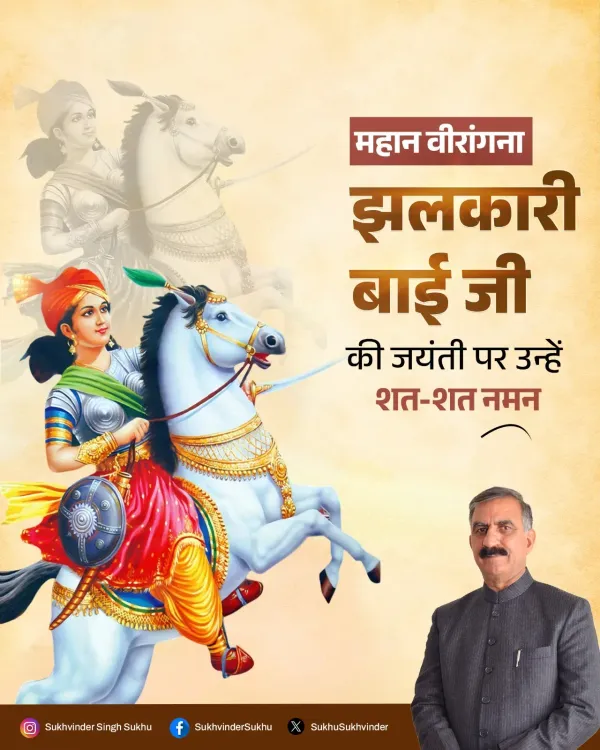
CM Sukhu pays tribute to warrior Jhalkari Bai on her birth anniversary
Synopsis
Himachal Pradesh CM Sukhvinder Singh Sukhu honoured Jhalkari Bai, the Dalit commander of the Durga Dal who fought under Rani Lakshmibai in the 1857 uprising, on her birth anniversary, calling her contribution to the motherland's defence immortal in Indian history.
Key Takeaways
CM Sukhvinder Singh Sukhu posted a tribute to Jhalkari Bai on her birth anniversary, 22 November 2026 .
Jhalkari Bai was a Dalit warrior who commanded the Durga Dal , the all-women regiment under Rani Lakshmibai during the 1857 uprising .
Sukhu described her as the 'embodiment of valour' whose sacrifice would remain 'immortal in Indian history.' Her legacy is especially significant for Dalit communities , whose oral traditions preserved her story for generations before mainstream recognition followed.
Indian political leaders increasingly use such anniversaries to publicly foreground Dalit contributions to the freedom struggle.
A Dalit woman who stood at the vanguard of India's first war of independence, Jhalkari Bai commanded the elite Durga Dal — the all-women fighting force of Jhansi — and her birth anniversary on Sunday, 22 November 2026, drew a solemn tribute from Himachal Pradesh Chief Minister Sukhvinder Singh Sukhu, who honoured her legacy of courage, sacrifice, and service to the motherland.
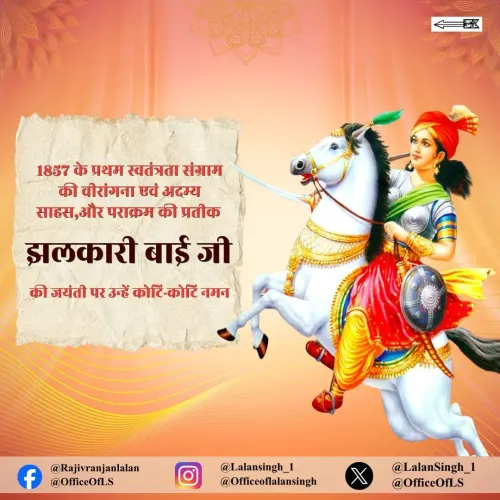
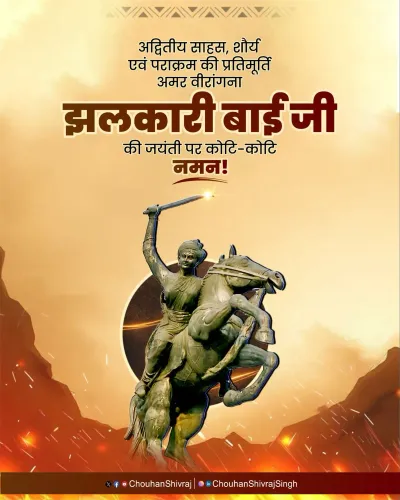
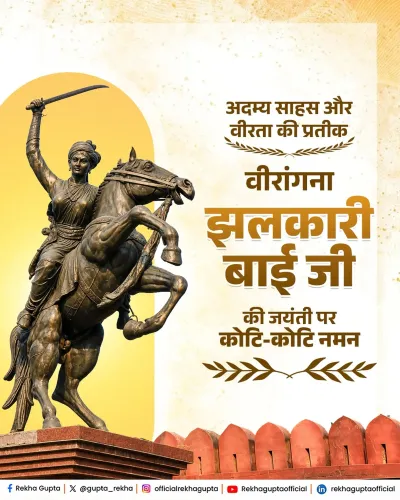
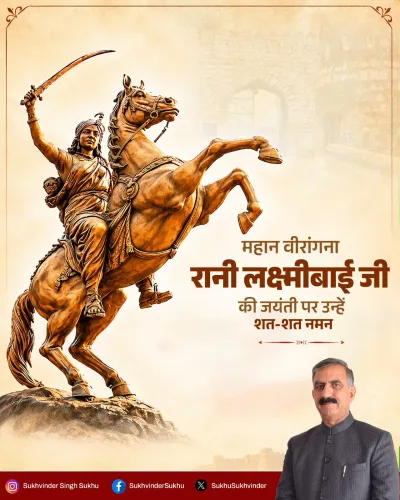
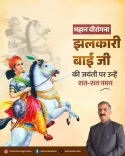
Posting on X, CM Sukhu wrote: 'Durga Dal ki senapati evam shaurya ki pratimoorti veerangana Jhalkari Bai ji ki jayanti par unhe sadar naman' — paying his respects to the 'commander of the Durga Dal and embodiment of valour,' adding that her 'saga of courage, sacrifice, and unparalleled contribution to the defence of the motherland will remain immortal in Indian history forever.'
Who was Jhalkari Bai — the soldier history almost forgot
Jhalkari Bai was a Dalit warrior who rose to command the Durga Dal, the specially trained women's regiment that served under Rani Lakshmibai during the 1857 uprising against British colonial rule. Her role in the defence of Jhansi Fort made her one of the most consequential but least celebrated figures of that rebellion. Where mainstream historical accounts long centred on queens and chieftains of upper-caste lineage, Jhalkari Bai's story endured primarily in the oral traditions and folk memory of Kori and other Dalit communities.
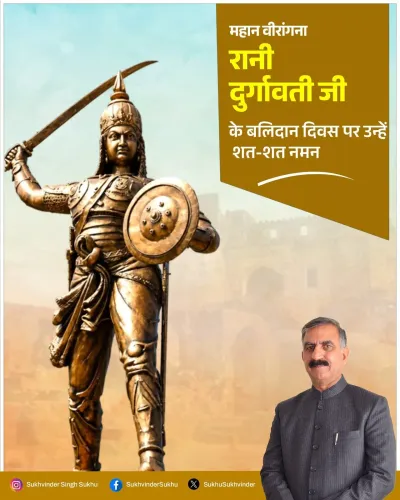
That gap in the official record has narrowed significantly in recent decades, as Dalit scholars, social movements, and state governments across India have reclaimed her as a symbol of both martial bravery and social inclusion in the independence narrative. Her statues now stand in several cities, and her birth anniversary is observed with public ceremonies in Uttar Pradesh, Madhya Pradesh, and beyond.
Political tributes and the broader Dalit remembrance moment
Tributes to 1857 revolt figures from marginalised communities have become a steady feature of Indian political discourse — a recognition, amplified on social media, that the freedom struggle was fought across caste and class lines. CM Sukhu's post fits a pattern of Congress leaders actively foregrounding Dalit heroes to signal inclusive nationalism, particularly at a time when competition for Dalit political identity is sharpest at the state level.
The gesture carries symbolic weight beyond ceremony. Anchoring a tribute to a Dalit woman warrior in the language of national glory — 'immortal in Indian history' — is a deliberate act of historical reframing, one that Dalit communities across the country have long demanded and that now finds mainstream political expression.
Jhalkari Bai's story is not a footnote. It is a corrective.
Point of View
Governing a hill state with its own distinct social fabric, aligning with this broader Congress emphasis on Dalit inclusion reinforces a national party identity at the grassroots. The pattern also reflects a wider competitive dynamic: as multiple parties contest Dalit political identity, the anniversary calendar of marginalised freedom fighters has become contested cultural terrain, making each tribute both a civic gesture and a strategic statement.
NationPress
22 Nov 2026
Frequently Asked Questions
Who was Jhalkari Bai?
Jhalkari Bai was a Dalit warrior who commanded the Durga Dal, the all-women fighting unit, under Rani Lakshmibai of Jhansi during the 1857 uprising against British colonial rule. She is celebrated for her bravery in the defence of Jhansi Fort.
What is the Durga Dal?
The Durga Dal was a specially trained all-women regiment that served under Rani Lakshmibai of Jhansi during the 1857 revolt. Jhalkari Bai served as its commander and is its most celebrated figure.
Why did CM Sukhu pay tribute to Jhalkari Bai?
Himachal Pradesh CM Sukhvinder Singh Sukhu posted a tribute on 22 November 2026, the birth anniversary of Jhalkari Bai, honouring her courage, sacrifice, and contribution to the defence of the motherland during the 1857 uprising.
Why is Jhalkari Bai significant for Dalit communities?
Jhalkari Bai is a symbol of Dalit martial bravery and social inclusion in India's freedom struggle. Her story, long preserved in Dalit oral tradition before receiving mainstream recognition, represents the broader contribution of marginalised communities to the 1857 revolt.
When is Jhalkari Bai's birth anniversary celebrated?
Jhalkari Bai's birth anniversary falls on 22 November. In 2026, the occasion was marked by tributes from political leaders including Himachal Pradesh Chief Minister Sukhvinder Singh Sukhu.