Pinarayi Vijayan calls Modi's worker concern 'political theatrics'
Synopsis
Kerala Chief Minister Pinarayi Vijayan accuses PM Narendra Modi of 'political theatrics' for questioning corporate India's wage and jobs record, arguing that 12 years of tax concessions to big business — including the landmark 2019 corporate tax cut — make the Prime Minister's sudden worker-sympathy untenable.
Key Takeaways
Kerala CM Pinarayi Vijayan publicly accused PM Narendra Modi of staging 'political theatrics' by questioning corporates on wages and jobs on November 22, 2026 .
Vijayan cited 12 years of corporate tax cuts and concessions under Modi as the foundation of his critique.
The September 2019 corporate tax reduction — from 30% to 22% for existing firms, and 15% for new manufacturers — is central to the opposition's narrative.
The CPI(M) argues that rising corporate profits during this period were not matched by wage or employment gains for ordinary workers.
Vijayan frames any current Modi pressure on corporates as an attempt to escape accountability for his own government's economic architecture.
Labour codes, minimum wage debates, and upcoming employment data remain the key policy battlegrounds ahead.
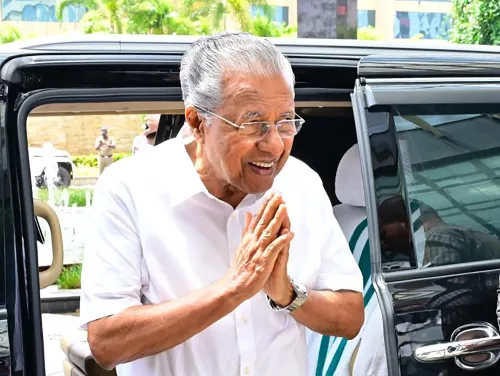
Twelve years of corporate tax cuts, and now a sudden sympathy for the worker — Kerala Chief Minister Pinarayi Vijayan isn't buying it. On Sunday, November 22, 2026, the CPI(M) Politburo member fired a pointed broadside at Prime Minister Narendra Modi, accusing him of performing concern for ordinary workers after spending over a decade engineering an economic model that he says was built to serve large corporates.
The accusation: a decade of corporate favour, now a change of tune
Vijayan's post cuts straight to the charge: 'After spending 12 years cutting corporate taxes and extending concessions to big businesses, Narendra Modi is now pretending to speak for ordinary people by questioning why corporates have not raised wages or created more jobs.' The CPI(M) leader frames Modi's apparent shift as a political sleight of hand — not a policy correction.
The reference to tax cuts is grounded in documented history. In September 2019, the central government slashed the base corporate tax rate from 30% to 22% for existing companies and introduced a headline rate of 15% for new manufacturing firms — one of the steepest such reductions in India's post-liberalisation era. The stated aim was to attract investment and signal ease of doing business. Critics, including the CPI(M), argued at the time that the relief flowed primarily to shareholders and promoters rather than to the wage floor.
Stagnant wages, rising profits — the opposition's core argument
Vijayan's criticism sits within a well-worn but persistently sharp opposition narrative: that corporate profit margins expanded significantly in the years following the 2019 tax relief, while real wages for a large section of India's workforce either stagnated or failed to keep pace with the cost of living. 'When corporate profits soared while ordinary people struggled with stagnant wages and rising living costs, where was this concern?' he asks — a rhetorical question designed to place the burden of proof squarely on the government.
Indian opposition parties, including the CPI(M), have consistently challenged the BJP-led government's framing that investment incentives automatically translate into job creation and wage growth. Labour economists and independent researchers have documented uneven employment outcomes through much of this period, with formal job numbers and wage data remaining contested terrain in policy debates.
Why Modi's framing is now politically inconvenient, Vijayan argues
'Having built an economic model that favours corporates, Modi cannot now escape responsibility by putting on a show of confronting them.' That closing line is the political thrust of the post — the argument that any public pressure the Prime Minister now exerts on corporate India is undermined by his own government's decade-long policy architecture.
The CPI(M) has long positioned itself as a bulwark for organised labour and wage rights, and Vijayan's intervention reflects that ideological anchor. It also reflects a broader strategic calculation: as employment and cost-of-living concerns gain salience among voters, the left intends to hold the ruling party accountable to its own record rather than allow a rebranding moment to go unchallenged.
Parliamentary debates on labour codes, minimum wage revision, and the next Economic Survey's employment figures will be the real test of whether this exchange moves beyond rhetoric — on either side.
Point of View
He forces the debate onto verifiable legislative history rather than contested intent. The timing matters — with cost-of-living pressures remaining politically potent, the CPI(M) is competing with other opposition formations to own the 'worker vs. corporate' frame heading into future electoral cycles. Whether this lands as principled accountability or partisan posturing will depend largely on what employment and wage data emerges in the next Economic Survey.
NationPress
22 Nov 2026
Frequently Asked Questions
What did Pinarayi Vijayan say about Modi and corporate wages?
Vijayan accused PM Modi of 'political theatrics' for questioning why corporates have not raised wages or created more jobs, arguing that 12 years of corporate tax cuts and concessions make the concern disingenuous.
What is the 2019 corporate tax cut Vijayan is referring to?
In September 2019, the Modi government reduced the base corporate tax rate from 30% to 22% for existing companies and introduced a 15% rate for new manufacturing firms, one of the largest such cuts in recent Indian history.
What is CPI(M)'s position on India's economic policy under Modi?
The CPI(M) has consistently argued that BJP-led economic policies have prioritised corporate incentives and investment-friendly measures over employment generation, wage growth, and the welfare of ordinary workers.
Why is Vijayan calling Modi's concern for workers 'political theatrics'?
Vijayan argues that because Modi's own government built an economic model favouring corporates — including major tax relief — any public pressure he now applies on corporate India over wages or jobs is performative rather than substantive.
What policy debates are expected next on wages and employment in India?
Parliamentary debates on pending labour codes, minimum wage revisions, and the findings of the next Economic Survey on employment and wage trends are seen as the key forums where these arguments will be tested.