CM Pinarayi backs protest demanding CEC Gyanesh Kumar's resignation
Synopsis
Kerala Chief Minister Pinarayi Vijayan has backed mass protests demanding CEC Gyanesh Kumar's resignation, accusing the Modi government and Sangh Parivar of deploying repression to silence democratic dissent and undermine constitutional institutions.
Key Takeaways
Kerala CM Pinarayi Vijayan publicly backed protests demanding the resignation of Chief Election Commissioner Gyanesh Kumar on October 10, 2026 .
Vijayan directly named the Modi government and the Sangh Parivar , accusing them of repressing democratic dissent.
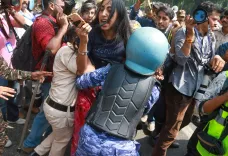
Protesters have been met with barricades , which Vijayan condemned as a symbol of governmental fear of the people's voice.
The demand targets the structural change to the Election Commissioner selection process , which removed the Chief Justice of India from the panel.
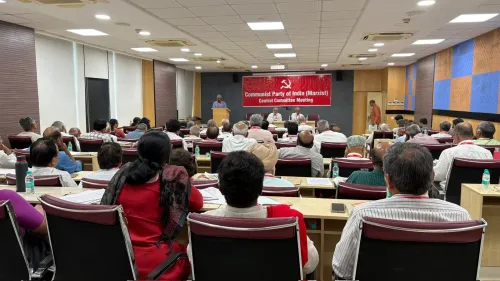
As a CPI(M) Politburo member , Vijayan's statement amplifies the Left's national push to defend electoral commission independence.
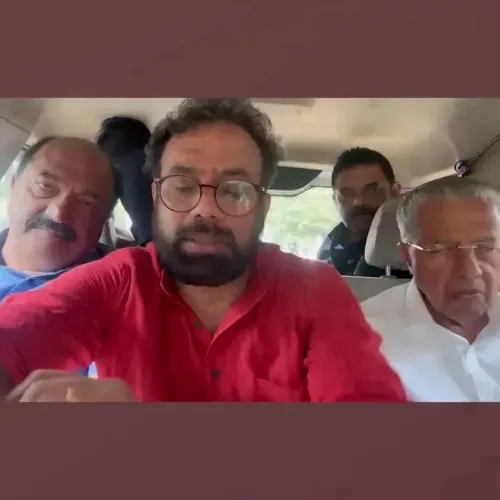
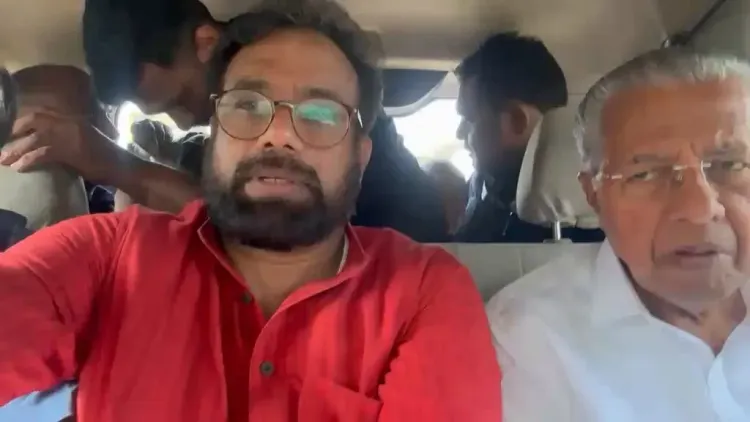
The post included a video , indicating a coordinated, high-visibility Opposition messaging effort.
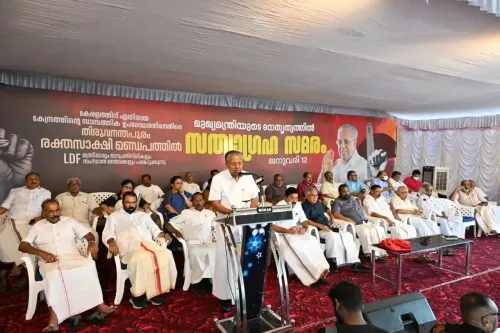
When a sitting Chief Minister calls a mass street demonstration an act of constitutional defence, the political temperature has already crossed a threshold. Kerala Chief Minister Pinarayi Vijayan posted on X on Saturday, October 10, 2026, throwing his full weight behind thousands of protesters who have gathered demanding the resignation of Chief Election Commissioner (CEC) Gyanesh Kumar, and directly accusing the Modi government and the Sangh Parivar of deploying repression to silence democratic dissent.
What Vijayan said — and who he targeted
Vijayan's post did not mince words. 'When those in power fear the voice of the people, democracy itself is under attack,' he wrote, framing the deployment of barricades against protesters as evidence of governmental insecurity rather than law-and-order management. He named both the Modi government and the Sangh Parivar as forces of repression, signalling that the Communist Party of India (Marxist) — a key pillar of the Opposition — views this moment as a direct contest over the integrity of India's electoral machinery.
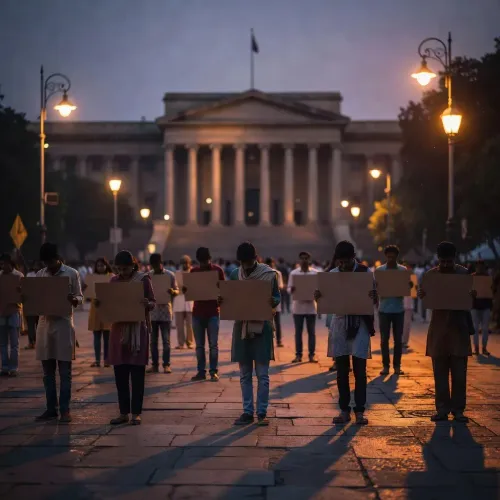
The post explicitly states that 'thousands have gathered to defend the Constitution and the right to vote' — language that elevates a demand for a single official's resignation into a broader civilisational argument about who controls the republic's foundational institutions.
The demand at the centre: CEC Gyanesh Kumar's resignation
Gyanesh Kumar has been a lightning rod for Opposition criticism since his appointment as Chief Election Commissioner. Opposition parties have repeatedly questioned the process by which Election Commissioners are now selected — a process altered by legislation that removed the Chief Justice of India from the selection panel — arguing it gives the executive disproportionate influence over an institution meant to be a constitutional watchdog. The demand for Kumar's resignation reflects that deeper anxiety: that the election body's independence has been structurally compromised.
Barricades erected around protest sites — referenced explicitly in Vijayan's post — have become a flashpoint of their own, with demonstrators and Opposition leaders framing physical obstruction as a metaphor for the government's attitude toward dissent itself.
A Politburo voice in a national battle
Vijayan's intervention carries weight beyond Kerala. As a member of the CPI(M) Politburo, he speaks not merely as a state executive but as one of the Left's most senior ideological voices nationwide. His framing — 'repression can never extinguish the people's resolve' — is a deliberate echo of the Left's historical grammar around mass movements, designed to both energise street-level mobilisation and consolidate Opposition unity ahead of electoral cycles.
The post, complete with a video, underlines that this is a coordinated messaging push, not an offhand remark. For the Opposition, the CEC controversy is now a wedge issue they intend to drive hard — and Kerala's Chief Minister has just sharpened it further.
Barricades, Vijayan is saying, are temporary. The question of who truly controls India's electoral commission is not.
Point of View
The CPI(M) is deliberately positioning the CEC controversy as an electoral-integrity issue that can mobilise beyond Left constituencies. The barricade imagery is strategically useful: it lets the Opposition cast physical crowd-control as ideological suppression without requiring proof of overt censorship. Whether the protest achieves its immediate goal or not, it locks the Election Commission's independence into the national political conversation ahead of upcoming electoral cycles.
NationPress
10 Oct 2026
Frequently Asked Questions
Why are protesters demanding CEC Gyanesh Kumar's resignation?
Protesters and Opposition parties allege that Gyanesh Kumar 's appointment as Chief Election Commissioner was made through a process that gives the executive disproportionate control over the selection, following legislative changes that removed the Chief Justice of India from the selection panel. They argue this compromises the Election Commission's independence.
What did Kerala CM Pinarayi Vijayan say about the protests?
Pinarayi Vijayan said that 'when those in power fear the voice of the people, democracy itself is under attack,' backing the protests and accusing the Modi government and the Sangh Parivar of using repression — including barricades — to silence democratic dissent.
What change was made to how Election Commissioners are appointed in India?
Legislation passed in recent years altered the Election Commissioner selection panel , removing the Chief Justice of India from the process. Critics, including the Opposition, argue this gives the ruling government greater influence over appointments to the constitutionally independent body.
Is Pinarayi Vijayan only the Chief Minister of Kerala?
No. Pinarayi Vijayan is both the Chief Minister of Kerala and a member of the Communist Party of India (Marxist) Politburo , making him one of the senior-most Left leaders at the national level.
What is the significance of barricades being put up against protesters?
The deployment of barricades at protest sites has become a political flashpoint, with Opposition leaders framing physical obstruction as evidence of the government's discomfort with democratic dissent — a narrative Vijayan reinforced explicitly in his post.