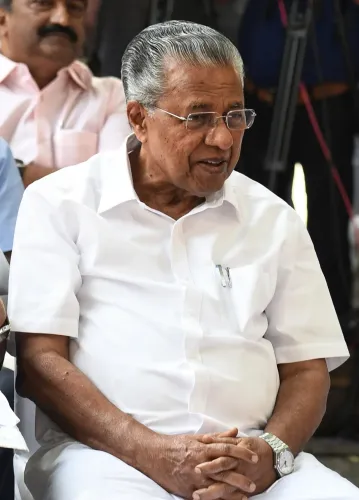
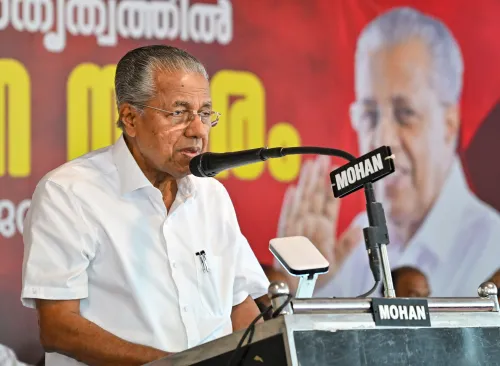
CM Pinarayi Slams Centre Over Fuel Price Hike, Targets UDF
Synopsis
Kerala Chief Minister Pinarayi Vijayan on 25 May 2026 accused the BJP-led Central Government of hiking petrol and diesel prices despite falling global crude, calling it electoral manipulation, while challenging Kerala's ruling UDF to deliver on its own past promises of fuel tax cuts.
Key Takeaways
Kerala CM Pinarayi Vijayan publicly condemned the Central Government on 25 May 2026 for raising petrol and diesel prices as Brent crude prices fall globally.
He accused the BJP of a deliberate pattern: suppressing fuel prices before elections and raising them after votes are counted.
Vijayan challenged the UDF government in Kerala to cut state fuel taxes, noting the alliance had demanded the same cuts while in opposition.
India's fuel retail prices combine central excise duty and state VAT , giving both the Centre and state governments levers — and political accountability — over pump prices.
The Central Government last cut excise duty on petrol and diesel in November 2021 , by Rs 5 and Rs 10 per litre respectively.
Any relief for consumers depends on action by both the Centre and the Kerala state government , making coordinated political will the key variable.
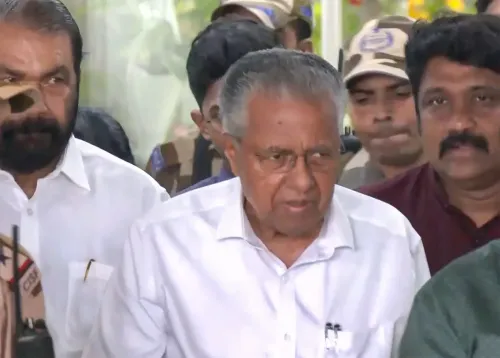
Kerala Chief Minister Pinarayi Vijayan on Monday, 25 May 2026, sharply criticised the Central Government for hiking petrol and diesel prices even as global crude oil benchmarks decline, calling the move 'daylight robbery on common people.' In the same post, he issued a pointed challenge to the ruling United Democratic Front (UDF) in Kerala, demanding it act on its own past promises of tax cuts on fuel.
Context
Vijayan's post states that Brent crude prices are falling globally yet pump prices in India are being pushed upward, a pattern he describes as 'looting people.' He directly accused the BJP-led Central Government of a deliberate electoral strategy: 'hold prices during elections, then empty people's pockets once votes are over.' The timing of the post — coming in the weeks after election season — underscores that accusation.
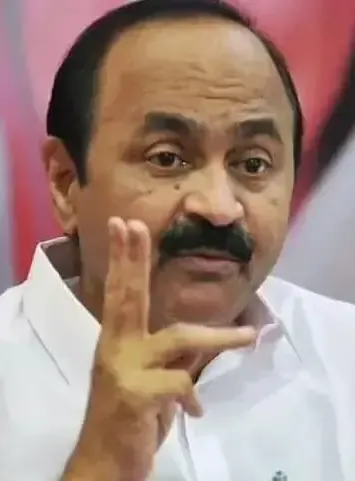
The Chief Minister also turned his fire inward at Kerala's political landscape, noting that the UDF, which 'staged protests demanding tax cuts while in opposition, is now in power in Kerala.' He said people are 'waiting to see whether they will practice what they preached.'
Policy Backdrop
India's retail fuel prices are a layered construct: the Central Government levies excise duties, while each state imposes its own Value Added Tax (VAT). This dual structure has long been a flashpoint between the Centre and opposition-ruled states. When global crude prices fall, the benefit does not automatically reach consumers because central and state levies remain sticky.
The Central Government had cut excise duty on petrol by Rs 5 per litre and on diesel by Rs 10 per litre in November 2021 following sustained pressure during a period of elevated global crude prices. Opposition parties, including the Congress and its allies, had mounted nationwide protests against fuel price hikes in 2018 and again in 2022, demanding reductions in central taxes. The UDF — the Congress-led alliance — was among the vocal critics during those campaigns while it was out of power in Kerala.
Stakeholders and Impact
For ordinary consumers, every rupee added to petrol and diesel prices cascades into higher transport costs, food prices, and the cost of goods across supply chains. Common households, small businesses, and daily-wage workers bear the sharpest impact of fuel price volatility.
State governments occupy a dual position: they collect VAT revenue from fuel sales, giving them a financial incentive to keep prices high, yet they face political pressure to provide relief. Vijayan's challenge to the UDF government in Kerala is therefore also a signal that the Left Democratic Front (LDF) opposition in the state intends to hold the new dispensation accountable on the very issue it campaigned on. For the BJP at the Centre, the criticism fits a well-established pattern of opposition attacks linking fuel pricing to electoral calculation.
What's Next
All eyes will now be on whether the Kerala government under the UDF announces a reduction in state VAT on petrol and diesel — a move that would be both a policy response and a political necessity given Vijayan's public pressure. At the national level, any revision to central excise duties could come through a supplementary budget or a standalone notification, though no such announcement has been made. Parliament's next session and the upcoming Union Budget cycle will be closely watched for signals on fuel tax policy. The broader centre-state friction over petroleum pricing is unlikely to ease unless both levels of government move in concert — a rare alignment in Indian fiscal politics.
Point of View
While simultaneously boxing in Kerala's new UDF government on a promise it cannot easily walk back. The challenge to the UDF is strategically timed — if the state government cuts VAT, Vijayan claims moral credit for forcing the move; if it does not, the LDF has a ready campaign line. This reflects a broader pattern in Indian state politics where fuel taxation has become a proxy battleground for centre-state relations, federal fiscal autonomy, and opposition credibility. The post signals that the LDF intends to be an aggressive opposition in Thiruvananthapuram even as it critiques Delhi.
NationPress
9 Oct 2026
Frequently Asked Questions
Why did Kerala CM Pinarayi Vijayan criticise the Centre over petrol and diesel prices?
Vijayan accused the BJP-led Central Government of hiking petrol and diesel prices even as global Brent crude prices were falling, calling it deliberate exploitation of consumers after election season.
What is the BJP's alleged 'election trick' on fuel prices that Vijayan mentioned?
Vijayan alleged that the BJP holds fuel prices steady before elections to avoid voter anger and then raises them after votes are counted, a pattern he described as emptying people's pockets.
What did Vijayan say about the UDF government in Kerala and fuel taxes?
He noted that the UDF had demanded fuel tax cuts while in opposition and challenged the alliance, now in power in Kerala, to follow through by cutting state VAT on petrol and diesel.
How are petrol and diesel prices determined in India?
Indian fuel retail prices combine a central excise duty set by the Union Government and a state-level VAT, meaning both the Centre and each state government influence the final pump price.
When did the Central Government last cut excise duty on petrol and diesel?
The Central Government cut excise duty on petrol by Rs 5 per litre and on diesel by Rs 10 per litre in November 2021 during a period of elevated global crude oil prices.