CM Sukhu Pushes Model Health Units in Every HP Constituency
Synopsis
Chief Minister Sukhvinder Singh Sukhu says his government is establishing one model health institution in every Himachal Pradesh assembly constituency, with Medical Officers and specialist appointments underway to fix chronic doctor shortages at primary facilities.
Key Takeaways
CM Sukhu announced on 20 November 2026 that one Adarsh Swasthya Sansthan (model health institution) is being opened in each of Himachal Pradesh's 68 assembly constituencies .
The move directly addresses chronic doctor shortages at PHCs, CHCs, and Zonal Hospitals across the state's hilly terrain.
Medical Officers ( MOs ) are being appointed in these institutions; specialist MOs have also been placed in several locations.
The initiative fits within the broader National Health Mission framework, which has targeted rural health infrastructure since 2013.
CM Sukhu has led Himachal Pradesh since December 2022 under the Indian National Congress government.
The real test will be measurable improvements in patient footfall and reduced referral rates at upgraded constituency-level facilities.
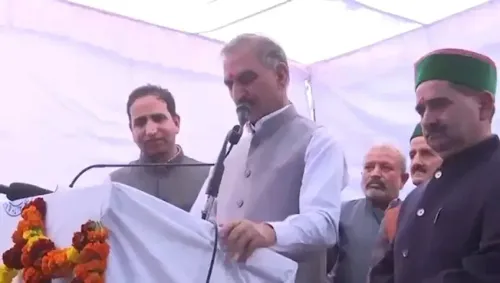
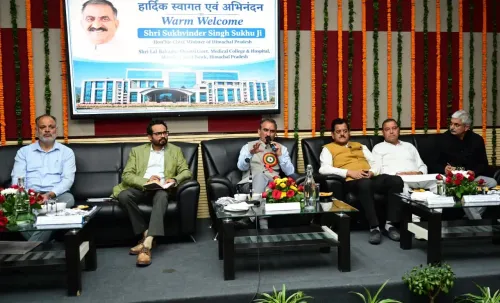
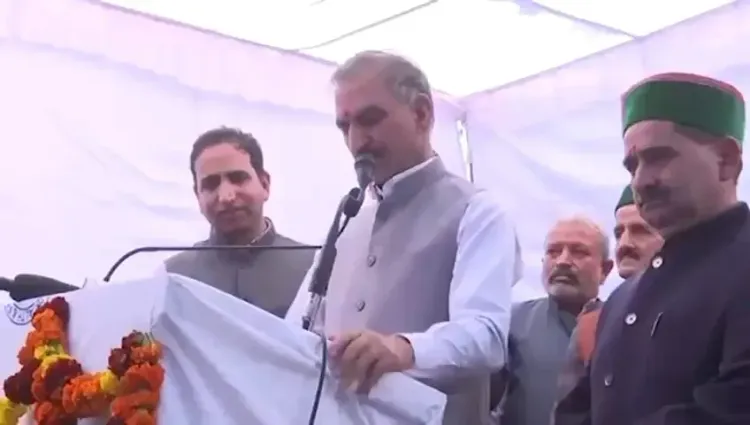
Doctor shortages in Himachal Pradesh's hills have long meant that a sick patient in a remote valley had little choice but to travel hours to a district hospital — or go without. Himachal Pradesh Chief Minister Sukhvinder Singh Sukhu is now pushing back against that reality, announcing on Friday, 20 November 2026, that his government is opening one Adarsh Swasthya Sansthan (model health institution) in every assembly constituency across the state.
Posting in Hindi, CM Sukhu said: 'Earlier there used to be a shortage of doctors in PHCs, CHCs and Zonal Hospitals. We have worked to open one model health institution in each assembly constituency. Medical Officers are being appointed in these institutions and in many places specialist MOs have also been appointed.'From PHC Gaps to Constituency-Level Model Institutions
Himachal Pradesh has 68 assembly constituencies, many of them straddling high-altitude, sparsely connected terrain where Primary Health Centres (PHCs) and Community Health Centres (CHCs) have historically struggled to retain doctors. The standard problem is familiar across mountain states: Medical Officers post in a remote facility, then seek transfers to urban postings, leaving rural catchments understaffed for months. The result is unnecessary referrals to Zonal Hospitals and district facilities, compounding costs and delays for patients who can least afford them.
Sukhu's announcement reframes the response. Rather than patching individual PHC vacancies, the government is building a tier of upgraded 'model' institutions — one per constituency — that are staffed not just with general Medical Officers but, in several locations, with specialist MOs who can handle cases that previously required onward referral. The ambition is to anchor credible secondary-level care at the constituency itself.
What 'Model' Institutions Actually Mean on the Ground
The term Adarsh Swasthya Sansthan signals a facility upgraded beyond the basic PHC standard — better infrastructure, a wider diagnostic basket, and critically, a more stable staffing structure. The National Health Mission, operational since 2013, has provided the federal architecture for strengthening rural health infrastructure across states, and Himachal Pradesh's constituency-level drive fits within that broader framework — though the specific design of these institutions is a state-level initiative.
Specialist appointments at the constituency level are the sharper edge of the announcement. Getting a gynaecologist or a physician to stay in a hill posting has historically required a combination of financial incentives and guaranteed infrastructure — both of which a 'model' institution is meant to provide. Whether actual footfall and referral-rate data bears out the improvement will be the real test in the months ahead.
Sukhu's Healthcare Push Since December 2022
CM Sukhu, who took office in December 2022 after the Indian National Congress won the state assembly election, has repeatedly flagged healthcare delivery as a priority for a state whose geography makes equitable access uniquely difficult. This post is part of a broader public accountability exercise — placing on record the appointments being made and the institutional framework being built, constituency by constituency.
The watch item now is straightforward: how many of the 68 constituency-level model institutions are fully operational, fully staffed with specialist MOs, and actually reducing the referral burden on district hospitals? That number, when it comes, will define whether this push becomes a template or a talking point.
Point of View
Locatable institution in each voter's own constituency. For a Congress government that must demonstrate differentiation from its predecessor, announcing specialist MO postings at that granular level is both a governance signal and an electoral one. The durability of the initiative will depend on whether the state can hold specialists at remote postings — historically the weakest link in hill-state health staffing — or whether the 'model' label outpaces the operational reality.
NationPress
20 Nov 2026
Frequently Asked Questions
What is an Adarsh Swasthya Sansthan in Himachal Pradesh?
An Adarsh Swasthya Sansthan, or model health institution, is an upgraded health facility being established by the Sukhu government in each of Himachal Pradesh's assembly constituencies, staffed with Medical Officers and, in several cases, specialist doctors to provide better primary and secondary care locally.
Why were PHCs and CHCs short of doctors in Himachal Pradesh?
Himachal Pradesh's difficult mountain terrain and remote postings have historically made it hard to retain Medical Officers at Primary Health Centres and Community Health Centres, as doctors frequently sought transfers to urban facilities, leaving rural areas underserved.
How many assembly constituencies does Himachal Pradesh have?
Himachal Pradesh has 68 assembly constituencies, and Chief Minister Sukhu's plan targets opening one model health institution in each of them.
When did Sukhvinder Singh Sukhu become Chief Minister of Himachal Pradesh?
Sukhvinder Singh Sukhu became Chief Minister of Himachal Pradesh in December 2022 after the Indian National Congress won the state assembly election.
What is the National Health Mission and how does it relate to HP's health push?
The National Health Mission, operational since 2013, is a federal programme aimed at strengthening rural and urban health infrastructure across Indian states. Himachal Pradesh's constituency-level model institution drive aligns with that framework, though the specific design and staffing plan is a state government initiative.