CM Sukhu Directs Speed-Up of Unity Mall, One District Three Products
Synopsis
Chief Minister Sukhvinder Singh Sukhu on 9 July 2026 directed officials to speed up the Unity Mall project and ensure product identification under Himachal Pradesh's 'One District, Three Products' scheme, with Industry Minister Harshvardhan Chauhan present at the review meeting.
Key Takeaways
CM Sukhvinder Singh Sukhu issued directives on 9 July 2026 to accelerate the Unity Mall project in Himachal Pradesh.
Officials were instructed to formally identify products under the 'One District, Three Products' scheme across all districts.
Industry Minister Harshvardhan Chauhan and other senior officers attended the review meeting.
The Unity Mall is designed as a retail and marketing outlet for locally produced goods from Himachal Pradesh's districts.
The scheme is modelled on Uttar Pradesh's One District One Product initiative launched in 2018 , expanded to cover three products per district in HP.
Beneficiaries include local artisans, MSME units, and district industries across Himachal Pradesh's 12 districts .
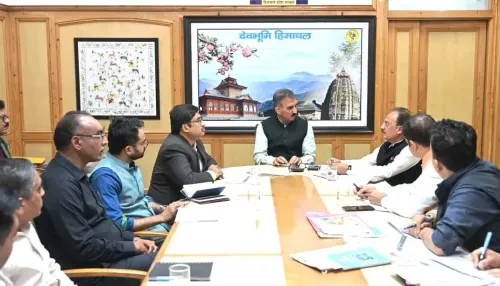
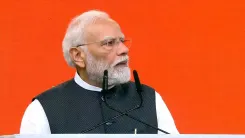
The Chief Minister's Office of Himachal Pradesh, on behalf of Chief Minister Thakur Sukhvinder Singh Sukhu, issued directives on 9 July 2026 to accelerate the state's Unity Mall project and to ensure product identification under the 'One District, Three Products' scheme across all districts. The announcements were made at a review meeting attended by senior officials and Industry Minister Harshvardhan Chauhan.
Context
The post, shared by the official CMO Himachal Pradesh account, carries a directive from CM Sukhu in Hindi: 'यूनिटी मॉल परियोजना के कार्यों में तेजी लाएं' — 'Accelerate work on the Unity Mall project.' A parallel instruction mandates that products be formally identified under the 'वन डिस्ट्रिक्ट, थ्री प्रोडक्ट्स' ('One District, Three Products') framework. The directives appear to be part of a broader economic review chaired by the Chief Minister.
Industry Minister Harshvardhan Chauhan, who holds direct responsibility for the implementation of district-level product schemes and manufacturing policy in the state, was present at the meeting alongside other senior officers.
Policy Backdrop
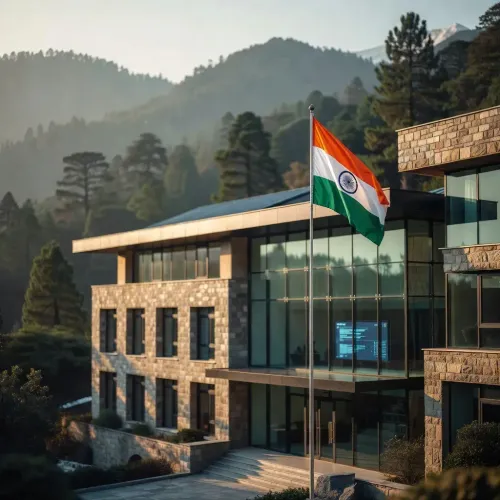
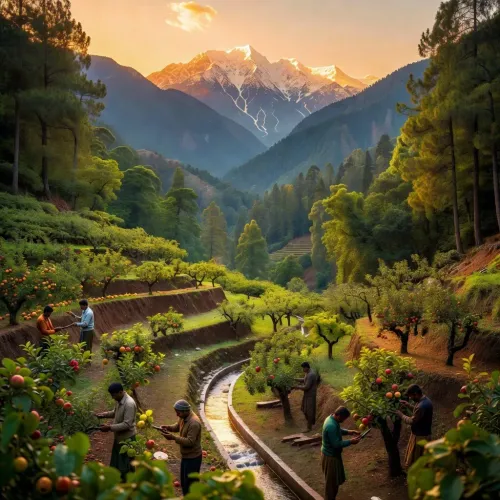
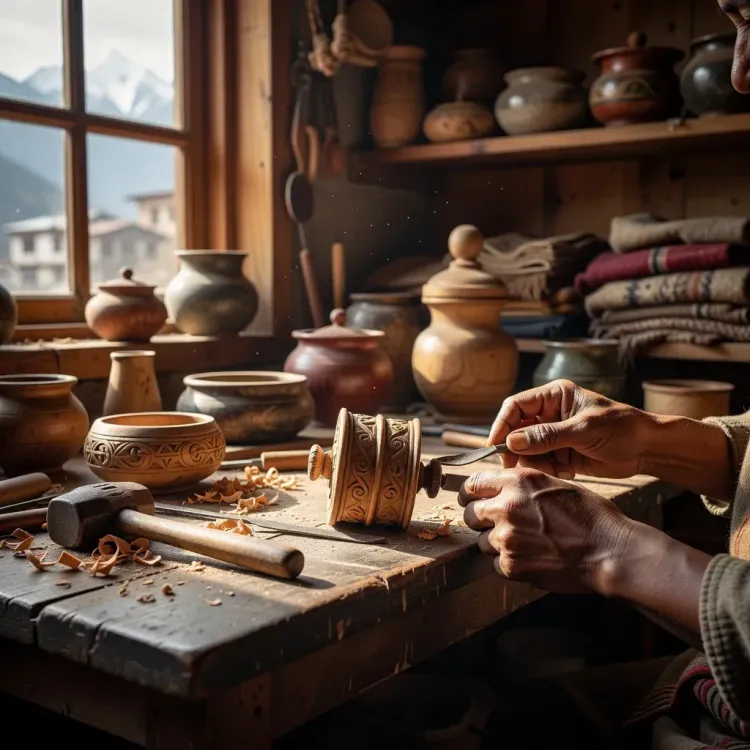
The Unity Mall project is a state infrastructure initiative designed to create dedicated commercial spaces that showcase and retail local handicrafts, tourism products, and trade goods from across Himachal Pradesh. The concept positions the mall as a marketing outlet directly tied to district-level production clusters.
The 'One District, Three Products' scheme is Himachal Pradesh's adaptation of the broader district-product promotion model pioneered by Uttar Pradesh in 2018 under its 'One District One Product' initiative. Where the original scheme focused on a single product per district, Himachal's variant expands the mandate to three, aiming to capture a wider range of local strengths — from agro-processing to handicrafts and cottage industry. Both schemes align with the national Atmanirbhar Bharat framework and the emphasis on decentralised industrial development.
Indian states have increasingly adopted such cluster-based approaches to reduce regional economic disparities and support MSME units and local artisans who lack direct access to urban markets.
Stakeholders and Impact
The primary beneficiaries of these twin directives are local artisans, MSME units, and district industries centres across Himachal Pradesh's 12 districts. Faster construction of the Unity Mall would provide a physical retail and marketing platform for goods identified under the three-product scheme, creating an end-to-end supply chain from production to sale.
For artisans in hilly and remote districts, access to a structured retail outlet can significantly reduce dependence on middlemen and improve income realisation. The directive to formally 'identify' products is also a prerequisite for any subsequent government branding, export promotion, or GI-tag application efforts.
What's Next
The key deliverables to watch are district-level product identification reports submitted to the Industry Department and construction milestone updates for the Unity Mall. Any supplementary budget allocations or memoranda of understanding with industry bodies, potentially tabled in the next assembly session, would signal how seriously the government intends to resource these directives.
With CM Sukhu personally chairing the review and Industry Minister Chauhan present, the political ownership of these projects is now clearly established — raising the stakes for timely delivery ahead of what is expected to be a competitive electoral cycle in the state.
Point of View
Three Products' scheme signals an attempt to demonstrate economic governance momentum, particularly as Himachal Pradesh faces fiscal pressure and a politically attentive electorate. By personally chairing the review and ensuring Industry Minister Chauhan's visible presence, the Chief Minister is establishing clear political ownership over two schemes that have tangible, district-level visibility. The move fits a broader pattern seen across Indian states of using district-product frameworks as low-cost, high-optics interventions that connect central Atmanirbhar Bharat messaging to local livelihoods. The real test, however, will be whether construction timelines and product identification reports follow the political signal with administrative substance.
NationPress
7 Oct 2026
Frequently Asked Questions
What is the Unity Mall project in Himachal Pradesh?
The Unity Mall project is a state government infrastructure initiative to develop commercial spaces in Himachal Pradesh that will retail and showcase locally produced handicrafts, tourism goods, and trade products from across the state's districts.
What is Himachal Pradesh's 'One District, Three Products' scheme?
It is Himachal Pradesh's adaptation of the district-product promotion model, requiring each district to identify three distinctive local products — spanning handicrafts, agro-processing, or cottage industry — for government-backed branding, marketing, and scaling.
Who is Harshvardhan Chauhan?
Harshvardhan Chauhan is the Industry Minister of Himachal Pradesh, responsible for implementing manufacturing policy and district-level product schemes in the state.
How is Himachal Pradesh's scheme different from Uttar Pradesh's One District One Product?
Uttar Pradesh's scheme, launched in 2018, focuses on one signature product per district. Himachal Pradesh's variant expands this to three products per district, aiming to reflect the state's more diverse local production base.
Who will benefit from the Unity Mall and the three-product scheme?
Local artisans, MSME units, and district industries across Himachal Pradesh's 12 districts stand to benefit, gaining access to a structured retail platform and reduced dependence on middlemen for marketing their goods.