CM Sukhu Targets BJP Over HP Recruitment Scams on I-Day
Synopsis
On Independence Day 2026, Himachal Pradesh CM Sukhvinder Singh Sukhu accused the previous BJP government of police recruitment paper leaks and SSC fraud, contrasted it with his Congress government's clean record, and confirmed the Subordinate Selection Board was dissolved and accused persons jailed.
Key Takeaways
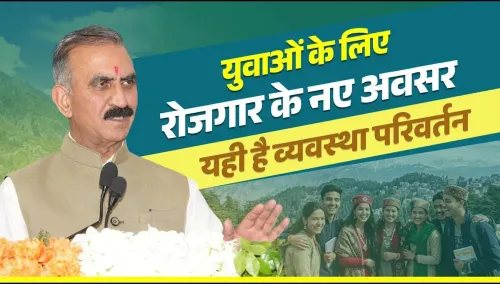
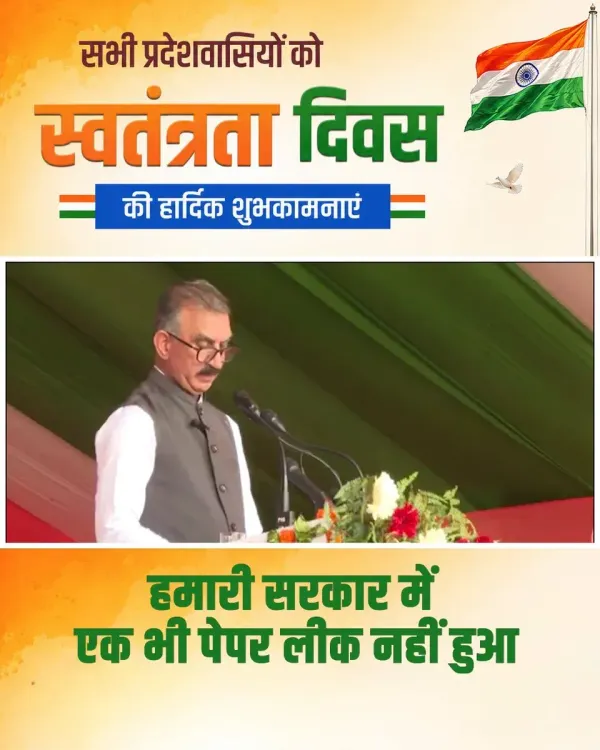
CM Sukhu posted on 15 August 2026 addressing Himachal Pradesh's youth, specifically naming Gen-Z as his audience.
He claimed no recruitment paper leak occurred during the Congress government's tenure since December 2022.
He accused the previous BJP government (2017–2022) of a police recruitment paper leak and large-scale Staff Selection Commission fraud, including alleged sale of papers.
His government dissolved the Subordinate Selection Board and sent accused individuals to jail.
The Congress won the 2022 Himachal Pradesh assembly elections partly on a platform of transparent recruitment.
The post frames merit-based, transparent employment as the Congress government's core priority for youth.
On Independence Day, 15 August 2026, Himachal Pradesh Chief Minister Sukhvinder Singh Sukhu turned a national celebration into a sharp political reckoning — calling out what he described as systematic fraud in government recruitment under the previous BJP administration and pledging that his Congress government has delivered a clean break.
Addressing the state's youth — and specifically Gen-Z — Sukhu wrote: 'युवा पीढ़ी, खासकर Gen-Z से कहना चाहता हूँ' ('I want to say to the younger generation, especially Gen-Z') that transparent, merit-based employment is his government's first priority. The message was pointed and personal: this is a government that sees you, and it is not the one that came before.
The Paper-Leak Charge Against the BJP Era
Sukhu's central accusation is specific: during the BJP government's tenure from 2017 to 2022 under then Chief Minister Jai Ram Thakur, a police recruitment paper was leaked and large-scale irregularities plagued the Staff Selection Commission — with papers allegedly sold outright. He contrasted that record directly with his own: 'Not a single recruitment paper has leaked during our tenure.'
The claim lands in a context that resonates far beyond Shimla. Paper leaks and selection fraud have convulsed recruitment cycles across multiple Indian states in recent years, turning government jobs — already scarce relative to demand — into a lottery rigged against honest aspirants. For lakhs of young people who spend years preparing for competitive exams, a leaked paper is not an administrative failure. It is a theft of time, money, and hope.
The Subordinate Selection Board Dissolved
Sukhu also confirmed that his government dissolved the Subordinate Selection Board, the state body at the centre of the alleged irregularities, and pursued criminal action against those responsible — with accused individuals sent to jail. The dissolution of a recruitment body mid-term is a significant administrative step, signalling that the government chose institutional rupture over damage control.
The Congress government has been in office since December 2022, when it won the assembly elections on a platform that explicitly included recruitment transparency. Sukhu's Independence Day message is, in part, a mid-term report card — telling youth voters that the promise made in 2022 has been kept.
Why Gen-Z Is the Audience
The deliberate call-out of Gen-Z is not accidental. Younger voters — those who came of age politically after 2019 — are increasingly attentive to employment outcomes over ideological appeals. Recruitment fraud is not an abstract governance issue for this cohort; it is a lived grievance. By naming them directly, Sukhu is staking a claim to credibility with the electorate most likely to hold governments accountable on jobs.
The next test will be in the outcomes: whether fresh recruitment cycles proceed without incident, and whether the legal cases against those accused of earlier fraud result in convictions that hold. Accountability promised on Independence Day must survive the courts to mean anything.
Point of View
Converting a governance record into a political identity. By naming Gen-Z explicitly, he signals awareness that this cohort evaluates parties on tangible delivery, not legacy loyalty. The dissolution of the Subordinate Selection Board — a structural, not merely rhetorical, intervention — gives the claim institutional weight that a press statement alone would not. If the legal cases against the accused produce durable convictions, the Congress will have a rare asset in Indian state politics: a corruption narrative with a paper trail.
NationPress
15 Aug 2026
Frequently Asked Questions
What did CM Sukhu say about recruitment in Himachal Pradesh on Independence Day 2026?
CM Sukhu said his Congress government has provided thousands of government jobs with full transparency and that not a single recruitment paper leaked during his tenure, contrasting this with alleged paper leaks and fraud under the previous BJP government.
What was the Himachal Pradesh police recruitment paper leak?
During the BJP government's tenure in Himachal Pradesh from 2017 to 2022, a police recruitment examination paper was allegedly leaked. CM Sukhu cited this as evidence of systemic fraud under the previous administration.
Why was the Subordinate Selection Board dissolved in Himachal Pradesh?
The Sukhu-led Congress government dissolved the Subordinate Selection Board following allegations of large-scale irregularities in the recruitment process, including the alleged sale of question papers during the previous BJP tenure.
What action did the Sukhu government take against recruitment fraud in HP?
According to CM Sukhu, the government dissolved the Subordinate Selection Board and ensured that those found guilty of recruitment malpractice were sent to jail.
When did the Congress government come to power in Himachal Pradesh?
The Indian National Congress government led by Sukhvinder Singh Sukhu assumed office in Himachal Pradesh in December 2022 after winning the state assembly elections.