CM Revanth Reddy Unfurls Flag at Golconda, Outlines Telangana's Big Bets
Synopsis
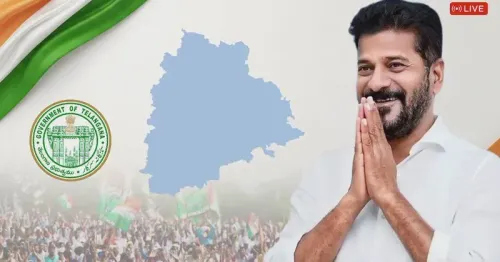
On India's 80th Independence Day, Telangana CM A. Revanth Reddy hoisted the national flag at Golconda Fort and announced flagship projects — Bharat Future City on 30,000 acres, a 360-km Regional Ring Road, and Musi River rejuvenation — framing them as the state's long-term development roadmap.
Key Takeaways
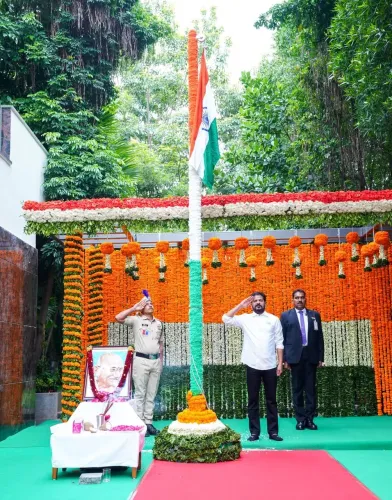
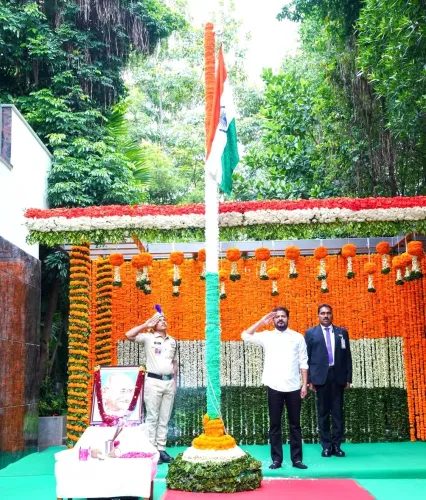
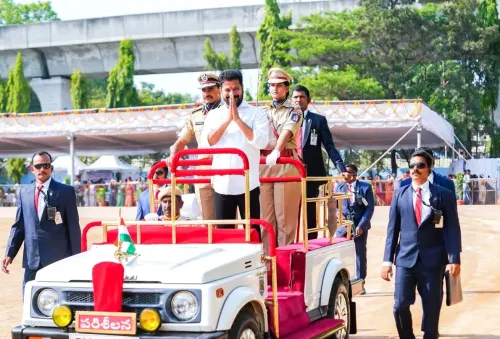
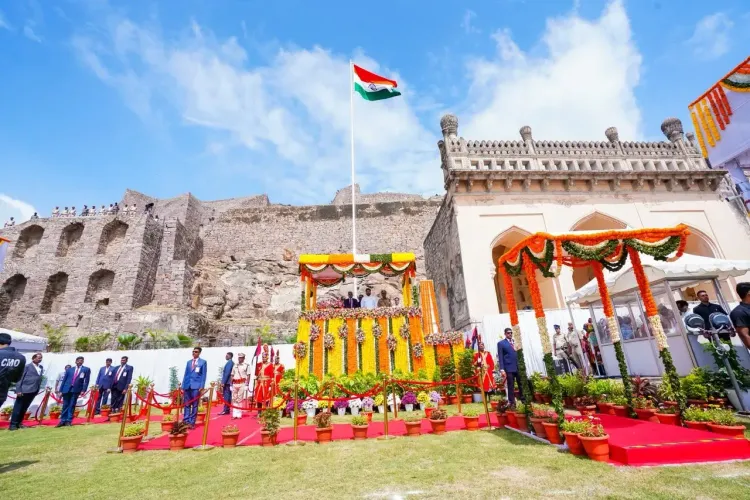
Revanth Reddy hoisted the national flag at Golconda Fort, Hyderabad on 15 August 2026 , India's 80th Independence Day .
He announced Bharat Future City , a proposed new urban zone spanning 30,000 acres .
A 360-kilometre Regional Ring Road around Hyderabad and radial road expansions were highlighted as key connectivity projects.
Musi River rejuvenation and modern infrastructure development were cited as ongoing government priorities.
Revanth Reddy pledged to make Telangana a 'leading state' in India's development, invoking the sacrifices of freedom fighters.
Land acquisition, environmental clearances, and budget allocations for these projects remain key milestones to watch.
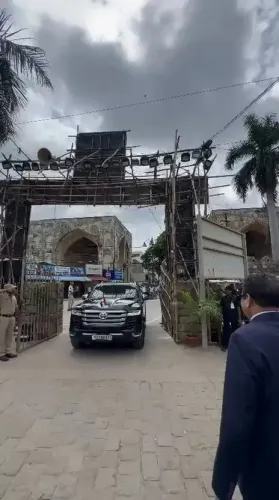
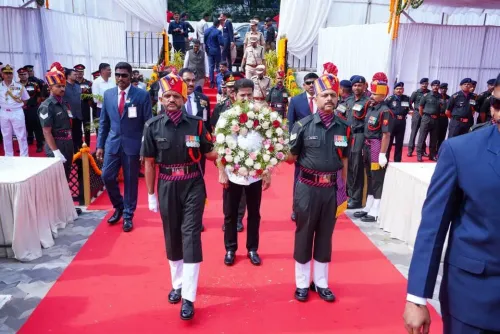
At the ramparts of a 17th-century fort that once guarded one of history's wealthiest kingdoms, Telangana Chief Minister A. Revanth Reddy hoisted the national flag on India's 80th Independence Day — and used the moment to lay out the most ambitious infrastructure agenda the state has publicly articulated since its formation.
Flag at Golconda, Vision for a Future City
Speaking at Golconda Fort, Hyderabad, on 15 August 2026, Revanth Reddy detailed a slate of projects he said would position Telangana as a front-ranking state in India's development story. The centrepiece: a proposed Bharat Future City spread across 30,000 acres, a new urban node designed to absorb the next generation of the state's growth. Alongside it, the government announced plans for a 360-kilometre Regional Ring Road around Hyderabad, radial road expansions, and the much-discussed revival of the Musi River — the waterway that bisects the city and has long been a symbol of both Hyderabad's heritage and its neglected civic infrastructure.
In Telugu, the Chief Minister framed his government's intent plainly: 'అభివృద్ధి చెందిన తెలంగాణ నిర్మాణమే మా సంకల్పం' — 'building a developed Telangana is our resolve' — invoking the sacrifice of freedom fighters as the moral foundation for that ambition.
The 360-km Ring Road and Musi Rejuvenation: What's at Stake
The Regional Ring Road is not a new idea — successive Hyderabad governments have floated orbital expressway concepts for over a decade to ease the city's chronic congestion and unlock land value on its periphery. What Revanth Reddy's government is now doing is putting a firm kilometre figure — 360 km — and a political commitment behind it. The Musi rejuvenation project, similarly, has been a stated priority since the Congress government took office in December 2023, positioning the river's cleanup and redevelopment as both an ecological and an urban-branding exercise for the state capital.
For the real estate sector and the millions of residents in Hyderabad's fast-expanding outer zones, the ring road's progress — and the land acquisition and environmental clearances it will require — is the number to watch in the coming state budget cycle.
Independence Day as a Stage for State Ambition
Choosing Golconda Fort as the venue is itself a statement. Since Telangana's formation in 2014, governments of different political hues have consistently used Independence Day addresses to tie large-scale infrastructure announcements to national pride — a pattern that gives such pledges both visibility and a degree of political insulation. Revanth Reddy's Congress government, elected on a platform that distinguished itself from the previous BRS administration, is now operating in that same tradition: rebranding and accelerating urban connectivity projects while stamping them with a new political identity under the hashtag #PrajaPrabhutvam ('people's government').
The question that follows every Independence Day address in Hyderabad is the same: how quickly do the announcements move from the fort's ramparts to the ground? Land acquisition timelines, budgetary allocations, and environmental clearances for projects of this scale will be the real test in the assembly sessions ahead.
Telangana was carved out of Andhra Pradesh with the promise of becoming a model state. Twelve years on, its Chief Minister stood at a Mughal-era fort and made that promise again — this time with a 30,000-acre city and a 360-kilometre road as the evidence he intends to keep it.
Point of View
000 acres, 360 kilometres — to projects that have existed largely as concepts, the Congress government is attempting to shift the political conversation from welfare delivery to transformational infrastructure, a terrain where it can differentiate itself from the BRS legacy. The Musi rejuvenation, in particular, is a high-risk, high-reward bet: visible enough to generate political capital if it moves, and equally visible if it stalls. With assembly sessions and an annual budget ahead, the distance between the Golconda announcement and a ground-breaking ceremony will define how seriously the market — and the voter — takes this vision.
NationPress
30 Sept 2026
Frequently Asked Questions
What did CM Revanth Reddy announce on Independence Day 2026?
Telangana Chief Minister A. Revanth Reddy announced several major infrastructure projects at Golconda Fort on 15 August 2026, including Bharat Future City on 30,000 acres, a 360-km Regional Ring Road around Hyderabad, radial road expansions, and the Musi River rejuvenation project.
What is Bharat Future City in Telangana?
Bharat Future City is a proposed new urban development spanning 30,000 acres, announced by the Telangana government as a planned city designed to meet the state's future growth requirements. Specific details about its location and timeline are yet to be officially confirmed.
What is the Telangana Regional Ring Road project?
The Regional Ring Road is a planned 360-kilometre orbital expressway around Hyderabad intended to decongest the city, improve connectivity to peripheral areas, and support real estate and industrial growth along its corridor.
Why did Revanth Reddy hoist the flag at Golconda Fort?
Golconda Fort in Hyderabad is a historic 17th-century landmark occasionally used as a venue for official state ceremonies, including Independence Day flag hoisting. The choice of venue underscores the state government's intent to link its development vision to Telangana's cultural heritage.
What is the Musi River rejuvenation project?
The Musi River rejuvenation is a flagship initiative of the Telangana Congress government to clean up and redevelop the Musi River that flows through Hyderabad, combining ecological restoration with urban infrastructure development along its banks.