CM Sukhu Pledges Full Rehab After Kangra Cloudburst
Synopsis
Himachal Pradesh CM Sukhvinder Singh Sukhu reached out to cloudburst survivors in Boh Valley, Kangra, pledging that every affected family will be rehabilitated and no household left without shelter. The Kangra DC is already on-site; the CM plans a personal visit soon.
Key Takeaways
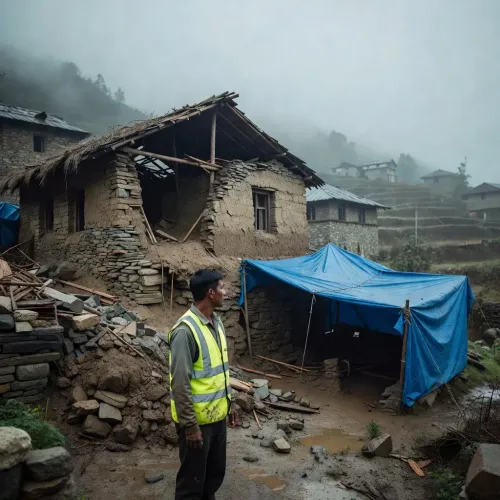
A cloudburst struck Boh Valley in Kangra district on 21 July 2026 , severely disrupting lives and destroying homes.
CM Sukhvinder Singh Sukhu personally called panchayat heads and affected families on 22 July 2026 to offer assurance.
The Deputy Commissioner of Kangra has been deployed to the site with resources and instructed to assist every affected family.
The Chief Minister pledged house-by-house rehabilitation and assured no family would remain without shelter.
CM Sukhu has announced a forthcoming personal visit to Boh Valley to meet survivors directly.
The response follows the framework of the Disaster Management Act, 2005 , which mandates state-level coordination of relief after natural calamities.
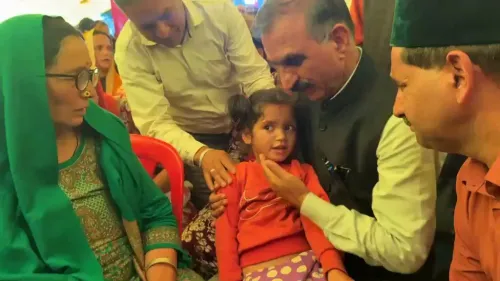
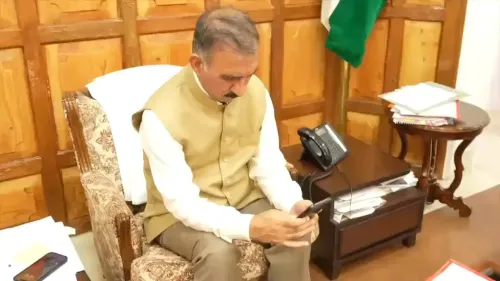
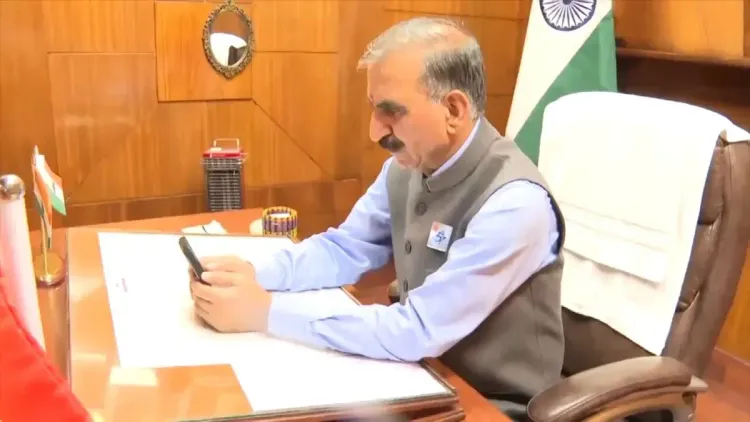
Himachal Pradesh Chief Minister Sukhvinder Singh Sukhu on Wednesday, 22 July 2026, reached out by phone to panchayat heads and affected families in Boh Valley, Kangra district, following a devastating cloudburst that upended lives across the region. He assured that the state government would stand by every affected household and pledged that no family would be left without a roof over their heads.
What the Chief Minister Said
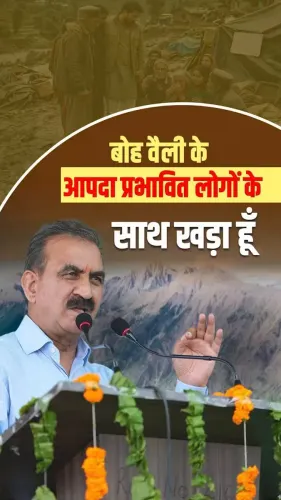
Posting in Hindi on X, CM Sukhu described the cloudburst as a heartbreaking event that snatched away 'the dreams, years of hard work, and homes of many families in an instant' (अनेक परिवारों के सपने, उनकी वर्षों की मेहनत और उनका आशियाना पल भर में छिन गया). He said he personally spoke with panchayat heads and affected residents over the phone, conveying that 'your grief is our grief' (आपका दुःख हमारा दुःख है).
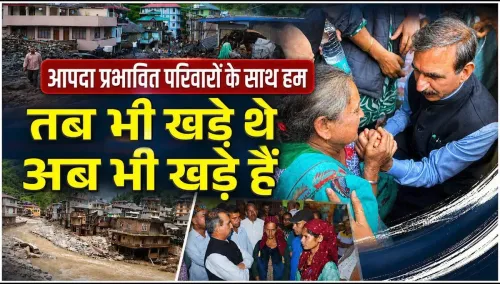
The Chief Minister committed to a house-by-house rehabilitation drive, stating the government would 'hold the hand of every affected family, rebuild every home, and ensure no family remains without shelter.' He also confirmed plans to visit Boh Valley in person to meet survivors.
Context: Kangra's Vulnerability to Cloudbursts
Kangra is Himachal Pradesh's largest district and sits in the Himalayan foothills, making it acutely susceptible to sudden, intense monsoon downpours. Cloudbursts — defined meteorologically as rainfall exceeding 100 mm per hour over a localised area — routinely trigger flash floods and landslides across the state's steep terrain during the June–September monsoon window.
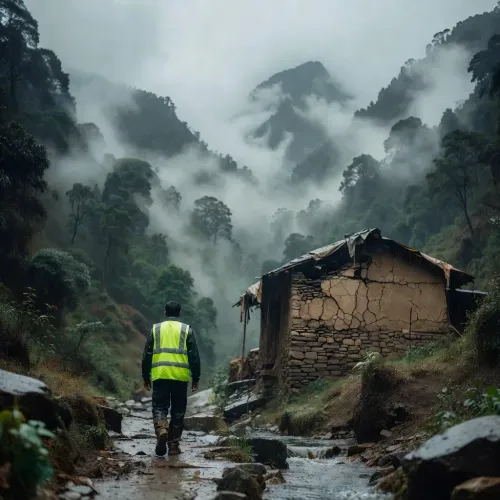
The Boh Valley area, a relatively narrow Himalayan valley in Kangra, bears the brunt of such events, with infrastructure, agricultural land, and residential structures frequently damaged or destroyed within minutes of a cloudburst striking.
Policy Backdrop: Disaster Response Framework
Under the Disaster Management Act, 2005, state governments are mandated to coordinate immediate relief and rehabilitation through district-level machinery. The Act established the National Disaster Response Force (NDRF) and empowered states to deploy resources rapidly after natural calamities.
In line with this framework, CM Sukhu confirmed that the Deputy Commissioner of Kangra has already reached the site with 'necessary resources and assistance' and has been directed to provide 'all possible help to every affected family.' This mirrors the standard protocol successive Himachal governments have followed — mobilising district administration first, followed by a high-level political visit to signal state commitment.
Stakeholders and Impact
The immediate stakeholders are the families of Boh Valley who have lost homes and livelihoods. Panchayat heads, who serve as the first administrative link between villagers and the district machinery, have already been in direct contact with the Chief Minister's office. Their role in documenting damage and channelling relief will be critical in the days ahead.
Broader communities across Kangra district — farmers, daily-wage workers, and small traders — also face indirect disruption as roads, bridges, and local markets are typically damaged in such events. Reconstruction timelines and the scale of ex-gratia assistance announced during CM Sukhu's planned site visit will determine how quickly normalcy returns.
What's Next
CM Sukhu has indicated he will personally visit Boh Valley shortly to meet affected families — a visit that is expected to be accompanied by a formal announcement of a rehabilitation package. The details of financial assistance per household, temporary shelter arrangements, and any special reconstruction fund will be closely watched by both survivors and opposition parties assessing the government's disaster response.
With the monsoon season still active, the risk of further cloudbursts in Himachal Pradesh remains elevated, making robust and swift implementation of relief measures not just a political imperative but a humanitarian necessity.
Point of View
Where disaster response has increasingly become a test of governance competence rather than mere administrative routine. How the Congress-led state government translates these assurances into verifiable rehabilitation will likely shape voter sentiment in the affected Kangra constituencies ahead of future electoral cycles.
NationPress
21 Oct 2026
Frequently Asked Questions
What happened in Boh Valley Kangra?
A cloudburst struck Boh Valley in Kangra district of Himachal Pradesh, destroying homes and severely disrupting the lives of many families. The event occurred on 21 July 2026, prompting an immediate response from the state government.
What did CM Sukhu say about the Kangra cloudburst?
CM Sukhvinder Singh Sukhu called panchayat heads and affected families on 22 July 2026, pledging that the state would hold 'the hand of every affected family,' rebuild every home, and ensure no household is left without shelter. He also plans to visit Boh Valley in person.
What relief has been sent to Boh Valley after the cloudburst?
The Deputy Commissioner of Kangra has reached Boh Valley with necessary resources and has been instructed by CM Sukhu to provide all possible assistance to affected families. A personal visit by the Chief Minister is also expected shortly.
Is Himachal Pradesh prone to cloudbursts?
Yes. Himachal Pradesh, particularly Kangra district, is highly vulnerable to cloudbursts during the June–September monsoon season due to its steep Himalayan terrain. Such events regularly trigger flash floods and landslides, damaging homes, roads, and farmland.
What law governs disaster relief in India after a cloudburst?
The Disaster Management Act, 2005 governs disaster relief in India. It created the National Disaster Response Force and mandates state governments to coordinate immediate relief and rehabilitation through district-level authorities after natural calamities like cloudbursts.