CM Sukhu: Youth Falling Behind in Tech Means HP Falls Behind
Synopsis
Chief Minister Sukhvinder Singh Sukhu invoked India's 1985 US supercomputer denial and the indigenous PARAM success story to argue that Himachal Pradesh's youth must embrace new technology — or risk being left behind alongside the state and nation.
Key Takeaways
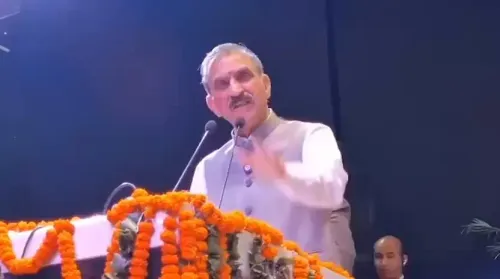
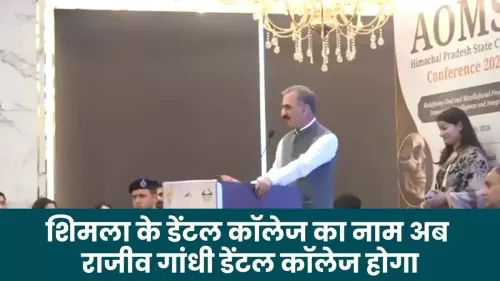
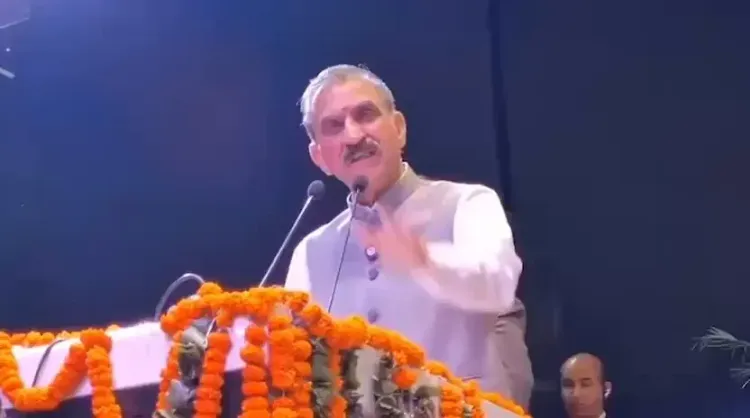
CM Sukhu addressed higher education stakeholders on September 25, 2026 , stressing that technology adoption by youth is a state and national imperative.
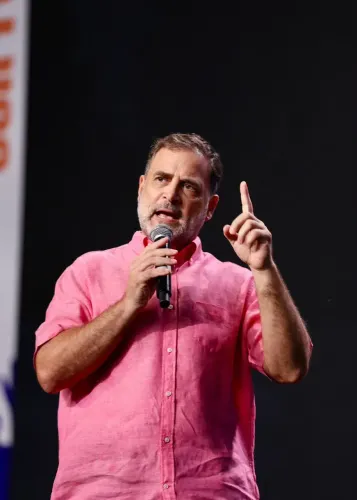
In 1985 , the United States denied India a supercomputer during Rajiv Gandhi's tenure, prompting India to develop the indigenous PARAM series by 1991.
Sukhu cited Indian professionals leading global technology firms including Google as evidence of the country's self-reliance dividend.
He framed higher education as a collaborative endeavour — advancing through shared ideas alongside new technology.
The Chief Minister ended with a resilience message: failure is a precursor to success, directed at the younger generation.
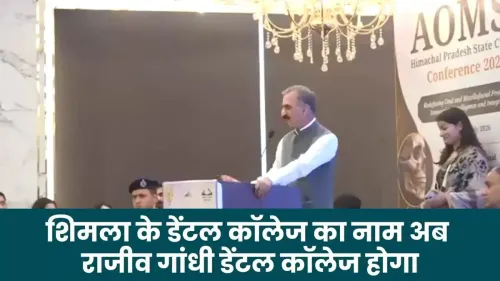
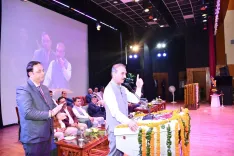
When Himachal Pradesh Chief Minister Sukhvinder Singh Sukhu addressed higher education stakeholders on Friday, September 25, 2026, he reached back four decades to make a point that still stings — and still inspires. The lesson: when the world shuts a door on India, India builds its own.
The 1985 Supercomputer Rebuff That Built PARAM
Sukhu anchored his remarks in a pivotal moment of Cold War-era technology denial. In 1985, under then Prime Minister Rajiv Gandhi, the United States refused to supply India a high-performance supercomputer — a move made on strategic grounds that left Indian scientists without access to cutting-edge computing power. Rather than accept the setback, India turned inward. The government established the Centre for Development of Advanced Computing (C-DAC), and by 1991 India had launched PARAM — its own indigenous supercomputer series, a milestone that rewrote the country's technology self-image.
Sukhu invoked that arc deliberately. 'If youth fall behind in technology,' he said, 'the state and the country will fall behind too.' The message to students and educators was direct: technological capability is not optional — it is existential.
From PARAM to Google's C-Suite: India's Three-Decade Arc
The Chief Minister pointed to a vivid marker of how far that journey has travelled: today, Indian talent leads some of the world's most consequential technology organisations, including Google. That trajectory — from a nation denied a single supercomputer to one that now exports the engineers who run global platforms — is, in Sukhu's framing, the proof of what self-belief and sustained investment in education can produce.
His broader argument was collaborative rather than triumphalist. Higher education must move forward, he said, through the exchange of ideas and collective effort — 'आपसी विचारों के साथ मिलकर आगे बढ़ना है' (we must move forward together with shared ideas). The state's responsibility, as he defined it, is to ensure the next generation is not left behind by new technology.
Failure as a Feature, Not a Bug
Sukhu closed with a line that landed like a motivational anchor: 'Success brings failure too, but behind every failure, success is hidden.' The formulation was simple, but its placement — after a story about national humiliation turned into national capability — gave it weight. It was directed, unmistakably, at the young people in the room who have not yet failed at anything worth attempting.
For Himachal Pradesh, a hill state with aspirations to expand its technology and startup footprint, the speech signals that the Chief Minister sees higher education reform and digital skilling as a political and developmental priority — even as specific budget allocations or institutional MoUs for technology-enabled education remain to be announced.
Point of View
Implicitly linking the party's legacy to national self-reliance. At the state level, the speech signals that Himachal Pradesh's government intends to position digital skilling and higher-education modernisation as a defining theme of its tenure. The absence of specific scheme announcements, however, means the rhetoric has yet to harden into policy — the question is whether budget allocations follow the narrative or whether this remains aspirational positioning ahead of an academic year.
NationPress
25 Sept 2026
Frequently Asked Questions
Why did the US refuse to give India a supercomputer in 1985?
The United States declined to supply India a Cray supercomputer in 1985 on strategic export-control grounds during the Cold War, worried about potential dual-use military applications. The refusal prompted India to develop its own high-performance computing capability.
What is PARAM supercomputer and who built it?
PARAM is India's first indigenous supercomputer series, developed by the Centre for Development of Advanced Computing (C-DAC) after the US technology denial. It was launched in 1991 and became a symbol of India's technological self-reliance.
What did CM Sukhu say about higher education and technology?
Chief Minister Sukhvinder Singh Sukhu said higher education must advance through shared ideas and that equipping the younger generation with new technology is the government's responsibility. He warned that if youth fall behind in technology, the state and the country will too.
Which Indian leads Google that CM Sukhu referred to?
Sukhu referenced Google as an example of global technology organisations led by Indian talent, reflecting a broader pattern of Indian professionals reaching the top of major multinational tech firms. He did not name any individual in his post.
What is Himachal Pradesh government's plan for technology in higher education?
As of CM Sukhu's September 25, 2026 address, the government has articulated a clear intent to prioritise technology-enabled higher education for Himachal Pradesh's youth. Specific scheme announcements or budget allocations tied to this stated priority have not yet been confirmed publicly.