CM Tamang Congratulates Gen Raja Subramani as New CDS
Synopsis
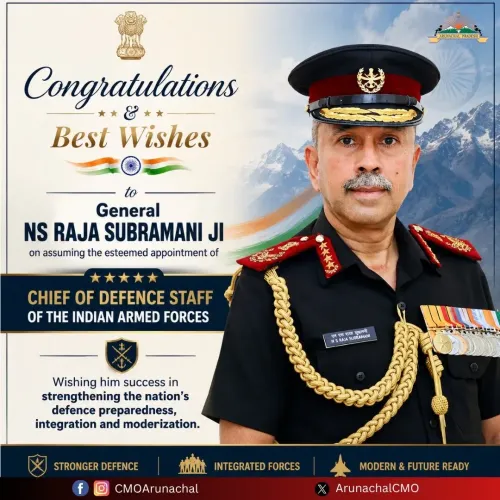
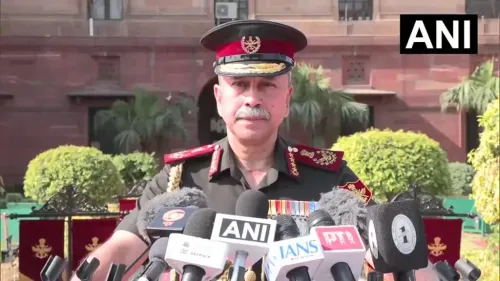
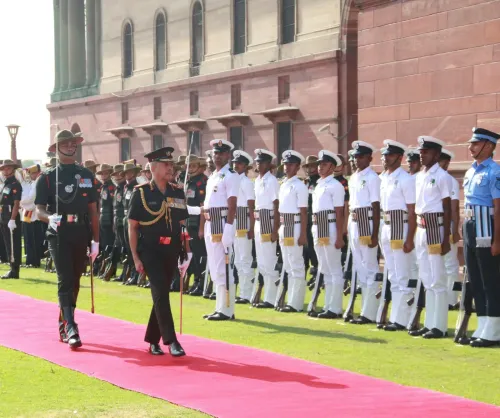
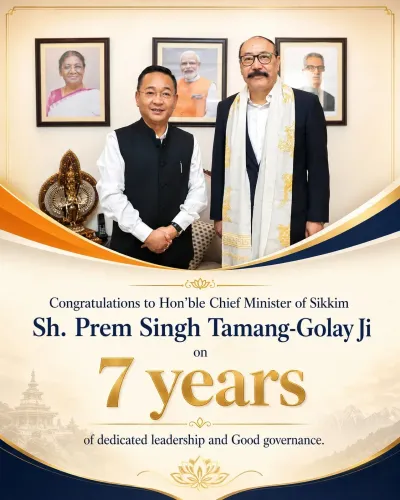
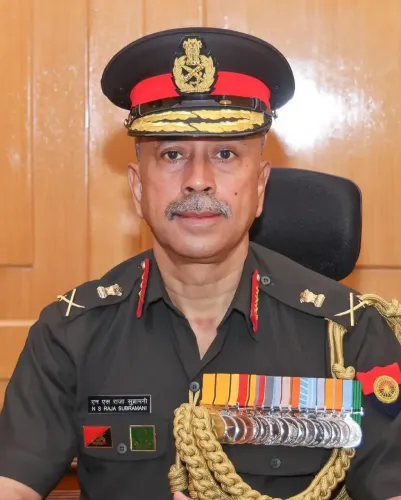
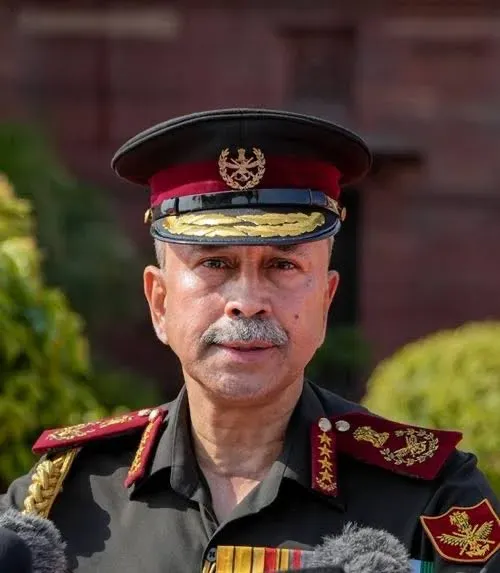
Sikkim Chief Minister Prem Singh Tamang on June 1, 2026, congratulated General N. S. Raja Subramani on assuming office as Chief of Defence Staff, calling him a 'highly respected military leader' whose strategic vision will strengthen the Indian Armed Forces' capabilities and future readiness.
Key Takeaways
CM Prem Singh Tamang publicly congratulated General N.
Raja Subramani on his assumption of the Chief of Defence Staff office on June 1, 2026 .
The CDS post was established in December 2019 as India's highest-ranking military position, designed to unify the Army, Navy, and Air Force under single-point advisory leadership.
Tamang described the new CDS as a leader whose 'exemplary leadership and strategic vision' will strengthen the armed forces' 'capabilities, cohesion, and future readiness.' Sikkim borders China, Nepal, and Bhutan , making its Chief Minister's acknowledgement of the CDS appointment particularly significant from a regional security standpoint.
The new CDS is expected to advance ongoing deliberations on integrated theatre commands and joint capability development frameworks.
Sikkim Chief Minister Prem Singh Tamang on Monday, June 1, 2026, extended warm congratulations to General N. S. Raja Subramani on assuming the office of Chief of Defence Staff (CDS) of the Indian Armed Forces, describing him as a 'highly respected military leader with decades of dedicated service to the nation.'
Context
Posting on X, CM Tamang praised General Raja Subramani's 'exemplary leadership and strategic vision,' expressing confidence that these qualities 'will further strengthen the capabilities, cohesion, and future readiness of our Armed Forces.' The message reflected the broad political acknowledgement that typically accompanies the assumption of the country's highest military office.
The Chief of Defence Staff is the single-point military adviser to the Government of India and the permanent chairman of the Chiefs of Staff Committee. The post was formally created in December 2019 to drive jointness among the Army, Navy, and Air Force and to serve as the principal interface between the armed services and the civilian defence establishment.
Policy Backdrop
India has been pursuing structural reforms in higher defence management since the late 1990s, with successive governments emphasising inter-service coordination, theatrisation of commands, and streamlined procurement. The CDS office sits at the centre of this long-running modernisation effort, tasked with aligning operational planning with national security priorities.
The push for integrated theatre commands — a reorganisation that would place Army, Navy, and Air Force assets under unified geographic commands — has been one of the most consequential items on the defence reform agenda. The incoming CDS is expected to carry forward deliberations on this structural shift alongside capability development and joint training frameworks.
Stakeholders and Impact
General Raja Subramani's appointment is significant for the Indian Armed Forces at a moment when the country is navigating complex security environments on its northern and western frontiers. The CDS role requires balancing the institutional interests of three distinct services while advancing a unified national defence posture.
Political leaders across party lines and state governments have welcomed the appointment, underscoring the bipartisan regard for the office. CM Tamang's message from Sikkim — a strategically sensitive state bordering China, Nepal, and Bhutan — carries particular resonance given the region's direct stake in national security and border management.
What's Next
Attention will now turn to General Raja Subramani's early priorities in office, particularly any directives on integrated theatre commands, joint logistics frameworks, or defence capability road maps. His tenure will also be watched for its approach to civil-military coordination on procurement and indigenisation under the broader Aatmanirbhar Bharat (self-reliant India) defence agenda.
The coming months will test whether the structural reforms initiated under previous CDS tenures gain fresh momentum, as India seeks to modernise its armed forces while managing evolving strategic pressures across the subcontinent.
Point of View
' Tamang implicitly signals Sikkim's stake in the broader national security architecture at a time when the northeastern Himalayan region remains a focal point of India-China border management. The message also fits a pattern of the Sikkim Krantikari Morcha government positioning itself as a cooperative partner with the central defence establishment. For the new CDS, early political goodwill from border-state leaders could ease coordination on civil-military matters relevant to the region.
NationPress
21 Oct 2026
Frequently Asked Questions
Who is the new Chief of Defence Staff of India?
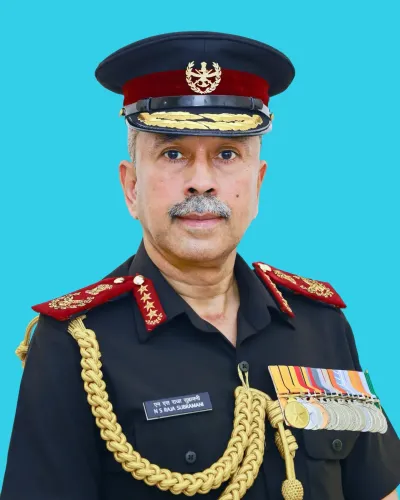
General N. S. Raja Subramani has assumed the office of Chief of Defence Staff (CDS) of the Indian Armed Forces, as confirmed by congratulatory messages from senior political leaders including Sikkim Chief Minister Prem Singh Tamang on June 1, 2026 .
What is the role of the Chief of Defence Staff in India?
The Chief of Defence Staff is India's highest-ranking military officer, serving as the single-point military adviser to the government and the permanent chairman of the Chiefs of Staff Committee. The post was created in December 2019 to improve jointness and integration among the Army, Navy, and Air Force .
Why did Sikkim CM Prem Singh Tamang congratulate the new CDS?
CM Prem Singh Tamang extended congratulations to General Raja Subramani on assuming the CDS office, praising his 'exemplary leadership and strategic vision.' Sikkim shares borders with China, Nepal, and Bhutan , giving the state a direct interest in national defence leadership.
When was the Chief of Defence Staff post created in India?
The Chief of Defence Staff post was formally established by the Government of India in December 2019 , following long-standing recommendations for structural reform in higher defence management to improve inter-service coordination.
What are the key priorities expected from the new CDS?
The new CDS General Raja Subramani is expected to advance progress on integrated theatre commands , joint logistics, and capability development frameworks, continuing India's broader defence modernisation agenda including indigenisation under the Aatmanirbhar Bharat initiative.